
How to Care for Catmint
Grow-and-go catmint: a tough, sun-loving perennial with airy lavender-blue spikes that thrives on neglect and shrugs off drought.
Read the full Catmint encyclopedia entry →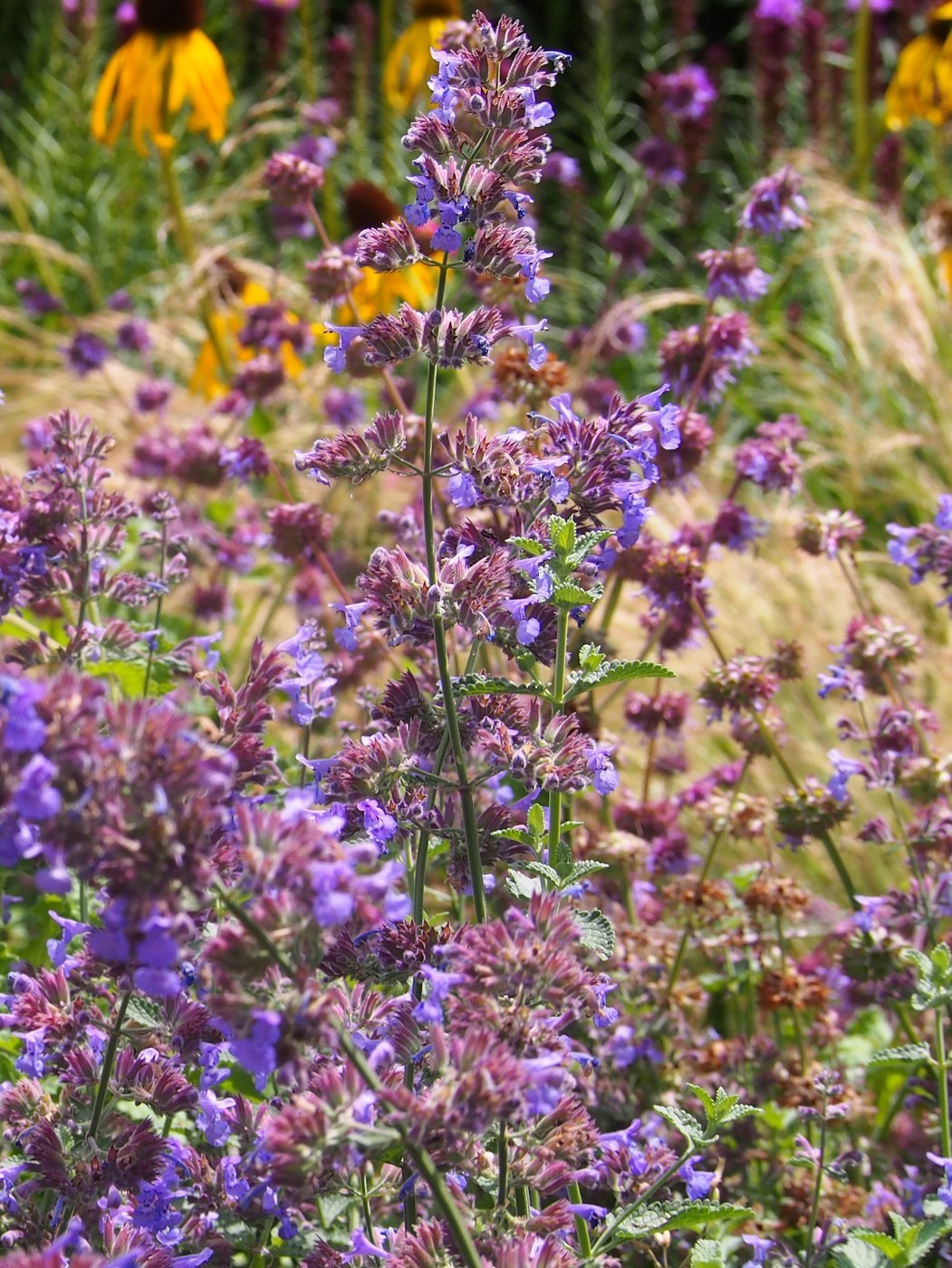
Catmint (Nepeta x faassenii) is a mounding, aromatic perennial prized for its long haze of lavender-blue flower spikes and soft grey-green foliage. It is one of the easiest sun perennials you can grow, tolerating heat, poor soil, and dry spells with almost no fuss.
Light
Give catmint full sun for the densest mounds and heaviest bloom. In the hottest climates it accepts a little afternoon shade, but too much shade produces floppy, sprawling stems that open at the center. A minimum of six hours of direct sun keeps plants compact and free-flowering.
Water
Water sparingly. Catmint is genuinely drought-tolerant once its roots are established, and it strongly prefers dry-leaning conditions to constant moisture. Soak newly planted specimens through their first season so roots go deep, then let the soil dry well between waterings. Overwatering and soggy soil are the fastest way to rot the crown.
Soil & Potting
Sharp drainage is the single most important factor. Catmint thrives in lean, gritty, average to poor soil and actually flowers better where fertility is low. Avoid rich, heavy clay that stays wet; amend such beds with grit or coarse sand. In containers use a free-draining mix and a pot with generous drainage holes.
Humidity & Temperature
This is a temperate perennial that laughs off summer heat and cold winters alike, tolerating a wide hardiness range. It prefers dry air and good airflow; humid, stagnant conditions invite foliar problems. No humidity boosting is ever needed.
Feeding
Feed lightly or not at all. Catmint performs best in lean soil, and heavy feeding causes lush, floppy growth with fewer flowers. A thin scattering of compost in spring is more than enough for the whole season.
Propagation
The easiest method is spring division: lift an established clump and split it into sections, each with roots and shoots, then replant. Softwood stem cuttings taken in late spring root readily in a gritty mix. Note that the popular sterile hybrids rarely come true from seed, so division and cuttings are the reliable routes.
Repotting / Pruning
The key maintenance task is the mid-season shear. After the first flush of bloom fades, cut the whole plant back by about one-third to one-half; this removes tired growth and triggers a fresh, tidy mound with a strong second wave of flowers. Cut old stems to the ground in late winter or early spring. Container plants can be divided and refreshed every two to three years.
Common Problems & Pests
Catmint is remarkably trouble-free. Its main enemy is wet feet, which causes root and crown rot; ensure drainage is impeccable. In damp, crowded conditions powdery mildew or leaf spot can appear, both curbed by better spacing and airflow. Floppy, splayed centers usually signal too much shade, too much water, or overfeeding rather than disease.
Seasonal Care Tips
In spring cut back last year's dead stems and let new growth emerge. Through summer, shear after the first bloom to rejuvenate the mound and prolong flowering into autumn. As the season ends the plant dies back; you can leave the stems for winter structure and cut them down at the very start of the next growing season.
Frequently asked questions
Why is my catmint flopping open in the middle?
Splaying almost always means too little sun, too much water, or overly rich soil. Move it to a brighter, drier spot and shear the plant back hard; it will regrow into a tighter mound.
How do I get catmint to bloom again after the first flush?
Shear the entire plant back by a third to a half once the first wave of flowers fades. This quickly triggers fresh foliage and a strong second bloom that carries into autumn.
Does catmint need fertilizer?
Very little. It flowers best in lean soil, so a light scatter of compost in spring is plenty. Heavy feeding just produces floppy leafy growth with fewer flowers.
How often should I water established catmint?
Rarely. Once established it is drought-tolerant and prefers to dry out between waterings. Water only during prolonged dry spells, and never let it sit in soggy soil.