Catmint
Nepeta x faassenii
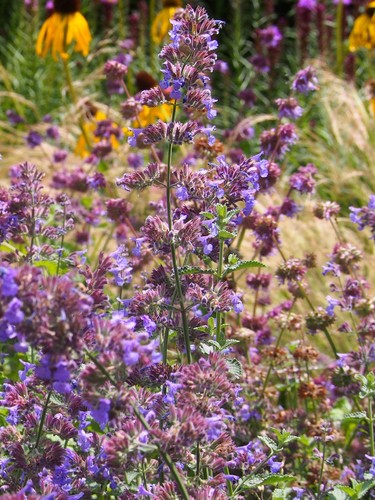
A soft, billowing perennial with gray-green aromatic foliage and a long haze of small lavender-blue flowers. Tough, drought-proof, deer-resistant, and a magnet for bees.
- Light
- Full sun
- Water
- Sparingly; drought-tolerant
- Difficulty
- Easy
Got a plant like this?
Identify any plant from a photo, free.
Overview
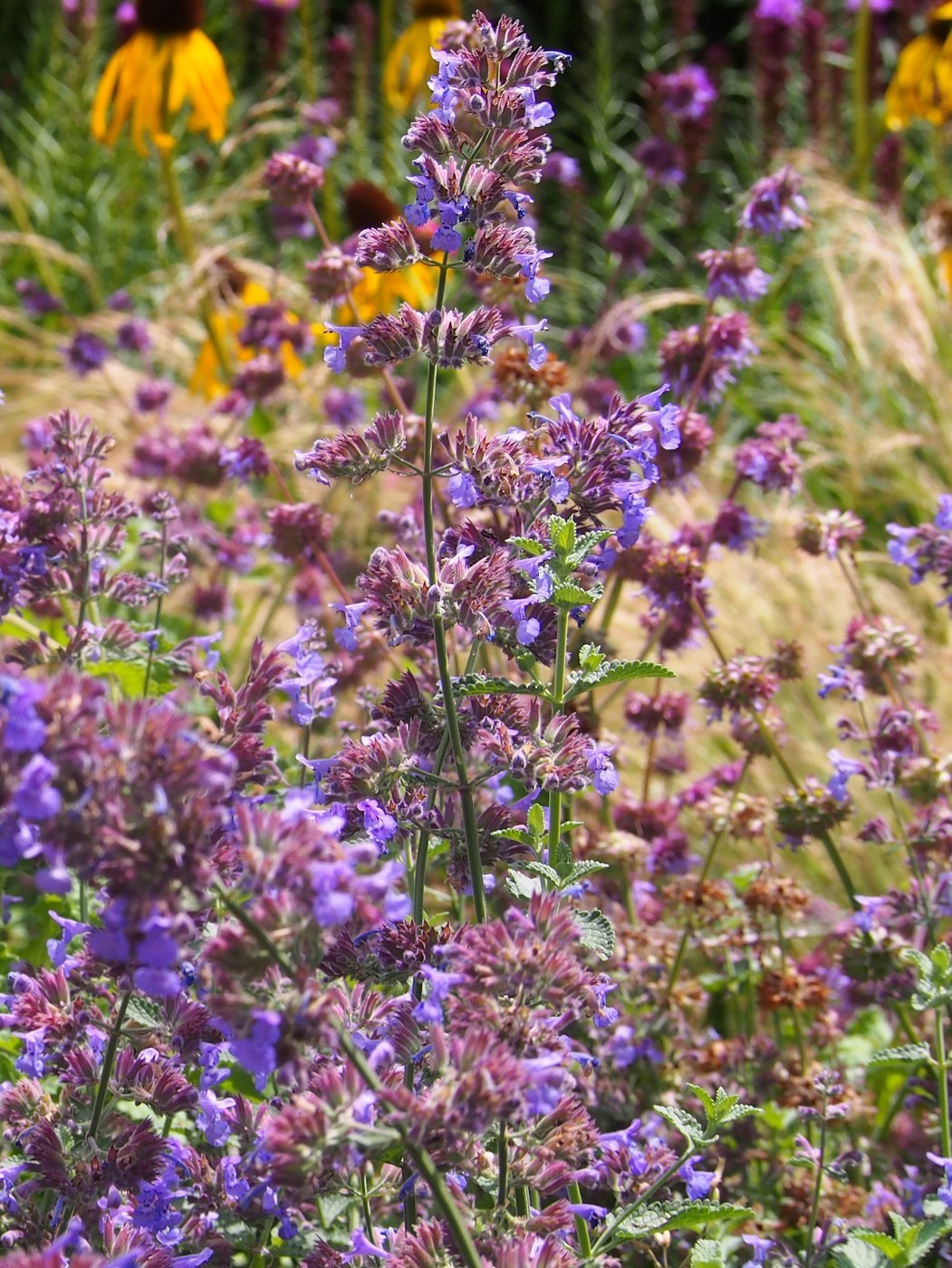
Catmint forms relaxed, mounding clouds of silvery foliage smothered in spikes of lavender-blue flowers from late spring well into summer. A cousin of the famous catnip, the ornamental hybrid Nepeta x faassenii is more refined and longer-blooming, though it still has mild appeal to some cats.
It is a member of the mint family, with aromatic, gray-green leaves and the characteristic square stems. The plant is exceptionally easy, thriving in heat, drought, and lean soil.
Catmint is a favorite for softening edges, lining paths, and feeding pollinators, and a hard shearing after the first bloom flush brings a fresh second wave of flowers.
How to identify it
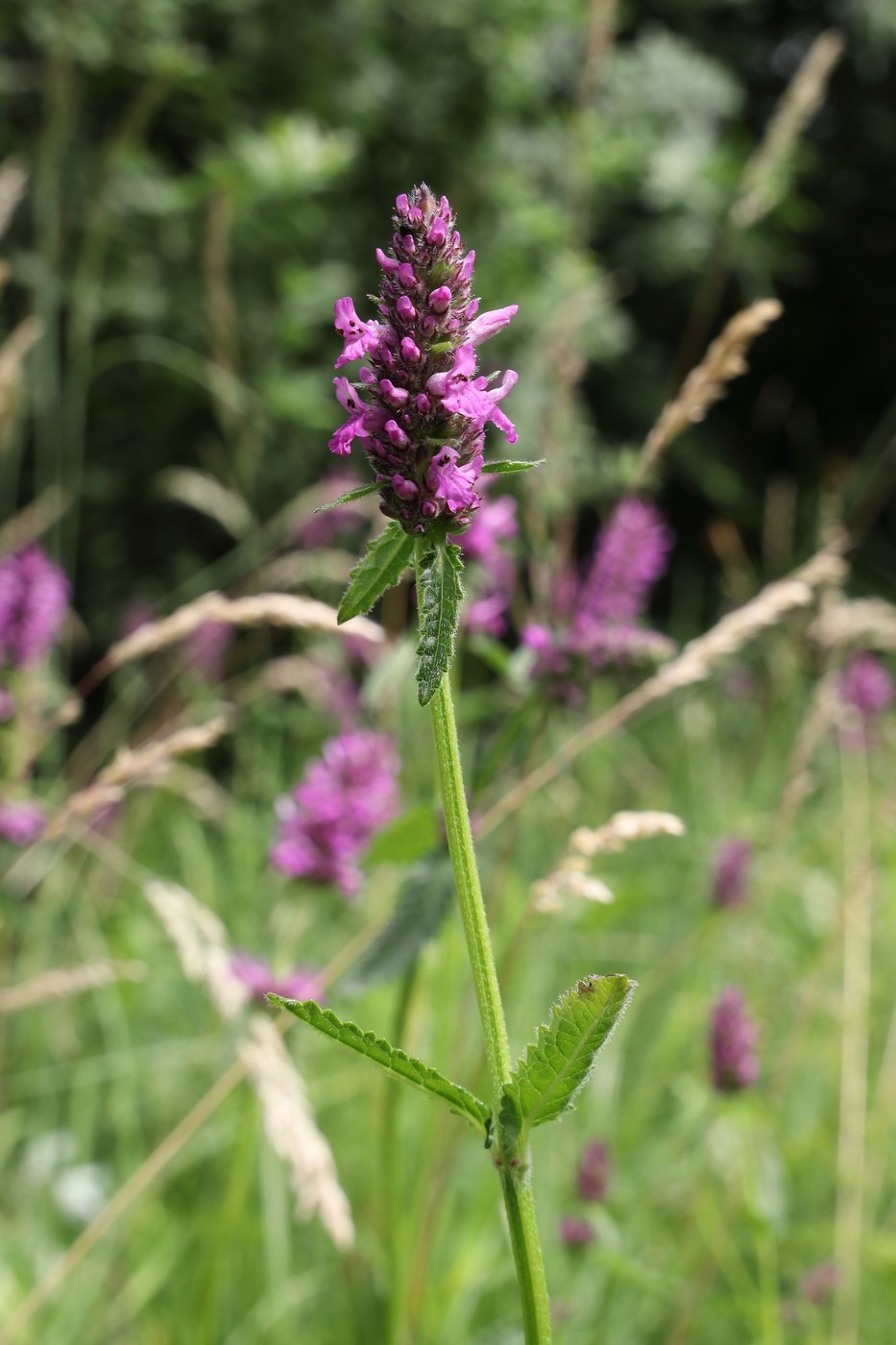
- Flowers: Small two-lipped lavender-blue (sometimes white or pink) flowers in loose spikes
- Leaves: Small, gray-green, scalloped, aromatic, on square stems
- Habit: Soft, sprawling, mounded clump typically 1-2 ft tall and wider
- Bloom time: Late spring through summer, often reblooming after shearing
- Scent: Minty, herbal aroma when foliage is brushed or crushed
Care & growing
Light: Full sun for the most compact growth and heaviest bloom.
Water: Drought-tolerant once established; water sparingly and avoid wet soil.
Soil: Average to lean, well-drained soil; tolerates poor and dry ground. Rich soil causes floppy, sprawling growth.
Temperature: Hardy in USDA zones 3-8.
Feeding: None needed.
Propagation: Division in spring or softwood cuttings. Shear the whole plant back by a third to a half after the first bloom flush to tidy it and trigger reblooming.
Habitat & origin
Catmint hybrids derive from Nepeta species native to the dry hillsides and rocky slopes of Europe, the Mediterranean region, and Central Asia.
This arid heritage makes them ideal for sunny, well-drained sites. Catmint is grown worldwide in borders, cottage gardens, xeriscapes, and along walkways.
Frequently asked questions
What is the difference between catmint and catnip?
Catnip (Nepeta cataria) is the plant that strongly affects cats, while ornamental catmint (Nepeta x faassenii) is grown for flowers and has only mild appeal to cats.
How do I get catmint to rebloom?
Shear the entire plant back by a third to a half after the first flush of flowers fades. This tidies the mound and triggers a fresh wave of bloom.
Why is my catmint flopping open in the middle?
Flopping comes from rich soil, too much water, or shade. Grow it in lean, well-drained soil in full sun, and shear it to keep it compact.
Is catmint good for pollinators?
Yes, it is one of the best, attracting steady traffic of bees and butterflies over its long bloom season.
Catmint guides
In-depth guides for identifying, growing, and caring for Catmint.
How to Care for Catmint
Grow-and-go catmint: a tough, sun-loving perennial with airy lavender-blue spikes that thrives on neglect and shrugs off drought.
Catmint Identification Guide
Identify catmint (Nepeta) by its soft gray-green aromatic foliage, square stems, and long, loose spikes of small lavender-blue flowers.