
Catnip Identification Guide
Recognize catnip by its grayish-green, downy, heart-shaped toothed leaves, square stems, spikes of spotted white-to-lilac flowers, and minty smell that attracts cats.
Read the full Catnip encyclopedia entry →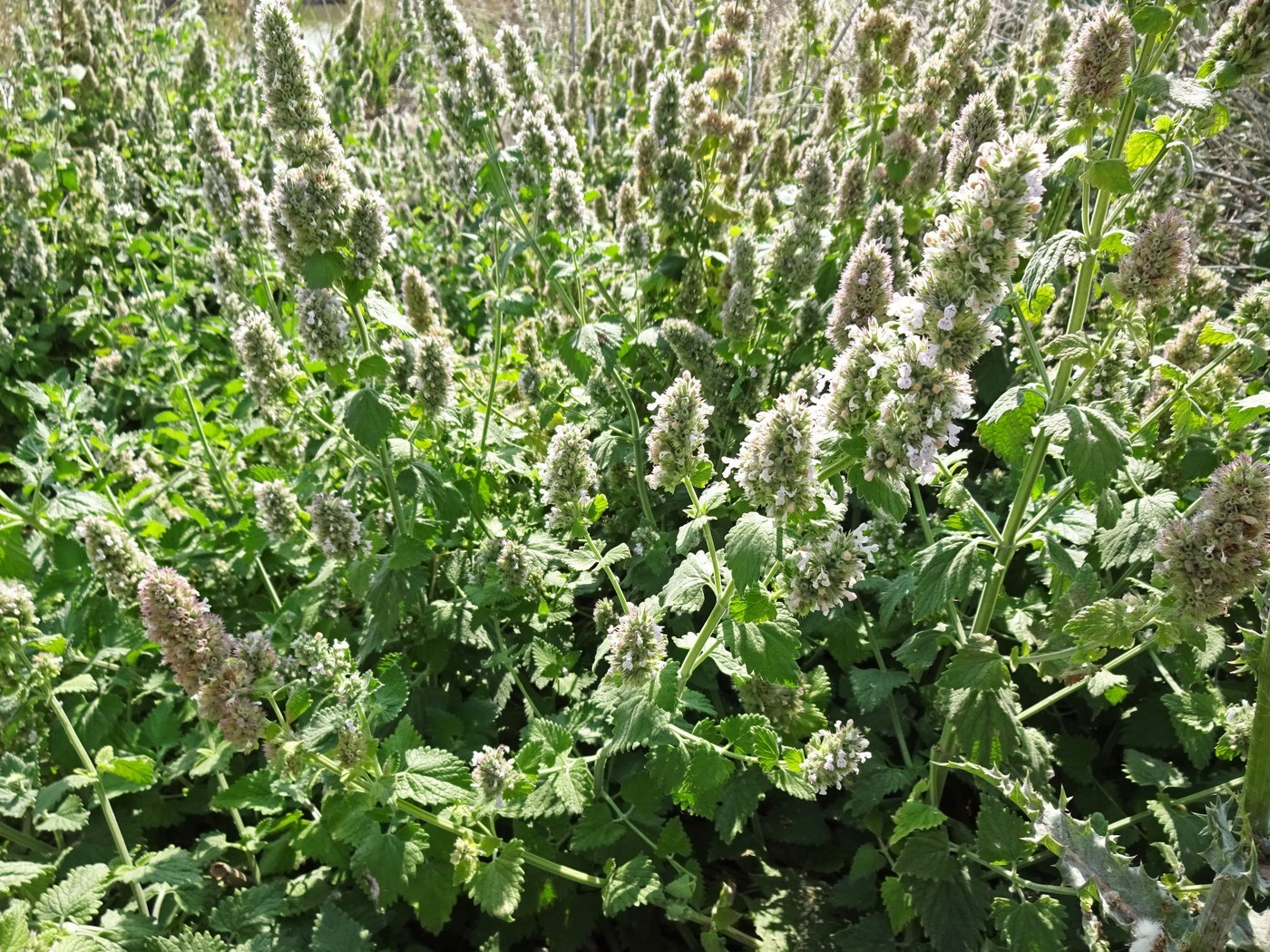
Key Identifying Features
Catnip (Nepeta cataria) is a bushy perennial in the mint family (Lamiaceae), famous for the euphoric reaction it triggers in many cats. It is identified by its soft, grayish-green, downy (hairy) heart-shaped leaves with coarse teeth, its square stems, and a musky, minty, slightly skunky aroma. The overall plant looks whitish-gray and fuzzy compared with greener mints.
- Bushy, branching plant 50–100 cm (1.5–3 ft) tall
- Gray-green, soft-hairy, triangular/heart-shaped toothed leaves
- Square stems, downy white-gray
- Spikes of small white-to-pale-lilac flowers spotted with purple
- Minty, musky scent that attracts cats
Leaves & Stems
Leaves are 3–7 cm long, ovate to triangular (heart-shaped at the base), with coarsely toothed (scalloped) margins. Both surfaces are covered in fine soft hairs, giving a grayish, velvety, almost frosted look, paler and downier underneath. They sit in opposite pairs on square, branching, downy stems. The whole plant has a soft, grayish, fuzzy character distinguishing it from glossier true mints.
Flowers & Fruit
Flowers bloom from summer into autumn in dense spike-like clusters at stem tips and upper leaf axils. Each flower is small, two-lipped, and white to pale pink or lilac, with the lower lip marked with small purple/crimson spots. After flowering, tiny smooth nutlets form. Bees and pollinators are strongly attracted.
How to Tell It Apart from Look-Alikes
- Garden catmints (other Nepeta, e.g., N. × faassenii): lower, more sprawling, with smaller leaves and showier blue-violet flowers; N. cataria is taller, grayer, and more upright with whiter flowers.
- Lemon balm: greener, smells of lemon not musky-mint.
- Mints (Mentha): greener, glossier leaves and a clean menthol scent.
- Hoarhound / dead-nettles: different flower color and scent.
The gray downy heart-shaped toothed leaves, square stems, and spotted white-lilac flowers confirm true catnip.
Where You'll Find It
Native to Europe and Asia and naturalized across North America, catnip grows in dry, disturbed, sunny places: roadsides, fields, fence lines, waste ground, and gardens. It tolerates poor soil, full sun, and drought, and self-seeds readily.
Quick ID Checklist
- Gray-green, downy, heart-shaped toothed leaves
- Square stems, opposite leaves (mint family)
- Spikes of white-to-lilac flowers spotted purple
- Musky minty aroma (and cat appeal)
- Upright bushy habit on dry disturbed ground
A gray, fuzzy mint-family plant with toothed heart-shaped leaves and spotted whitish flowers that drives cats wild is catnip.
Frequently asked questions
How is catnip different from ornamental catmint?
True catnip (Nepeta cataria) is taller and more upright, with grayer, downier leaves and white-to-lilac flowers spotted with purple. Garden catmints like Nepeta × faassenii are lower, bushier, and have showier blue-violet flowers with less cat appeal.
What gives catnip its smell, and why do cats react?
Catnip produces a compound called nepetalactone that creates its musky, minty aroma and triggers a euphoric response in many cats. The scent helps confirm identification.
Does catnip have square stems?
Yes. As a member of the mint family, it has four-sided (square) stems with leaves in opposite pairs, plus a covering of fine gray hairs.
What do catnip flowers look like?
Small, two-lipped, white to pale pink or lilac, clustered in spikes, with tiny purple or crimson spots on the lower lip.