
Celandine Poppy Identification Guide
Identify Celandine Poppy by its large four-petaled golden-yellow flowers, deeply lobed blue-green leaves, and yellow-orange sap.
Read the full Celandine Poppy encyclopedia entry →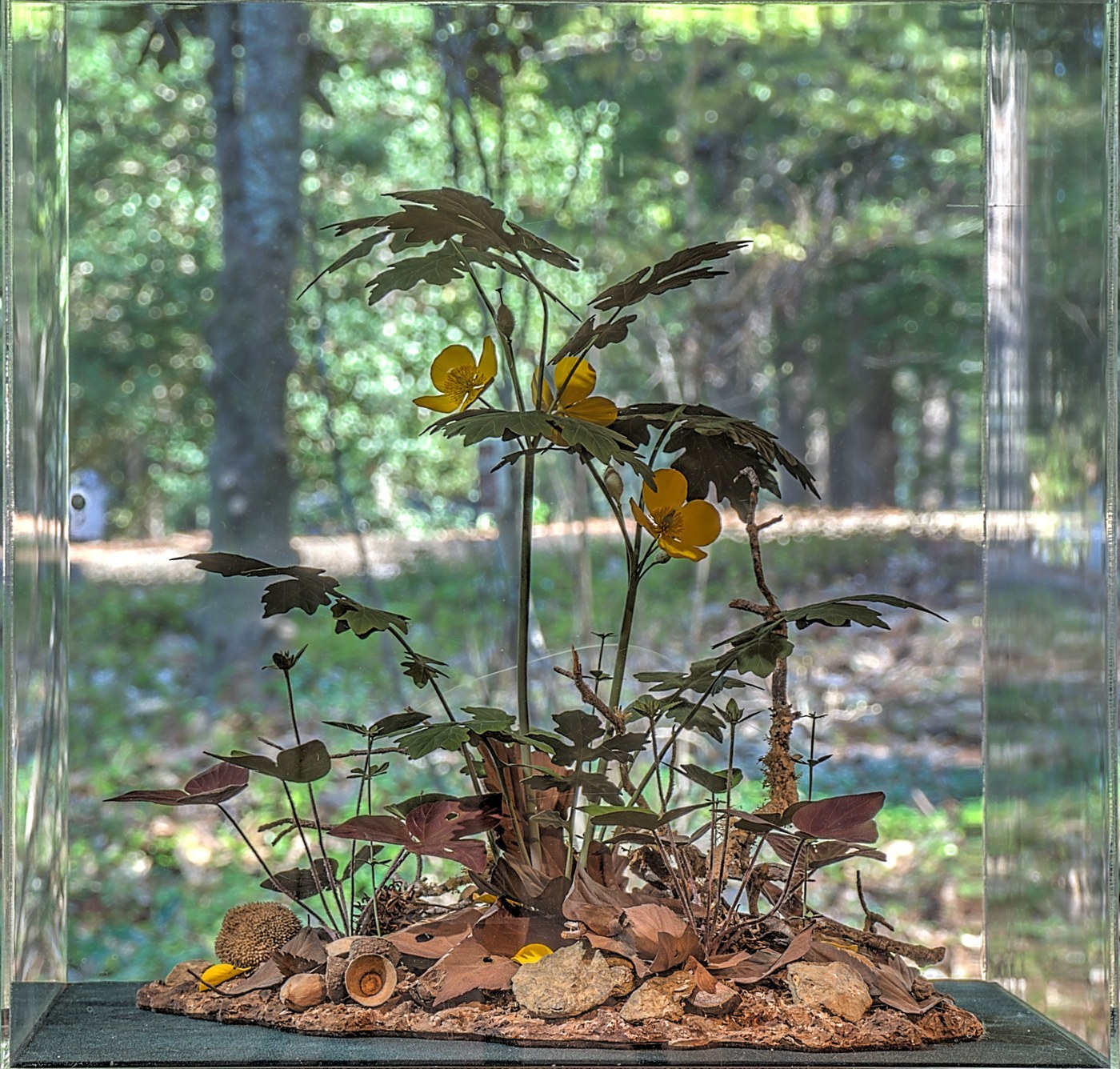
Key Identifying Features
Celandine Poppy (Stylophorum diphyllum), also called Wood Poppy or Yellow Wood Poppy, is a spring-blooming woodland perennial of eastern North America. Reliable signs:
- Bright golden-yellow flowers about 3.5–5 cm across with four broad, satiny petals.
- Yellow-to-orange sap that bleeds from broken stems and leaves — a key feature.
- Deeply lobed, blue-green leaves that are pale and hairy beneath.
- A clumping plant 30–45 cm (12–18 in) tall.
Leaves & Stems
Leaves are pinnately lobed with 5–7 deeply cut, rounded lobes and wavy or scalloped margins, mid-green to blue-green above and silvery-hairy beneath. Most leaves are basal, with usually two opposite leaves on the flowering stem (hence diphyllum, 'two-leaved'). When any part is broken, it exudes bright yellow or orange juice, confirming its identity among woodland plants.
Flowers & Fruit
Flowering peaks in spring (March–May), sometimes reblooming sporadically into summer. Flowers are borne in small clusters above the foliage, each with four petals and many yellow stamens around a central pistil. The fruit is a conspicuous, nodding, oval, silvery-hairy seed capsule (resembling a small fuzzy egg), which splits to release seeds bearing fleshy appendages (elaiosomes) that ants disperse.
How to Tell It Apart from Look-Alikes
- Greater Celandine (Chelidonium majus), a Eurasian invasive, has smaller flowers (~2 cm) with thinner petals, more dissected leaves, and slender smooth pods — and is the plant most often confused with it. Celandine Poppy has larger flowers and fuzzy round capsules.
- Lesser Celandine (Ficaria verna) is a buttercup relative with glossy heart-shaped leaves and many narrow petals.
- Wood Poppy / Buttercups lack the orange sap.
The pairing of large 4-petaled yellow flowers + orange sap + a fuzzy egg-shaped pod distinguishes the native Celandine Poppy.
Where You'll Find It
Celandine Poppy grows in rich, moist deciduous woodlands, ravines, and shaded stream banks in the eastern and central United States. It prefers partial to full shade and humus-rich soil. It is a popular native shade-garden plant that can spread to form colonies.
Quick ID Checklist
- 4-petaled golden-yellow flowers, 3.5–5 cm
- Yellow-orange sap when broken
- Deeply lobed blue-green leaves, hairy/silvery beneath
- Fuzzy, oval, nodding seed capsule
- Clump 30–45 cm tall, spring bloomer
- Moist shaded deciduous woodland habitat
Frequently asked questions
What is the yellow-orange sap?
Celandine Poppy, like other poppies, contains colored latex — here yellow to orange — that bleeds from cut stems and leaves. It's a quick confirmation of identity but can stain and irritate skin.
How do I tell it from invasive Greater Celandine?
Celandine Poppy has larger flowers (3.5–5 cm) and a fuzzy egg-shaped seed pod, while Greater Celandine has smaller flowers (~2 cm) and slender smooth pods. Both have orange-yellow sap.
Why is it called diphyllum?
The species name means 'two-leaved,' referring to the typical pair of opposite leaves on the flowering stem beneath the flower cluster.
Is Celandine Poppy native?
Yes — it is a native eastern North American woodland wildflower, unlike the similar-looking Greater Celandine, which is a Eurasian introduction.