
Century Plant Identification Guide
Recognize the Century Plant (Agave americana) by its huge gray-blue rosette of spiny-edged leaves and towering once-in-a-lifetime flower stalk.
Read the full Century Plant encyclopedia entry →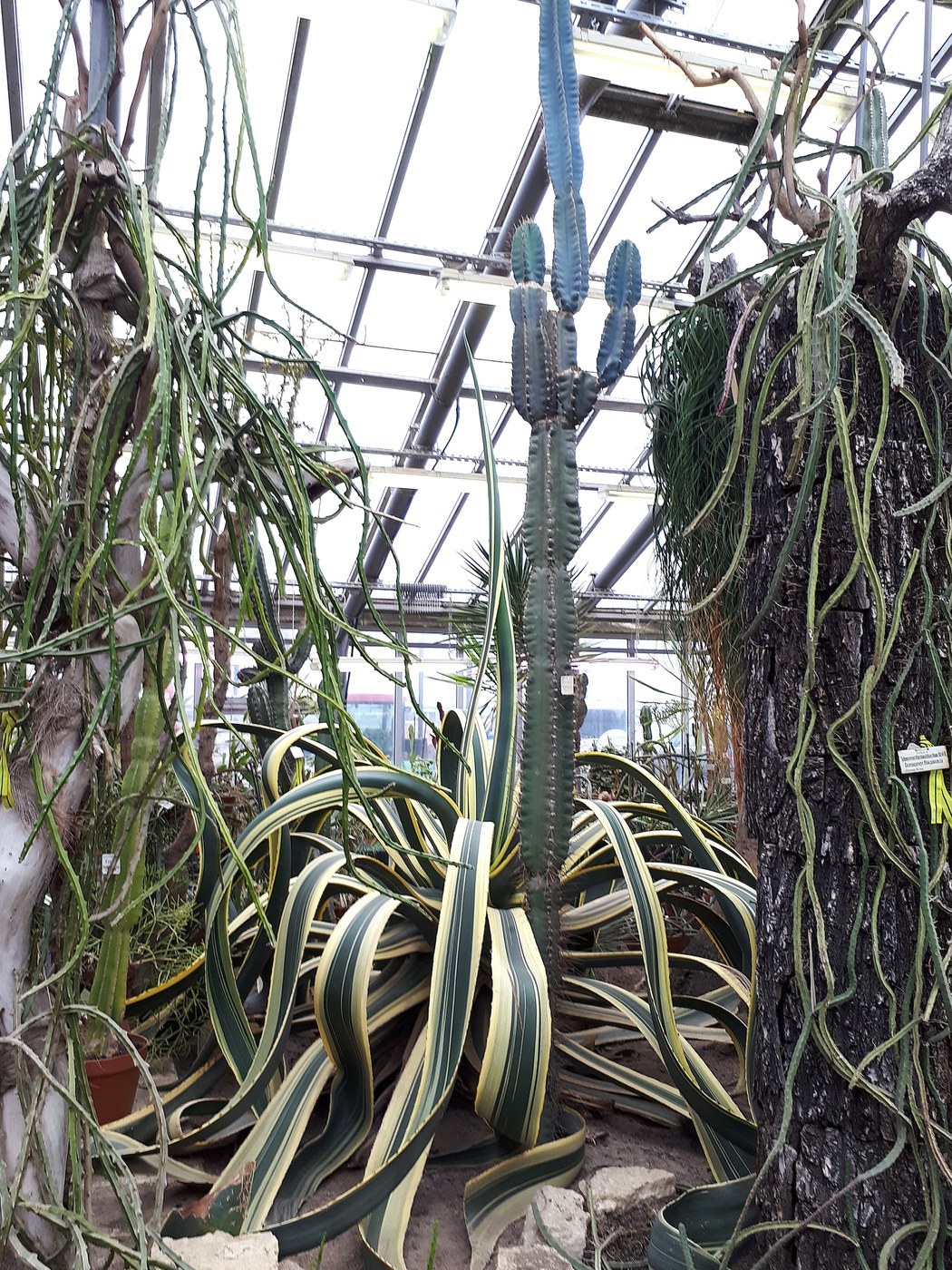
Key Identifying Features
The Century Plant (Agave americana) is a massive rosette-forming agave with broad, thick, gray-blue leaves that can span 6–12 ft across and 6 ft tall. Its common name comes from the myth that it blooms once a century — in reality it flowers once after 10–30 years and then dies.
- Enormous rosette of stiff, succulent, gray-green to blue leaves
- Leaves armed with hooked spines along the margins and a sharp terminal spine at the tip
- Solitary, ground-level rosette that produces basal offsets (pups)
- Often a glaucous (powdery blue) sheen; variegated yellow- or white-striped cultivars are common
Leaves & Stems
The leaves are long, lance-shaped, and rigid, thickened and concave, ending in a fierce dark terminal spine. The margins carry regularly spaced, curved teeth. Young leaves bear a distinctive imprint pattern from being pressed against neighboring spines in the bud. There is essentially no above-ground stem until flowering; the rosette sits low and wide and spreads by underground rhizomes that pop up pups.
Flowers & Fruit
The plant is monocarpic: after many years it sends up a gigantic flower stalk 15–30 ft tall resembling a giant asparagus, branching at the top into candelabra-like clusters of yellow-green flowers. After this single spectacular bloom the main rosette dies, leaving offsets behind. Bulbils (plantlets) may also form on the flower stalk.
How to Tell It Apart from Look-Alikes
- Agave salmiana / other large agaves: Similar size; A. americana has notably long, recurving gray-blue leaves and prominent marginal teeth.
- Aloe: Aloes have softer, gel-filled leaves and tubular red/orange flowers on shorter stalks; agave leaves are tougher and fibrous with a single terminal spine.
- Yucca: Yuccas have narrower, often softer-margined leaves and woody trunks; agaves form low spiny rosettes.
Where You'll Find It
Native to Mexico, now naturalized and widely planted across the Mediterranean, southwestern US, and warm coastal regions worldwide (often invasive). It thrives in full sun, poor rocky soil, and drought, hardy to roughly USDA zones 8–11. You'll see it on dry hillsides, in xeriscapes, and lining coastal cliffs.
Quick ID Checklist
- Giant gray-blue rosette, leaves to 6 ft
- Hooked marginal teeth plus a sharp terminal spine
- Produces basal pups; blooms once then dies (monocarpic)
- 15–30 ft candelabra flower stalk of yellow-green flowers
- Drought-loving, full-sun plant of warm dry regions
Frequently asked questions
Does it really bloom only once a century?
No. The name is a myth. It typically flowers once after 10–30 years, sends up a huge stalk, and then the main rosette dies, leaving offsets behind.
Are the leaves dangerous?
Yes, handle with care. The margins have hooked teeth and the tip ends in a very sharp, hard spine that can cause puncture wounds; the sap can also irritate skin.
How is it different from an aloe?
Agave leaves are tough, fibrous, and armed with a single hard terminal spine and marginal teeth, while aloes have soft, gel-filled leaves and tubular flowers on shorter stalks.
Will I lose the whole plant when it flowers?
The flowering rosette dies after blooming, but by then it has usually produced numerous basal pups (and sometimes stalk bulbils) that carry on.