
Chamomile Identification Guide
Identify chamomile by its small white daisy flowers with a hollow domed yellow center, finely feathery leaves, and sweet apple scent. Covers German vs Roman chamomile and how to tell it from look-alike mayweeds.
Read the full Chamomile encyclopedia entry →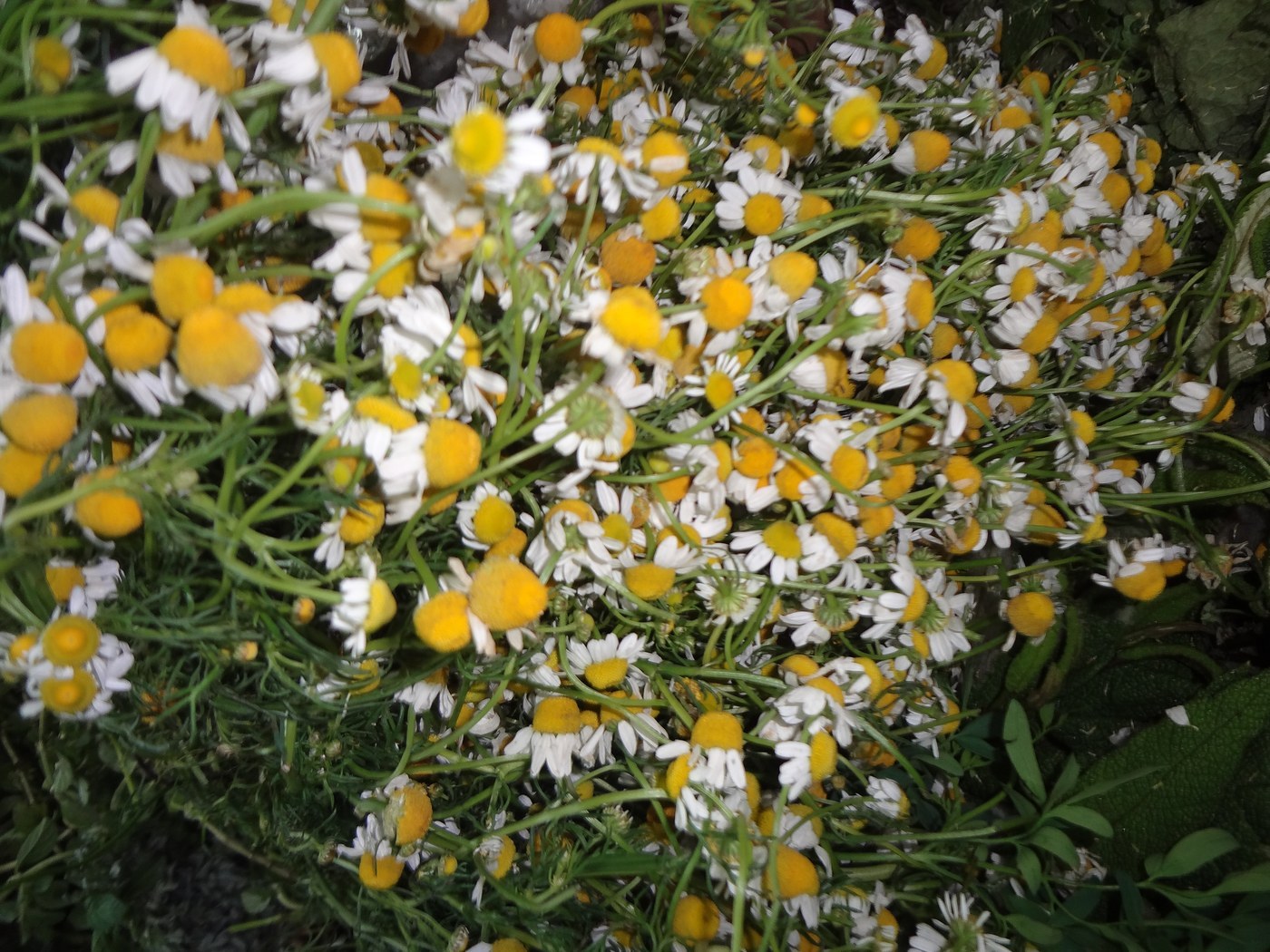
Key Identifying Features
Chamomile refers to two related daisy-family (Asteraceae) herbs: German chamomile (Matricaria chamomilla) and Roman chamomile (Chamaemelum nobile). Both share small white daisy flowers (~1-2.5 cm) with a yellow central disc, finely dissected feathery leaves, and a distinctive sweet apple-like fragrance when crushed. The pleasant smell is one of the best confirmations.
Leaves & Stems
- Leaves are finely divided into thread-like segments (bipinnate), soft and feathery, light green.
- German chamomile is an upright annual to 60 cm with smooth, branching stems.
- Roman chamomile is a low, spreading, mat-forming perennial with downy stems, often used as a lawn.
- Crushing the foliage releases a sweet, fruity, apple-chamomile aroma.
Flowers & Fruit
- Flower heads have white ray florets (petals) that often bend downward as they age, surrounding a yellow disc.
- German chamomile's central disc is distinctly cone-shaped, raised, and hollow inside when cut lengthwise — a key diagnostic.
- Roman chamomile's disc is more solid and flatter to domed.
- Seeds are tiny, ribbed achenes without conspicuous pappus.
How to Tell It Apart from Look-Alikes
- Scentless mayweed (Tripleurospermum inodorum) looks nearly identical but is odorless or unpleasant and has a solid (not hollow) disc.
- Stinking chamomile / mayweed (Anthemis cotula) has an acrid, foul smell.
- Pineapple weed (Matricaria discoidea) is a close relative with the same feathery leaves and apple smell but no white petals — just the green-yellow cone.
- The hollow domed receptacle plus sweet apple scent best confirms true German chamomile.
Where You'll Find It
German chamomile grows on disturbed ground, field edges, roadsides, and gardens across Europe, Asia, and naturalized in North America. Roman chamomile favors sandy, well-drained lawns and pastures. Both like full sun.
Quick ID Checklist
- Small white daisy flowers with yellow center
- Feathery, thread-like divided leaves
- Sweet apple-like scent when crushed
- German type: raised hollow cone-shaped disc
- Petals often droop downward with age
Frequently asked questions
How do I distinguish German chamomile from scentless mayweed?
Cut the flower's central disc lengthwise: German chamomile's cone is hollow inside and the plant smells sweetly of apples, while scentless mayweed has a solid disc and little or no pleasant scent.
What is the difference between German and Roman chamomile?
German chamomile is an upright annual with a hollow cone-shaped flower center; Roman chamomile is a low, mat-forming perennial with a more solid, flatter disc, often grown as a fragrant lawn.
Is pineapple weed a type of chamomile?
It is a close relative (Matricaria discoidea) with the same feathery leaves and apple-pineapple scent, but it lacks white petals, showing only a greenish-yellow cone.
What does chamomile smell like?
Crushed chamomile foliage and flowers give off a sweet, fruity, apple-like fragrance, which is a key way to confirm identity over odorless look-alike daisies.