
How to Care for Cherimoya Tree
Growing guide for the Cherimoya Tree (Annona cherimola), a subtropical tree that likes full sun, deep watering, and frost-free warmth.
Read the full Cherimoya Tree encyclopedia entry →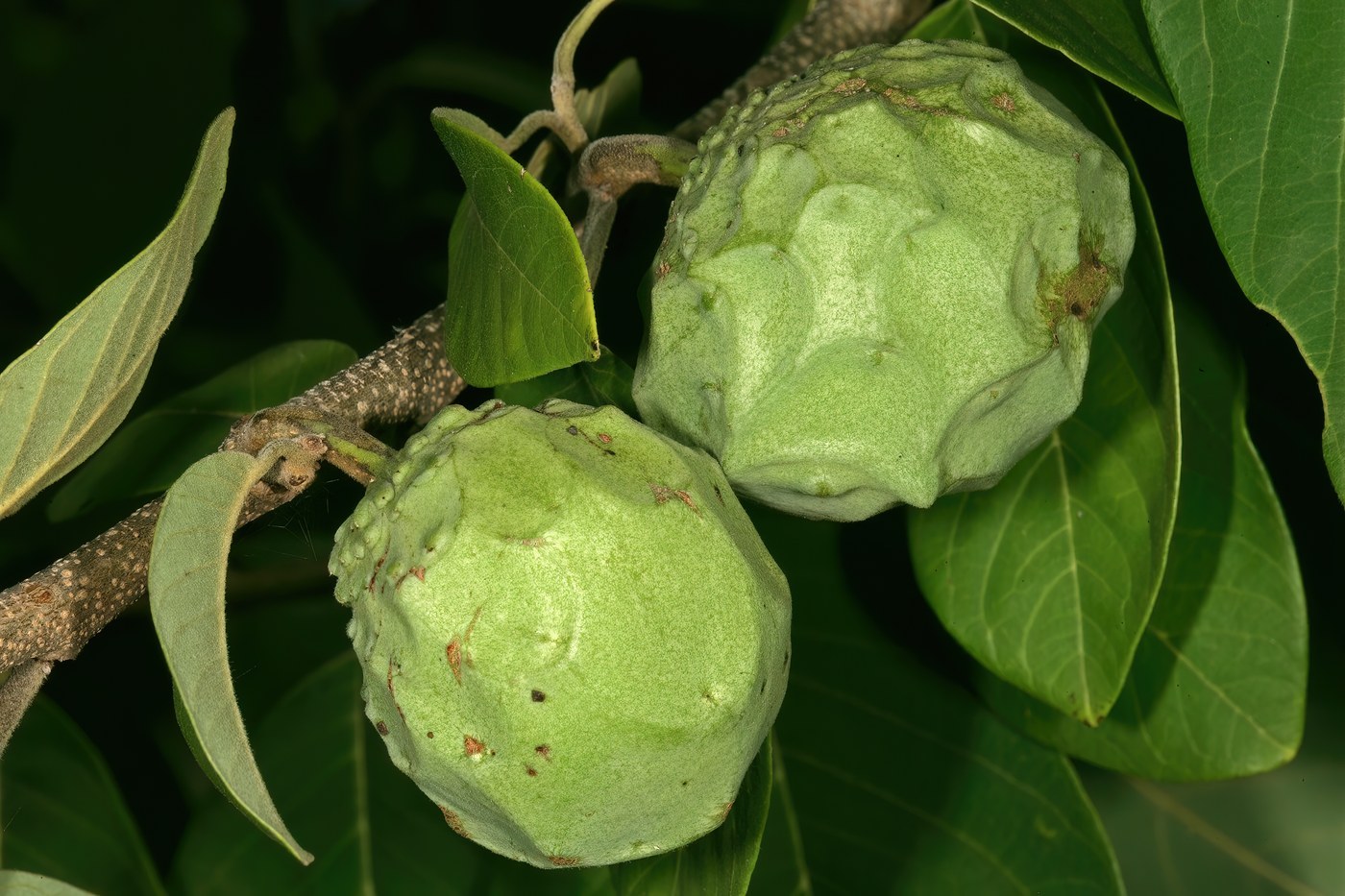
The Cherimoya Tree (Annona cherimola) is an attractive subtropical to mild-temperate tree with large, velvety green leaves and a spreading, often multi-branched form. It grows best in a frost-free climate with full sun and deep, well-managed watering, and is a moderately demanding but rewarding ornamental fruit tree.
Light
Grow cherimoya in full sun for strong growth and flowering, providing at least 6 hours of direct light daily. In very hot, arid climates, young trees benefit from some protection from the most intense afternoon sun, and the trunk can be shaded to prevent sunburn, but overall the tree wants ample light.
Water
Watering is moderate and best done deeply, letting the soil surface dry between waterings. Cherimoya has a shallow root system and appreciates regular deep soakings during the active growing and flowering season, then reduced water during its natural dormant or leafless period. Avoid constant sogginess, which causes root rot, but do not let established trees suffer prolonged drought while in leaf and fruit.
Soil & Potting
Cherimoya prefers deep, well-drained, moderately fertile soil and dislikes heavy, waterlogged ground. A medium-textured loam with good drainage and a pH from slightly acidic to neutral is ideal. In containers, use a rich, free-draining mix and a large pot to accommodate the vigorous roots; ensure excellent drainage.
Humidity & Temperature
This is a subtropical tree suited to mild, frost-free or nearly frost-free climates with moderate humidity. It grows best in warm days and cool but not freezing nights; young trees are frost tender and can be damaged or killed by hard freezes. It naturally drops its leaves during the coolest or driest part of the year and leafs out again in spring. Extreme, dry heat combined with low humidity can hinder flowering.
Feeding
Feed established trees with a balanced fertilizer during the active growing season, applying in split doses from late winter or early spring through summer. Young trees benefit from lighter, more frequent feeding to build framework. Organic mulch and compost around the root zone support steady nutrition; ease off feeding as the tree enters dormancy.
Propagation
Cherimoya is grown from seed, which germinates readily but yields variable trees, or propagated by grafting and budding onto seedling rootstock to reproduce named selections. Grafting is the standard method to preserve desirable forms. Seedlings take several years to mature, while grafted trees establish and flower sooner.
Repotting / Pruning
Prune during dormancy to build a strong open framework, remove crossing or weak branches, and keep the tree at a manageable size, since cherimoya responds well to structural and heading cuts. Container-grown trees should be repotted or root-pruned every couple of years into fresh mix. Regular pruning also improves light penetration and air movement through the canopy.
Common Problems & Pests
Cherimoya can be affected by mealybugs, scale, aphids, and fruit-boring pests, as well as fungal issues like collar rot and anthracnose in overly wet conditions. Good drainage, airflow, and sanitation reduce disease. Poor structure or over-fertilizing with nitrogen can lead to excessive leafy growth. Sunburn on exposed bark is common in intense sun, so shade or paint the trunk of young trees where needed.
Seasonal Care Tips
In late winter to spring, prune, resume feeding, and increase watering as the tree leafs out and flowers. Through the warm growing season, water deeply and feed regularly. In fall, taper feeding, and in winter reduce water as the tree drops its leaves and rests. Protect young trees from any frost with covers or by planting in a warm, sheltered spot.
Frequently asked questions
How much sun does a cherimoya tree need?
Full sun, at least 6 hours daily, for strong growth and flowering. In very hot climates, shade the trunk of young trees to prevent sunburn while still giving the canopy plenty of light.
How should I water a cherimoya tree?
Water deeply and moderately, letting the soil surface dry between waterings. Increase water during active growth and flowering, and reduce it when the tree drops its leaves and rests.
Can cherimoya survive frost?
It is a subtropical tree best in frost-free or nearly frost-free climates. Young trees are frost tender and can be damaged by hard freezes, so protect them or plant in a sheltered spot.
How is cherimoya propagated?
From seed, which germinates easily but gives variable trees, or by grafting onto seedling rootstock to reproduce named selections. Grafting is the standard method for preserving desirable forms.
When should I prune a cherimoya tree?
Prune during dormancy to build a strong open framework and control size. Remove crossing or weak branches to improve light and airflow through the canopy.