Cherimoya Tree
Annona cherimola
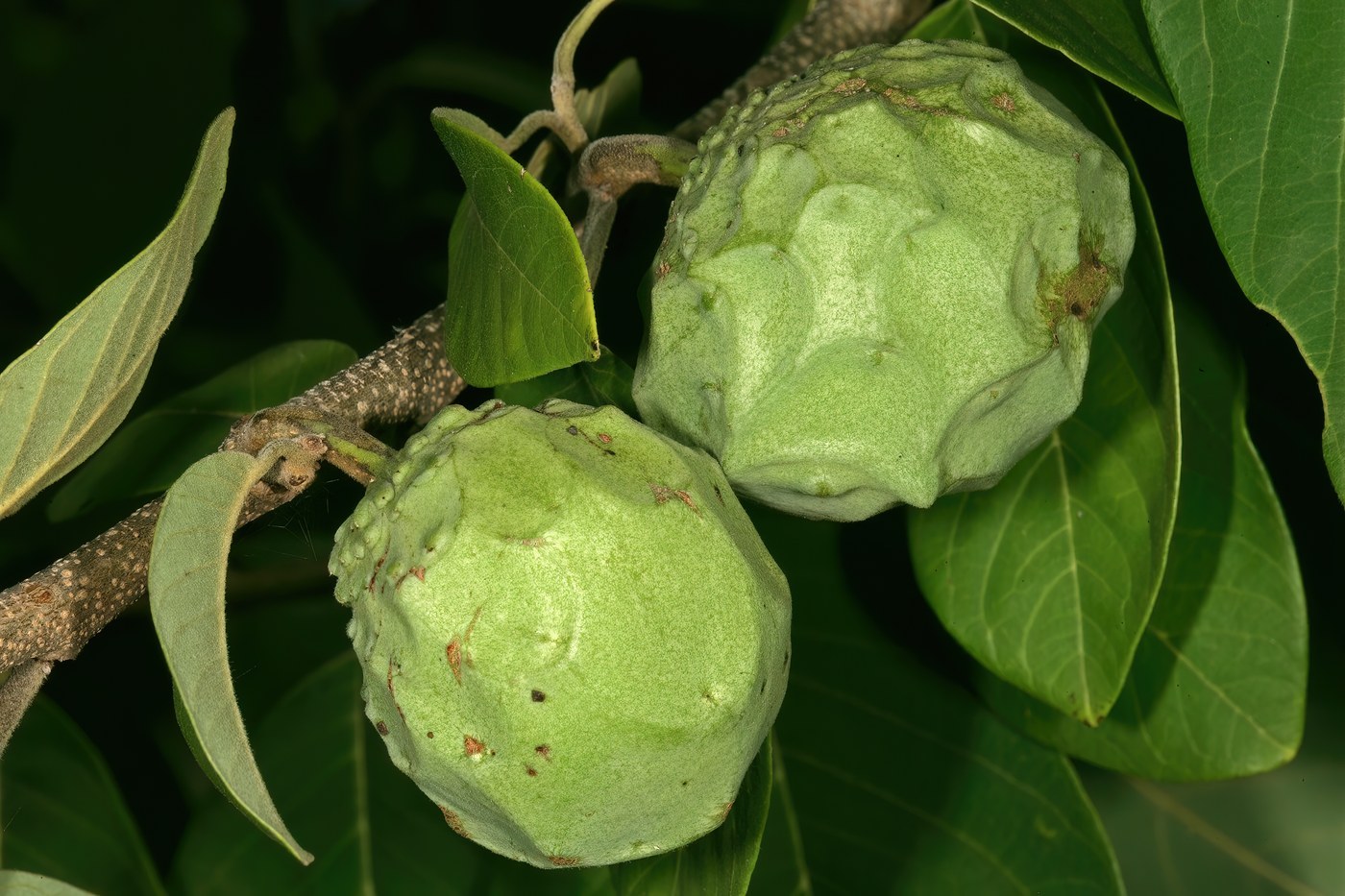
A subtropical fruit tree from the Andean highlands, recognized by its large, heart-shaped fruits with green, scale-patterned skin. It tolerates light frost better than most tropical fruit trees.
- Light
- Full sun
- Water
- Moderate; deep watering, let surface dry
- Difficulty
- Moderate
Got a plant like this?
Identify any plant from a photo, free.
Overview
Cherimoya is a small, semi-deciduous fruiting tree from the Andean highlands, grown for its large, distinctive fruit.
Unlike most tropical fruits, cherimoya is adapted to cooler, subtropical highland climates and can tolerate brief, light frosts, making it growable in places like coastal California, Spain, and Chile.
The tree often requires hand pollination because its flowers are protogynous (female and male phases occur at different times), and its natural pollinators are absent outside its native range.
How to identify it
- Spreading, low-branched tree typically 15 to 30 ft (5 to 9 m) tall
- Velvety, elliptic leaves that are deciduous to semi-deciduous, dull green above and downy beneath
- Fragrant, fleshy, three-petaled greenish-yellow flowers
- Large, heart-shaped or conical fruit, 10 to 20 cm, with green skin patterned in overlapping scale-like or fingerprint markings
- Creamy white flesh studded with hard, glossy black seeds
Care & growing
Light: Full sun for best fruiting.
Water: Deep, regular watering during the growing season; reduce during dormancy and let the surface dry between waterings to avoid root rot.
Soil: Well-drained, medium loam; tolerates a range of soils but not waterlogging; pH 6.5 to 7.5.
Temperature: Subtropical; thrives in mild climates and tolerates brief dips to about 26 to 28 F (-3 C), though young growth is frost-sensitive.
Feeding: Balanced fertilizer in spring and summer.
Propagation: Grafting onto seedling rootstock for named varieties; seedlings are variable. Hand pollination greatly improves fruit set.
Habitat & origin
Native to the Andean valleys of Ecuador, Peru, and Colombia, growing at moderate elevations of roughly 4,500 to 7,500 ft (1,400 to 2,300 m).
It favors a mild, frost-free to nearly frost-free climate with a distinct cooler season. Today it is cultivated in Spain (the leading producer), Chile, Peru, California, and other Mediterranean and subtropical highland regions.
Frequently asked questions
How do I recognize a cherimoya fruit?
It is large, heart-shaped or conical, 10 to 20 cm across, with green skin patterned in overlapping scale-like or fingerprint markings.
Why might my tree flower but not set fruit?
Cherimoya flowers shed pollen and receive it at different times, so without the right insects fruit set is poor. Hand pollinating with a small brush dramatically improves yields.
How cold-hardy is cherimoya?
It tolerates brief light frost down to roughly 26 to 28 F, more than most tropical fruits, but sustained or hard freezes will damage or kill it.
How big does a cherimoya tree get?
It is a spreading, low-branched tree typically 15 to 30 ft (5 to 9 m) tall with velvety, elliptic leaves.
Cherimoya Tree guides
In-depth guides for identifying, growing, and caring for Cherimoya Tree.
How to Care for Cherimoya Tree
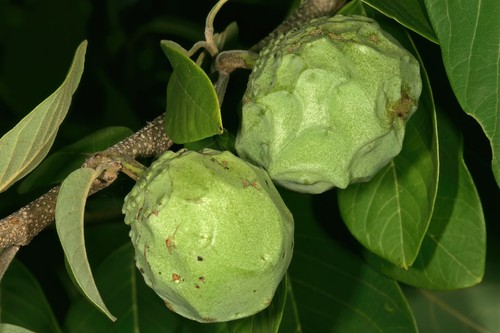
Growing guide for the Cherimoya Tree (Annona cherimola), a subtropical tree that likes full sun, deep watering, and frost-free warmth.
Cherimoya Tree Identification Guide
Identify the cherimoya (Annona cherimola) by its drooping velvety leaves, fragrant three-petaled flowers, and large heart-shaped fruit with scaly, thumbprint-marked green skin.