
Cherry Blossom Tree Identification Guide
How to identify ornamental flowering cherry trees (Prunus, e.g. Yoshino and Kwanzan) by their early pink-white blossoms, horizontal lenticel-banded bark, and toothed leaves.
Read the full Cherry Blossom Tree encyclopedia entry →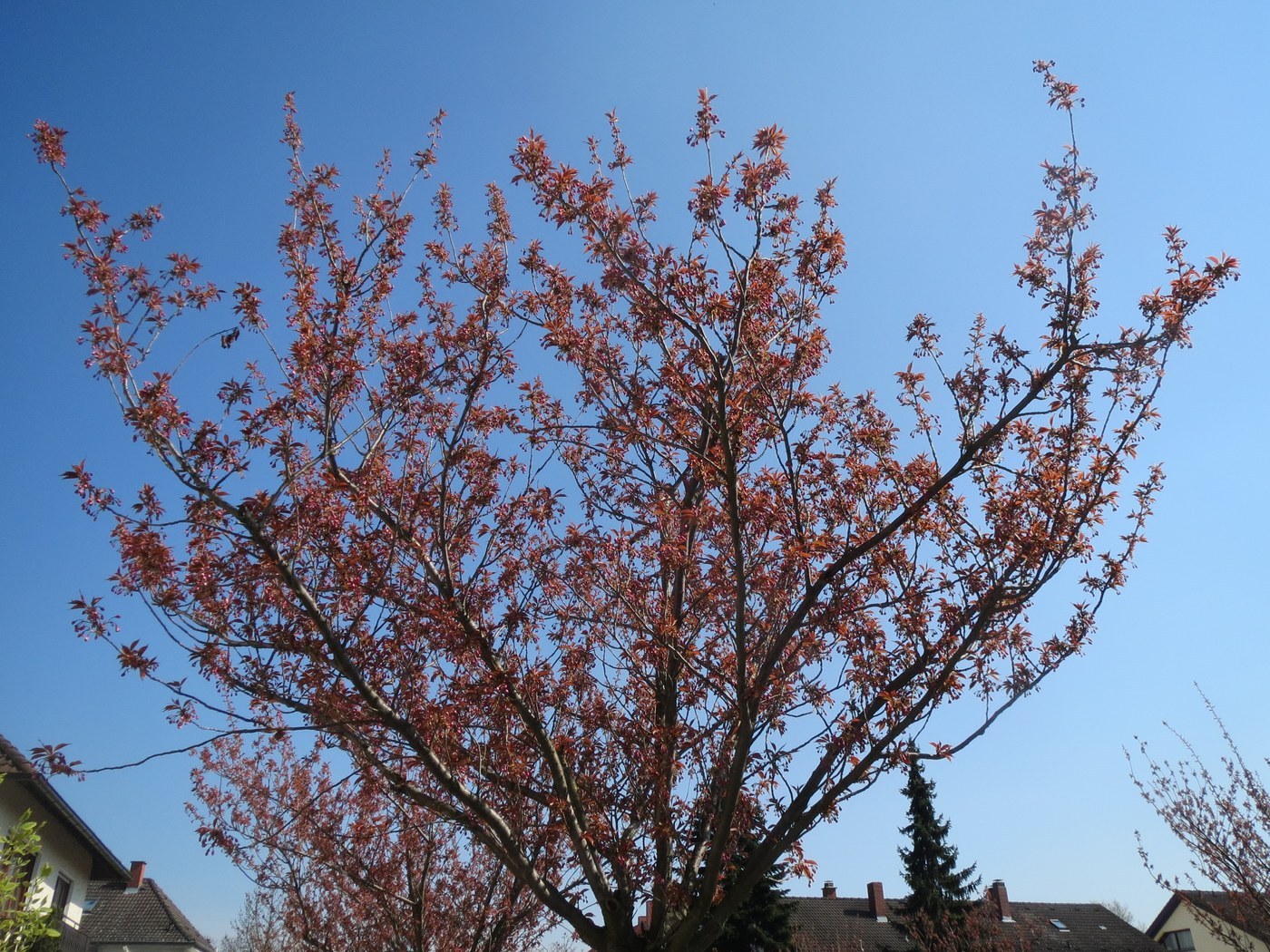
Key Identifying Features
The "Cherry Blossom Tree" refers to ornamental flowering cherries in the genus Prunus — most famously Yoshino cherry (Prunus × yedoensis) and Kwanzan cherry (Prunus serrulata 'Kanzan'), the trees that fill spring parks with clouds of bloom. The unmistakable feature is the early-spring flush of pink-to-white five-petaled (or many-petaled, in doubles) blossoms that open before or with the leaves, often covering the whole crown. The bark adds confirmation: smooth, glossy reddish-brown to gray with conspicuous horizontal rows of raised lenticels (corky pores).
- Masses of pink/white spring blossoms before/with the leaves
- Smooth bark banded with horizontal lenticels
- Toothed, often finely double-serrate leaves with gland-tipped stalks
Leaves & Stems
Leaves are alternate, 2-5 inches long, oval to elliptical, with a pointed tip and finely serrated (toothed) margin — often double-serrate. A reliable cherry clue is the pair of small glands (nectaries) at the top of the leaf stalk where it meets the blade. New foliage on many ornamental cherries (especially Kwanzan) emerges bronze or coppery before turning green; fall color is yellow, orange, or red.
Twigs are slender and reddish-brown with raised lenticels. Buds are small, pointed, and clustered. A bitter-almond smell in scraped twigs or crushed leaves is typical of Prunus.
Flowers & Fruit
Flowers appear in early spring in showy clusters. Yoshino blooms are single, 5-petaled, pale pink fading to white, lightly fragrant. Kwanzan blooms are large, double, deep pink pompoms with 20-30 petals and no fruit. Wild-type and single cultivars may set small, dark cherries (drupes) in summer; heavily double ornamental cultivars are usually sterile and fruitless.
How to Tell It Apart from Look-Alikes
- Crabapples (Malus): also spring-blooming, but flowers have a different structure and the bark lacks the prominent horizontal lenticel bands; crabapples bear pomes (mini apples), not cherries.
- Plums (Prunus): closely related; flowers usually white and leaves differ, but bark is similar — use flower color/doubling and habit.
- Ornamental pear (Pyrus calleryana): white flowers with an unpleasant smell and glossy leaves; cherry blossoms are pink-tinged with lenticel-banded bark.
Horizontal lenticel bark + early pink blossoms + gland-tipped serrate leaves points firmly to a flowering cherry.
Where You'll Find It
Flowering cherries are planted ornamentals in parks, streets, campuses, and gardens across temperate regions worldwide — the famous Washington, D.C. and Japanese hanami displays are Yoshino cherries. They are native to and most associated with East Asia (Japan, China, Korea). They favor full sun and moist, well-drained soil and are typically short-lived, medium-sized trees (20-40 feet).
Quick ID Checklist
- Spectacular pink/white blossoms in early spring before/with leaves
- Smooth bark with horizontal lenticel bands
- Serrate leaves with glands at the top of the leaf stalk
- New leaves often bronze; doubles (Kwanzan) usually fruitless
- Bitter-almond scent in twigs/leaves
- Planted in parks, streets, and gardens
Frequently asked questions
How do I know it's a cherry and not a crabapple or plum?
Check the bark for horizontal bands of raised lenticels and the leaf stalk for a pair of small glands near the blade — both are classic cherry (Prunus) traits. Crabapples bear apple-like pomes, not cherries.
What's the difference between Yoshino and Kwanzan cherries?
Yoshino has single, 5-petaled pale-pink-to-white flowers and an airy spreading habit; Kwanzan has large, double, deep-pink pompom flowers, bronzy new leaves, and an upright vase shape, and it sets no fruit.
When do cherry blossoms bloom?
In early spring, typically before or as the leaves emerge, with the whole crown covered in flowers for only one to two weeks.
How can I recognize cherry bark?
Flowering cherry bark is smooth and glossy reddish-brown to gray with conspicuous horizontal rows of raised lenticels (corky pores), a reliable year-round identification clue.