
Chinquapin Oak Identification Guide
How to identify Chinquapin Oak (Quercus muehlenbergii) by its chestnut-like coarsely toothed (not lobed) leaves and flaky gray limestone-loving bark.
Read the full Chinquapin Oak encyclopedia entry →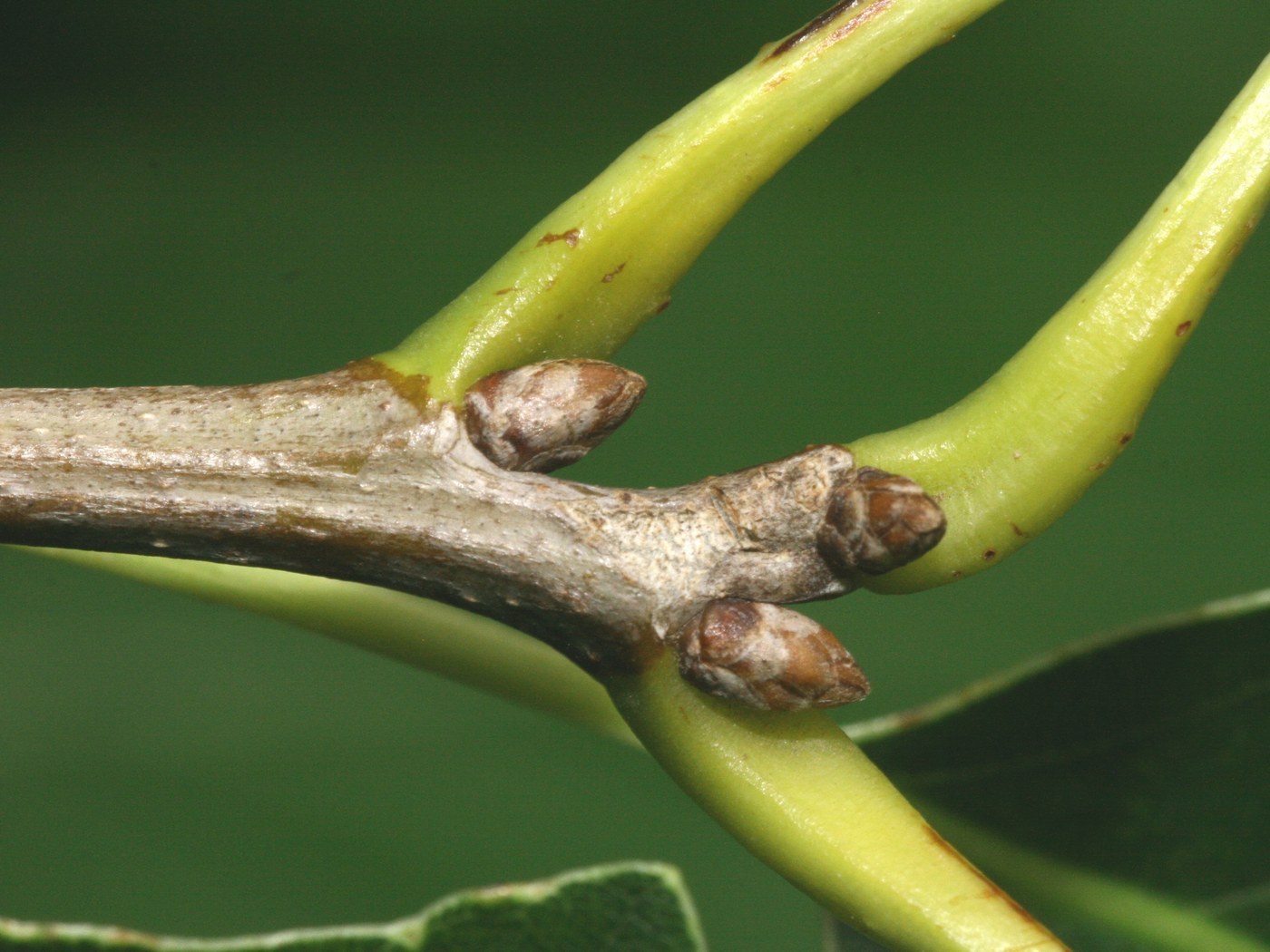
Key Identifying Features
Chinquapin Oak (Quercus muehlenbergii) is a white-oak-group tree, 40-70 feet tall, easily separated from most oaks because its leaves are coarsely toothed rather than lobed, resembling a chestnut or chinquapin leaf (hence the name). Each tooth is sharp and incurved, giving the leaf margin a saw-edged look. Combine the chestnut-like leaf with flaky, ashy-gray bark and you have a confident ID.
- Leaves toothed, not lobed, chestnut-like
- Each marginal tooth sharp and slightly incurved, often gland-tipped
- Flaky, light silvery-gray bark; frequent on limestone soils
Leaves & Stems
Leaves are 4-7 inches long, oblong to lance-shaped, with 8-13 pairs of coarse, pointed teeth along each margin. The teeth curve slightly forward and lack the bristle tips of red-group oaks. The upper surface is yellow-green and lustrous; the underside is paler, finely downy, and often whitish. Fall color ranges from yellow to orange-brown.
Twigs are slender, orange-brown to gray. Buds are small, rounded, sharp-pointed, and chestnut-brown. The bark is distinctive — thin, flaky, and ashy gray to silvery, breaking into loose, narrow scales, quite unlike the blocky bark of white oak.
Flowers & Fruit
Yellow-green catkins hang at branch bases in spring. The acorn is small (1/2-3/4 inch), oval, dark brown, and seated in a thin, bowl-shaped cap that covers about half the nut. Acorns mature in a single season (white oak group).
How to Tell It Apart from Look-Alikes
- Chestnut oak (Quercus montana/prinus): leaves are larger with rounded, wavy teeth and the bark is dark, deeply ridged; chinquapin teeth are sharper and bark is pale and flaky.
- Swamp chestnut oak: similar toothed leaves but broader with rounded teeth, on wet bottomlands; chinquapin favors dry limestone uplands.
- American chestnut: long leaves with bristle-tipped teeth and spiny burs; chinquapin teeth lack bristles and bear acorns.
The sharp incurved teeth plus pale flaky bark on a dry, often limestone, site separates it.
Where You'll Find It
Chinquapin Oak is strongly associated with dry, rocky, alkaline (limestone) soils — bluffs, ridges, and well-drained slopes — across the eastern and central United States, from New England and the Midwest south to Mexico and west into Texas and New Mexico. Its preference for limestone makes it a useful indicator of calcareous soils.
Quick ID Checklist
- Leaves coarsely toothed (chestnut-like), not lobed
- 8-13 sharp, incurved teeth per side, no bristles
- Underside pale and downy
- Flaky, ashy-gray to silvery bark
- Small single-season acorn
- Dry, rocky, limestone-rich upland sites
Frequently asked questions
How do I tell chinquapin oak from chestnut oak?
Look at the teeth and bark: chinquapin has sharp, pointed, incurved teeth and thin, flaky silvery-gray bark, while chestnut oak has rounded, wavy teeth and dark, deeply furrowed ridged bark.
Why does chinquapin oak indicate limestone soil?
It is strongly tied to dry, alkaline, calcareous soils, so finding it on rocky bluffs often signals underlying limestone bedrock.
Is chinquapin oak related to the chinquapin chestnut?
No, it just resembles it. The leaves look chestnut-like, but it is a true oak (Quercus) that bears acorns, not the spiny burs of a chinquapin chestnut.