
How to Care for Chokeberry
An adaptable native shrub with spring flowers, glossy dark fruit, and brilliant fall color that tolerates sun, shade, wet, and dry soils.
Read the full Chokeberry encyclopedia entry →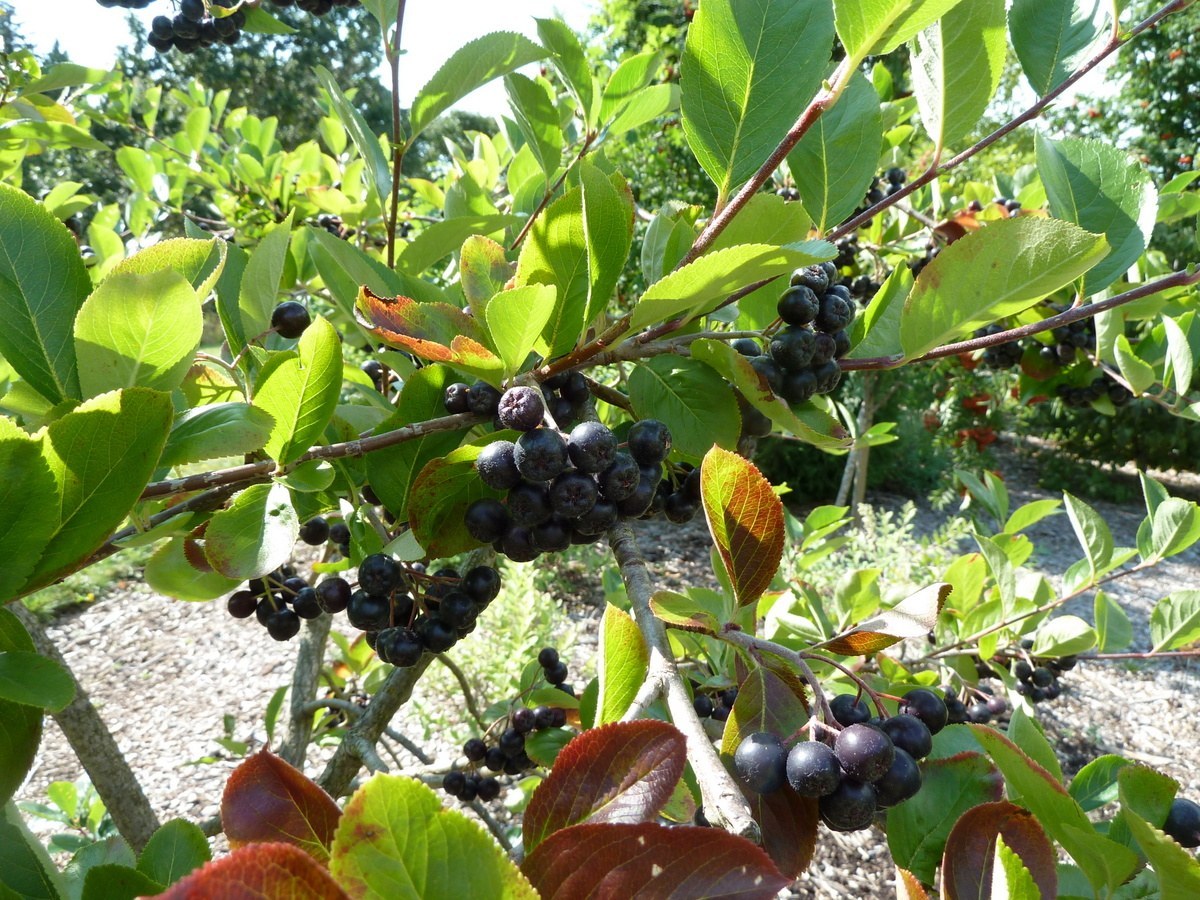
Chokeberry (Aronia melanocarpa) is a tough, adaptable native shrub grown for its clusters of white spring flowers, glossy dark ornamental berries, and spectacular fiery red-purple autumn foliage. It is an easy, forgiving landscape plant that copes with a wide range of conditions.
Light
Chokeberry grows in full sun to part shade. For the heaviest flowering, richest fruit set, and most brilliant fall color, give it full sun. It still performs respectably in partial shade, though bloom and berry display are somewhat reduced and the autumn tints are less intense. A sunny to lightly shaded spot brings out its best ornamental show.
Water
This shrub is remarkably adaptable to moisture, tolerating both wet and dry soils. Aim for moderate, even watering, especially while it establishes in its first year or two. Once settled it handles occasional drought and even periodically boggy ground, which makes it useful for rain gardens and difficult wet spots. Deep, occasional watering beats frequent shallow sprinkling.
Soil & Potting
Chokeberry is not picky about soil and accepts clay, loam, or sandy ground, wet or dry, preferring a slightly acidic pH. Enriching the planting hole with organic matter helps it establish and improves fruiting. It is a medium-sized suckering shrub best planted in the landscape, where it can form an attractive naturalized colony over time in tougher soils.
Humidity & Temperature
A very cold-hardy shrub, chokeberry withstands harsh winters with ease and needs no protection in most temperate climates. It is unbothered by normal humidity levels and adapts to a broad temperature range. Its natural toughness makes it a reliable choice for exposed sites, cold regions, and low-maintenance plantings where fussier shrubs would struggle.
Feeding
Chokeberry is a light feeder that thrives with minimal fertilizing. A single application of balanced or slow-release fertilizer in early spring, or an annual mulch of compost, is generally sufficient. Overfeeding, especially with high nitrogen, encourages leafy growth at the expense of flowers and fruit, so keep feeding modest for the best ornamental display.
Propagation
Chokeberry propagates several ways. It naturally spreads by suckers, which can be dug up with roots attached and transplanted — the easiest method. Softwood cuttings taken in early summer root fairly readily under humid conditions. Seed is also viable but requires cold, moist stratification and takes longer to reach flowering and fruiting size than division or cuttings.
Repotting / Pruning
Prune in late winter or early spring while dormant. Remove dead, damaged, or crossing stems and thin out the oldest wood at the base to renew the shrub and keep it vigorous and open. To limit spread, dig out unwanted suckers around the perimeter. Chokeberry tolerates fairly hard rejuvenation pruning well and resprouts strongly from the base.
Common Problems & Pests
One of chokeberry's great virtues is its resistance to pests and disease — problems are few. In poorly drained, crowded conditions it may occasionally show leaf spot or minor fungal issues; improve airflow and clean up fallen leaves. Watch for the usual shrub pests like aphids on new growth, but serious infestations are uncommon on this resilient native.
Seasonal Care Tips
In early spring, prune while dormant, mulch, and enjoy the white flower clusters. Through summer, water moderately as fruit develops and colors up. Autumn brings the shrub's showstopping red-purple foliage and glossy berries — a highlight of the season. In winter the bare, hardy framework needs no special care and stands up to cold with ease.
Frequently asked questions
Does chokeberry need full sun?
It grows in full sun to part shade, but full sun gives the best flowering, fruit set, and fall color. In shade the ornamental display is noticeably reduced.
Can chokeberry handle wet soil?
Yes. It is unusually adaptable, tolerating both wet and dry soils, which makes it excellent for rain gardens and difficult damp spots as well as ordinary borders.
How and when should I prune chokeberry?
Prune in late winter or early spring while dormant. Remove dead or crossing stems and thin the oldest wood at the base to renew vigor. It tolerates hard pruning well.
How do I propagate chokeberry?
The easiest way is to dig and transplant its natural rooted suckers. Softwood cuttings in early summer also root well, and seed works with cold stratification.