
Cholla Cactus Identification Guide
Identify Cholla Cactus (Cylindropuntia) by its cylindrical, segmented, jointed branches covered in barbed spines and papery spine sheaths.
Read the full Cholla Cactus encyclopedia entry →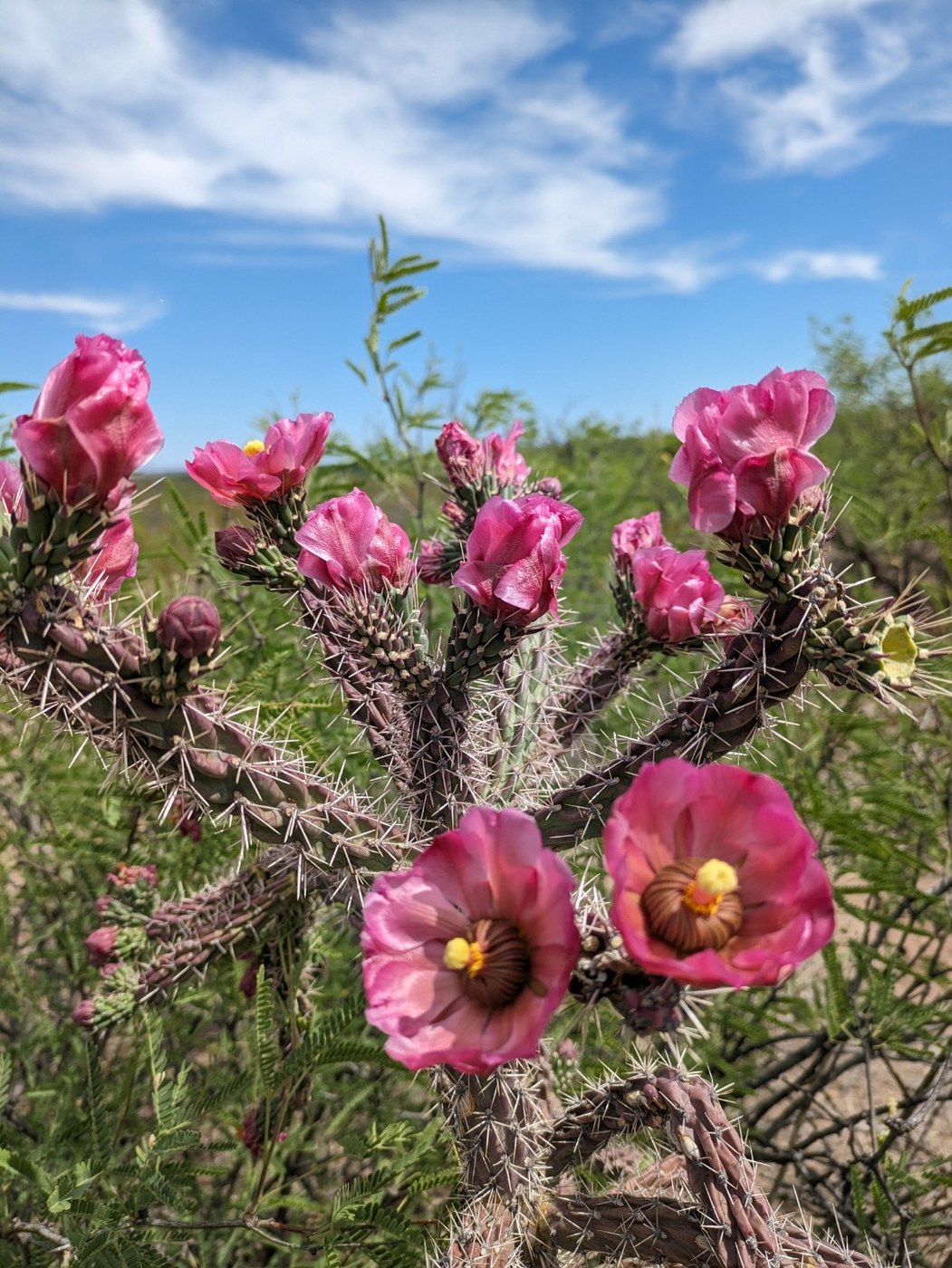
Key Identifying Features
Cholla Cactus (genus Cylindropuntia) is a group of desert cacti recognized by their cylindrical, jointed, segmented branches that look like a series of spiny tubes linked end to end. Unlike flat-padded prickly pears, chollas have round, rod-like stem segments, and many species are infamous for barbed spines covered in papery sheaths.
- Cylindrical (round in cross-section) stem segments joined into branching arms
- Segments covered in tubercles and barbed spines
- Spines often wrapped in papery, straw-colored sheaths (a key cholla trait)
- Shrubby to small-tree habit, sometimes forming dense thickets
Leaves & Stems
Chollas have tiny, quickly-shed cylindrical leaves, so for ID purposes the green cylindrical stems are what you see. The stems grow in segments (joints) that detach easily — especially in "jumping cholla" types, where barbed segments cling to anything that brushes past, aiding dispersal. The stem surface bears raised tubercles, each with an areole producing stiff barbed spines and tufts of irritating glochids (tiny barbed bristles). The papery sheath that covers each spine, easily peeled, is one of the most reliable cholla identifiers and distinguishes Cylindropuntia from other cacti.
Flowers & Fruit
Chollas bloom in spring to summer with cup- to wheel-shaped flowers in yellow, green, bronze, pink, magenta, or red depending on species. Flowers form at the tips of segments. Fruit is fleshy or dry and spiny/tuberculate; some species produce chains of sterile fruit that proliferate vegetatively. Flower and fruit color help separate the many cholla species.
How to Tell It Apart from Look-Alikes
- Prickly Pear (Opuntia): has flat, pad-shaped segments, not cylindrical ones; both share glochids, but pad shape is the clear divider.
- Other columnar cacti (Cereus, etc.): grow as continuous unsegmented ribbed columns, whereas cholla branches are clearly jointed into detachable segments.
- Pencil cactus/euphorbias: lack spines, areoles, and the papery sheaths, and have milky sap.
Where You'll Find It
Chollas are native to the deserts and arid grasslands of the southwestern United States, Mexico, and the Caribbean. You'll find them on rocky slopes, desert flats, and bajadas. In cultivation they appear in xeriscapes and desert botanical gardens. Many form large stands; "teddy bear cholla" looks deceptively fuzzy but is densely barbed.
Quick ID Checklist
- Cylindrical, round-section stem segments (not flat pads)
- Branches clearly jointed/segmented
- Spines with papery, peelable sheaths
- Glochids and barbed spines on tubercles
- Cup/wheel-shaped flowers (varied colors) at segment tips
- Desert shrub or small-tree habit
Caution: Cholla segments detach and barb into skin with painful, hard-to-remove spines. Never touch — use a comb or pliers to remove stuck segments.
Frequently asked questions
How is Cholla different from Prickly Pear?
Both are in the Opuntioideae and have glochids, but Cholla (Cylindropuntia) has cylindrical, rod-like stem segments, while Prickly Pear (Opuntia) has flat, paddle-shaped pads.
Why is it called 'jumping cholla'?
Some chollas have loosely attached, barbed segments that detach at the slightest contact and cling to skin, fur, or clothing, making it seem as if the cactus 'jumped' onto you.
What is the papery covering on the spines?
Chollas produce a thin, papery sheath over each spine, usually straw or tan colored, that peels off easily. This sheath is a distinctive feature of the genus Cylindropuntia.
Are cholla spines dangerous?
Yes. The barbed spines lodge firmly in skin and are very painful and difficult to remove, and the tiny glochids cause persistent irritation. Use a comb or pliers, never bare hands, to remove stuck segments.