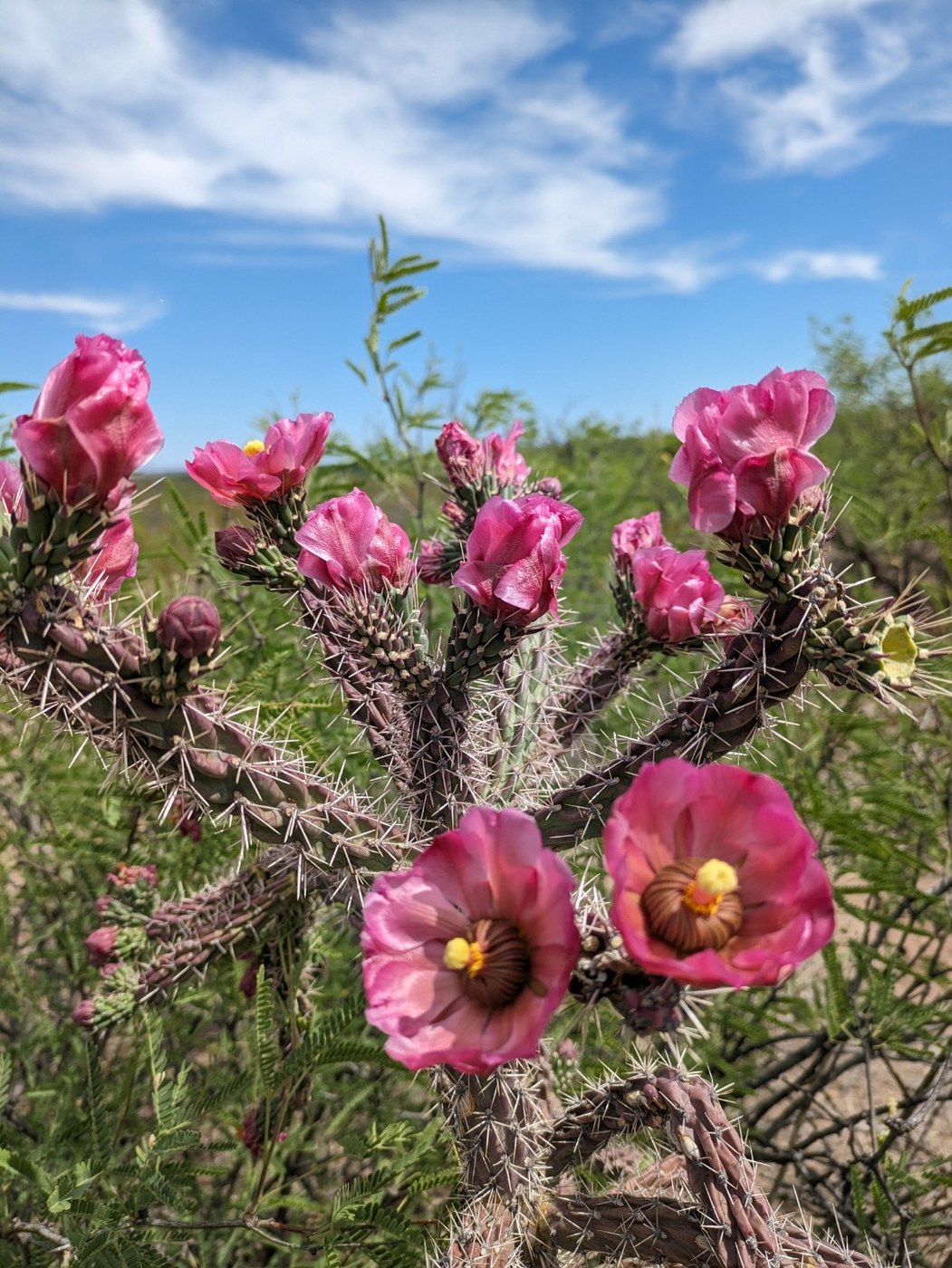
Cholla Cactus
Cylindropuntia
A group of shrubby to treelike desert cacti with cylindrical, jointed segments and barbed spines that detach easily. Iconic plants of the American Southwest deserts.
- Light
- Full sun
- Water
- Very sparingly; drought tolerant
- Difficulty
- Easy
Got a plant like this?
Identify any plant from a photo, free.
Overview
Cholla is the common name for cacti in the genus Cylindropuntia, distinguished by their cylindrical, segmented stems rather than the flat pads of their prickly pear relatives. They range from low shrubs to small trees and are signature plants of the deserts of the southwestern United States and Mexico.
Many chollas are armored with sharp, barbed spines covered in papery sheaths; in 'jumping' and 'teddy bear' chollas the segments detach at the slightest contact and cling stubbornly to skin and clothing, giving the illusion of leaping. They produce colorful flowers and spiny fruit.
The woody internal skeletons of dead cholla stems form a distinctive lattice tube often used in crafts.
How to identify it
- Stems: Cylindrical, jointed segments rather than flat pads, branching into shrub or tree forms
- Spines: Barbed, often with detachable papery sheaths; segments break off easily in some species
- Flowers: Showy, in yellow, green, pink, magenta, or red, blooming in spring to early summer
- Fruit: Spiny or knobby, sometimes chained
- Size: From low shrubs under 3 ft to tree forms over 10 ft
- Skeleton: Dead stems leave a hollow woody lattice tube
Care & growing
Light: Full sun; chollas are true desert plants needing maximum light.
Water: Very little once established; they are extremely drought tolerant and rot easily if overwatered.
Soil: Sandy, gravelly, sharply draining soil.
Temperature: Heat-loving; many species tolerate considerable cold and frost when dry.
Feeding: Generally unnecessary.
Propagation: Extremely easy from detached stem segments, which root where they fall.
Habitat & origin
Native to the deserts and arid scrublands of the southwestern United States, Mexico, and parts of South America and the Caribbean, where various species dominate desert flats, slopes, and washes.
They are key components of Sonoran and Chihuahuan desert ecosystems and are grown in xeriscape and desert gardens in dry climates.
Frequently asked questions
Do cholla segments really jump?
No, but the barbed segments of jumping and teddy bear chollas detach at the lightest brush and cling so readily that they seem to leap onto passersby.
How do chollas differ from prickly pears?
Both are cacti, but chollas have cylindrical, jointed stem segments, while prickly pears have flat, paddle-like pads.
How do chollas reproduce?
Both by seed and very easily from fallen stem segments, which root readily wherever they land.
Where do chollas grow?
They are native to deserts and arid scrublands of the southwestern United States, Mexico, and parts of South America and the Caribbean, favoring sunny flats, slopes, and washes.
Cholla Cactus guides
In-depth guides for identifying, growing, and caring for Cholla Cactus.
How to Care for Cholla Cactus
Care for cholla cactus (Cylindropuntia), a rugged, drought-tolerant desert cactus with cylindrical segmented stems that thrives in full sun.
Cholla Cactus Identification Guide
Identify Cholla Cactus (Cylindropuntia) by its cylindrical, segmented, jointed branches covered in barbed spines and papery spine sheaths.