Christmas Cactus Identification Guide
Identify the Christmas Cactus (Schlumbergera) by its flattened, segmented stems and tubular winter blooms that hang from arching branches.
Read the full Christmas Cactus encyclopedia entry →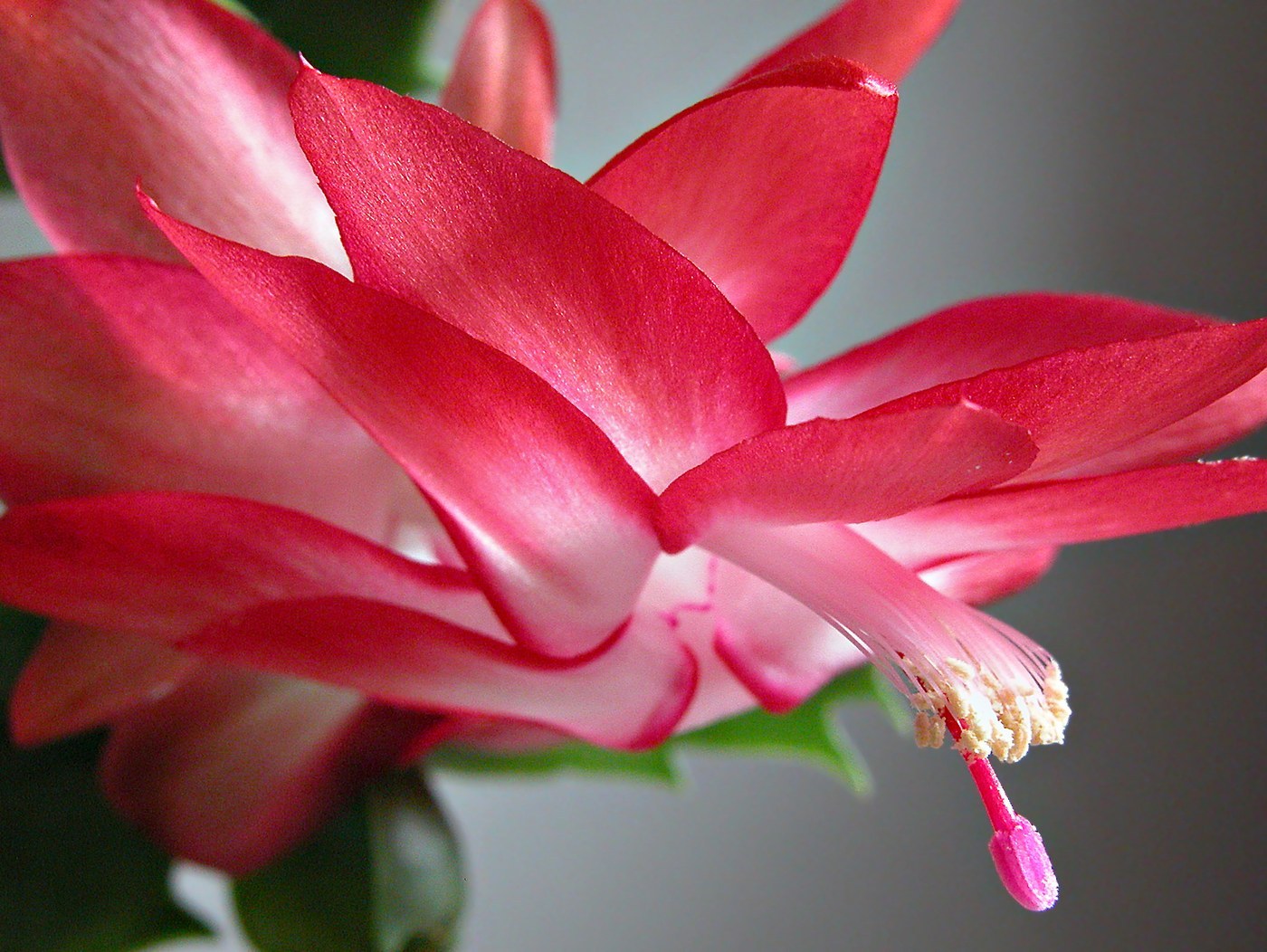
Key Identifying Features
The Christmas Cactus (Schlumbergera) is a spineless, leafless cactus from the cloud forests of Brazil, grown for its winter flowers. Unlike desert cacti, it is an epiphyte that grows on trees, and its body is made entirely of flattened, jointed green stem segments.
- Stems form chains of flat, leaf-like pads (cladodes)
- Pads have scalloped, rounded teeth along the edges (the key trait separating it from Thanksgiving cactus)
- Tubular, multi-tiered flowers bloom in late autumn to winter
Leaves & Stems
There are no true leaves. What looks like leaves are segmented stems:
- Each segment is flat, oblong, 3-5 cm long, smooth, and bright to deep green
- Segments are linked end-to-end, branching into arching, pendulous chains
- Edges of the true Christmas cactus (S. x buckleyi) are gently scalloped and rounded, while the similar Thanksgiving cactus (S. truncata) has sharp, claw-like points
- Tiny tufts of fuzz (areoles) sit at segment joints and tips
Flowers & Fruit
The blooms are spectacular and diagnostic:
- Tubular, double-tiered flowers that look like one flower nested inside another
- Colors include pink, red, magenta, white, orange, and salmon
- Flowers emerge from the tips of the terminal segments and hang downward
- Protruding stamens and a long style give a delicate, dangling form
- Bloom time is November-January in the Northern Hemisphere, triggered by long nights and cool temperatures
How to Tell It Apart from Look-Alikes
- Thanksgiving cactus (S. truncata): has pointed, toothed segment edges and blooms about a month earlier; the true Christmas cactus has rounded scallops.
- Easter cactus (Rhipsalidopsis): has more rounded segments with bristly tips and blooms in spring with star-shaped (not tiered) flowers.
- Desert cacti: are spiny and ribbed; Schlumbergera is spineless with flat segmented pads.
Where You'll Find It
Almost always a houseplant, the Christmas Cactus is a classic holiday gift plant. In the wild it grows as an epiphyte on tree branches and rocks in the humid, shaded mountains of southeastern Brazil. Indoors it thrives in bright indirect light and is famously long-lived, passed down for generations.
Quick ID Checklist
- Flat, segmented green stems instead of leaves
- Scalloped, rounded segment edges (Christmas) vs. pointed (Thanksgiving)
- No spines
- Tubular, tiered flowers hanging from segment tips
- Blooms in late autumn/winter
The spineless, jointed pads plus pendulous winter flowers make Schlumbergera unmistakable.
Frequently asked questions
How do I tell a Christmas cactus from a Thanksgiving cactus?
Look at the stem segment edges: the true Christmas cactus (Schlumbergera x buckleyi) has smooth, rounded, scalloped margins, while the Thanksgiving cactus (S. truncata) has sharp, claw-like points. The Thanksgiving type also blooms about a month earlier.
Does a Christmas cactus have spines?
No. Unlike desert cacti, Schlumbergera is spineless, with only tiny soft bristles at the segment joints. Its body is made of flat, jointed stem pads, which is a quick way to identify it.
What do the flowers look like?
They are tubular and appear double-tiered, as if one flower is nested inside another, and they dangle from the tips of the stem segments in shades of pink, red, white, orange, or magenta during late autumn and winter.
Why are the 'leaves' actually stems?
Christmas cactus has no true leaves. The flat green segments are photosynthetic stems called cladodes, an adaptation that lets this epiphytic cactus thrive in shady forest canopies.
Christmas Cactus identified by the community
Recent Christmas Cactus specimens identified with Plant Identifier.