Christmas Cactus
Schlumbergera bridgesii
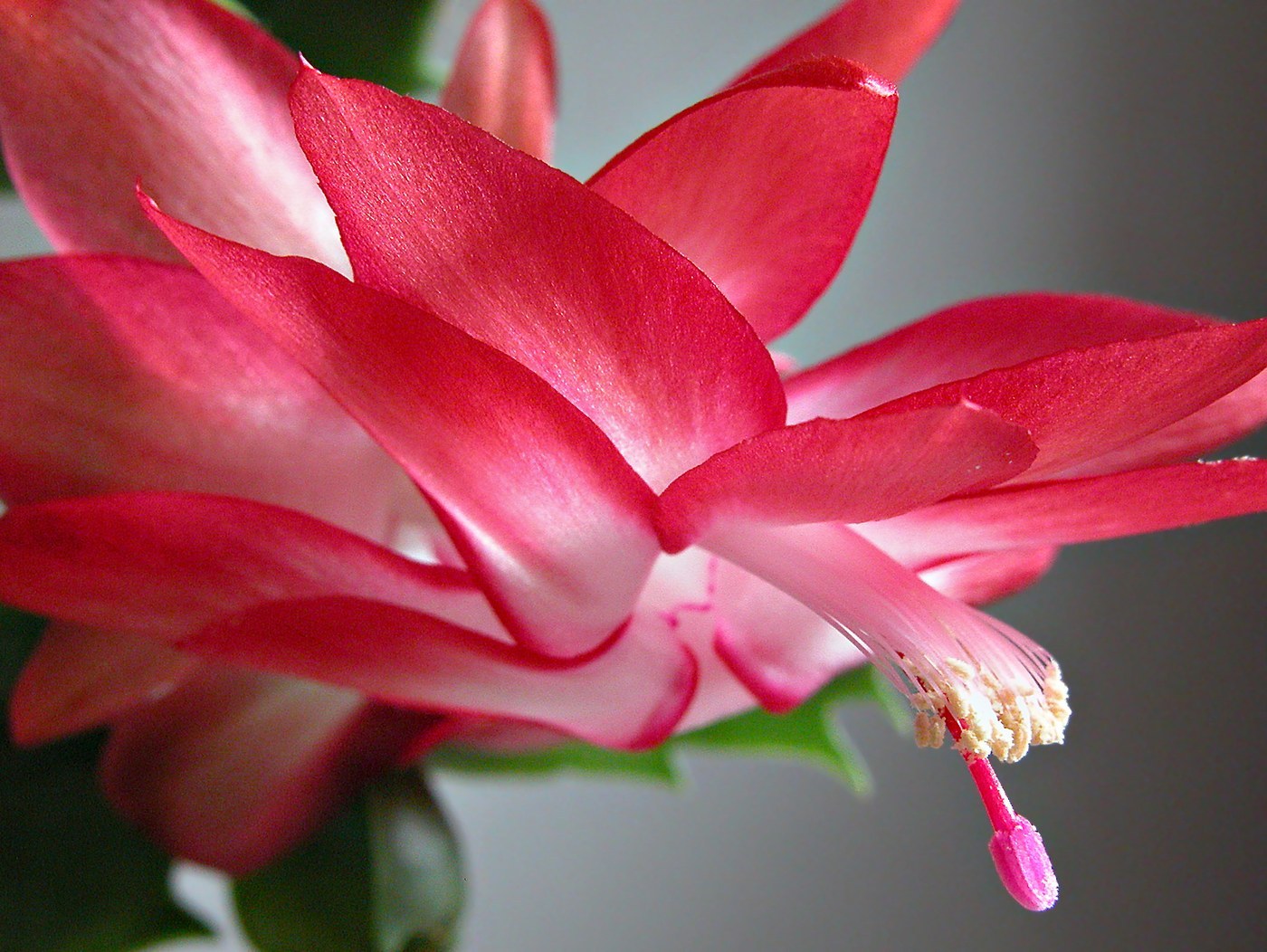
The Christmas cactus is a Brazilian forest cactus that bursts into tubular pink, red, or white blooms in early winter. Unlike desert cacti, it likes humidity and regular water.
- Light
- Bright indirect light
- Water
- When top inch dries; more when budding
- Difficulty
- Easy
Got a plant like this?
Identify any plant from a photo, free.
Overview
Schlumbergera is a genus of epiphytic cacti from Brazil, grown for their spectacular winter flowers and trailing, segmented stems. The common Christmas cactus blooms around the December holidays, while the closely related Thanksgiving cactus flowers slightly earlier.
Unlike desert cacti, these plants grow naturally on tree branches and shaded rocks in humid forests, so they prefer richer soil, more water, and filtered light. They are long-lived and can be passed down for generations.
Flowering is triggered by cool temperatures and long nights in autumn.
How to identify it
Recognize a Christmas cactus by:
- Stems: flattened, segmented green pads (cladodes) joined end to end, trailing with age
- Segment edges: rounded, scalloped notches (Thanksgiving cactus has pointed, claw-like teeth)
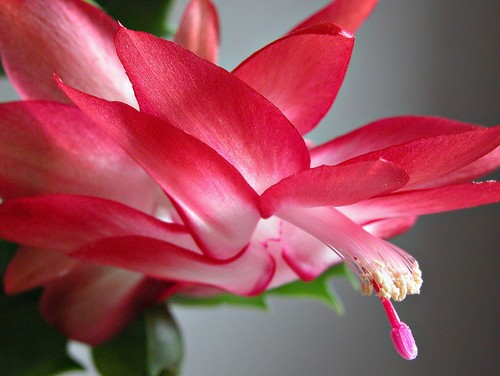
- Flowers: tubular, multi-tiered blooms in pink, red, white, orange, or purple
- No true leaves or spines: photosynthesis occurs in the flattened stems
- Habit: arching, cascading, well suited to hanging baskets
Care & growing
- Light: bright, indirect light; protect from hot direct sun
- Water: water when the top inch of soil dries; keep slightly moister while budding and blooming
- Humidity: moderate to high; appreciates a pebble tray
- Soil: well-draining mix, such as potting soil amended with perlite or orchid bark
- Temperature: 60-70 degrees F; cool 50-55 degree nights in fall help set buds
- Feeding: feed monthly spring through summer; stop while blooming
- Propagation: very easy from segment cuttings; let them callus a day, then root in soil
Habitat & origin
The Christmas cactus is native to the coastal mountains of southeastern Brazil, where it grows as an epiphyte on trees and in rock crevices in shaded, humid forest at moderate elevation.
It is cultivated worldwide as a popular flowering houseplant, especially prized as a holiday gift plant in temperate regions.
Frequently asked questions
How do I make my Christmas cactus bloom?
Give it about six weeks of long, uninterrupted nights (14+ hours of darkness) and cool temperatures around 50-55 degrees F in fall. This shorter-day, cooler period triggers bud formation.
Why are the buds falling off before opening?
Bud drop is usually caused by sudden changes in light, temperature, or watering. Keep the plant in a stable spot and water consistently once buds form.
Is it really a cactus if it likes water?
Yes, but it is a tropical forest (epiphytic) cactus, not a desert one. It evolved on humid tree branches, so it needs more water and humidity than spiny desert cacti.
Christmas or Thanksgiving cactus, how do I tell?
Check the stem segment edges: rounded, scalloped notches indicate a true Christmas cactus, while sharp, pointed, claw-like teeth indicate a Thanksgiving cactus.
Christmas Cactus guides
In-depth guides for identifying, growing, and caring for Christmas Cactus.
How to Care for Christmas Cactus
Care guide for Schlumbergera bridgesii, an easy tropical cactus with segmented stems and vivid winter blooms.
Christmas Cactus Identification Guide
Identify the Christmas Cactus (Schlumbergera) by its flattened, segmented stems and tubular winter blooms that hang from arching branches.
Christmas Cactus identified by the community
Real specimens identified with Plant Identifier.