
Coast Redwood Identification Guide
Recognize coast redwood by its flat two-ranked needles, fibrous reddish bark, and small cones on the tallest trees on Earth.
Read the full Coast Redwood encyclopedia entry →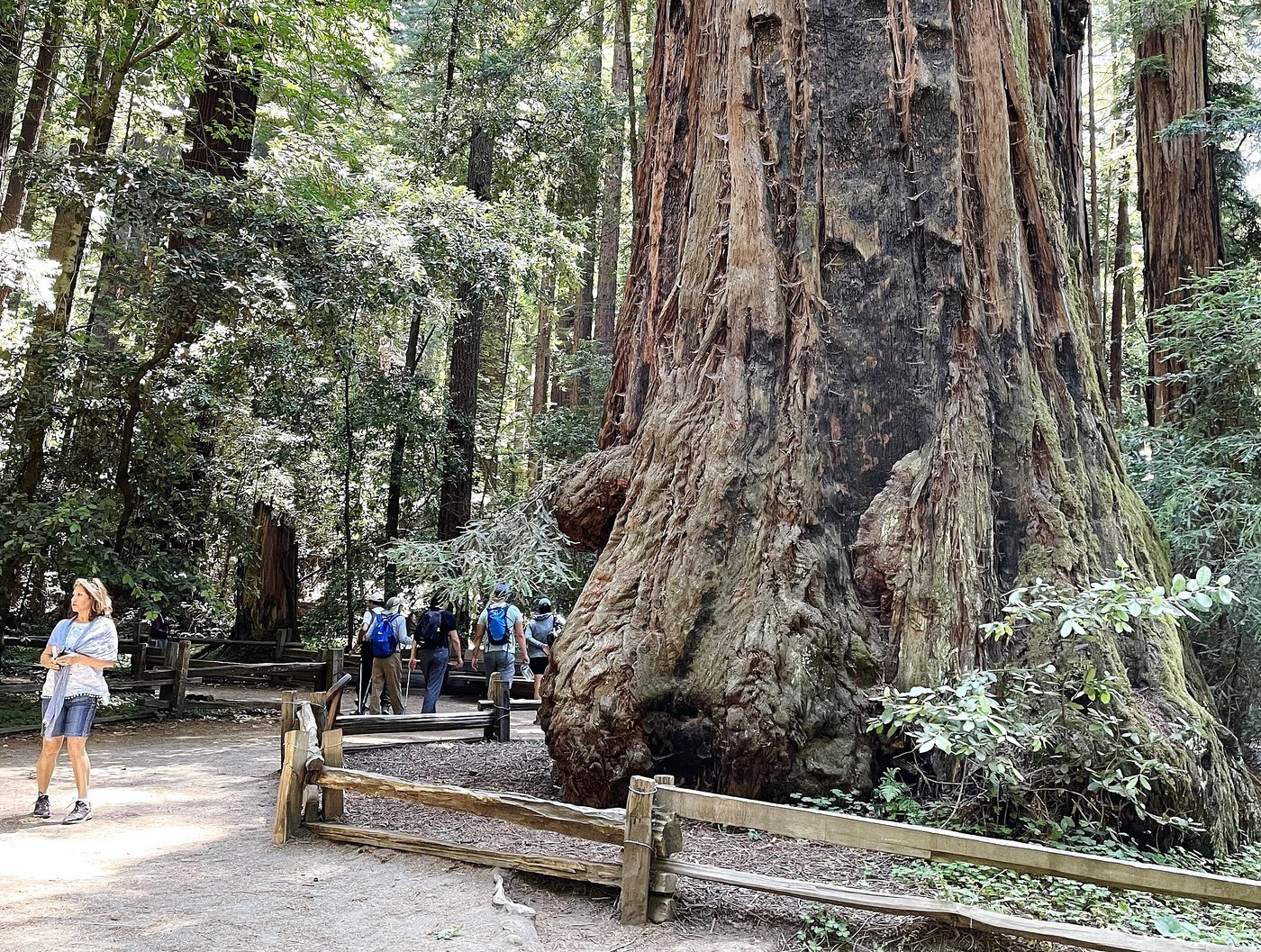
Key Identifying Features
Coast redwood (Sequoia sempervirens) is the tallest tree species on Earth, native to the foggy coastal belt of northern California and southern Oregon.
- Flat, needle-like leaves arranged in two flat rows (feather-like sprays) on most shoots
- Thick, fibrous, reddish-brown bark that is soft and furrowed
- Small, oval woody cones (about 2-3 cm)
- Extremely tall, straight columnar trunk; often sprouts in rings from a parent stump
Leaves & Stems
Most foliage consists of flat needles 1-2.5 cm long, dark green above with two whitish stomatal bands beneath, spreading in two opposite rows (two-ranked) along the twig like a flat spray, resembling a hemlock or yew. Leading shoots and cone-bearing twigs may instead carry shorter, scale-like or awl leaves, so a single tree can show two leaf forms.
The bark is thick (up to 30 cm), fibrous, soft, and reddish-brown to cinnamon, deeply furrowed and fire-resistant. The trunk is straight and strongly buttressed at the base. A diagnostic habit is stump-sprouting: new trunks emerge in circles around old stumps ("fairy rings"), and burls are common.
Flowers & Fruit
Tiny pollen cones release pollen in winter. The seed cones are small, oval to round, 1.5-3 cm long, reddish-brown, with about 15-25 wrinkled scales, maturing in a single season. Each cone holds many tiny winged seeds. Despite the tree's enormous size, the cones are roughly the size of an olive.
How to Tell It Apart from Look-Alikes
- Giant sequoia: Has awl-shaped scale leaves pressed to the twig (not flat two-ranked needles) and grows in the Sierra Nevada, not the coast.
- Dawn redwood: Deciduous with soft needles in opposite pairs and opposite branchlets; drops its foliage in fall.
- Hemlocks / yews: Have similar flat needles but very different bark and cones (or fleshy arils in yew).
Flat two-ranked needles plus fibrous red bark in the coastal fog belt confirm coast redwood.
Where You'll Find It
Native to a narrow coastal strip from southern Oregon to central California, in moist canyons and slopes within the summer fog zone, which supplies critical moisture. Planted as an ornamental in mild, moist climates worldwide.
Quick ID Checklist
- Flat needle-like leaves in two flat rows, whitish bands beneath
- Thick fibrous reddish-brown bark
- Small oval woody cones (olive-sized)
- Very tall straight trunk, buttressed base
- Stump-sprouting in rings, coastal fog-belt habitat
Frequently asked questions
What is the easiest way to identify coast redwood?
Look at the foliage. Most shoots bear flat needles arranged in two flat rows like a feather, and the bark is thick, fibrous, and reddish-brown.
How is it different from giant sequoia?
Coast redwood has flat two-ranked needles and grows in the coastal fog belt, while giant sequoia has awl-shaped scale leaves and grows in the Sierra Nevada.
Why are there rings of trees around old stumps?
Coast redwood readily sprouts new trunks from the base of cut or fallen trees, producing circular fairy rings of clones around the original stump.
How big are redwood cones?
They are small, only about 1.5-3 cm long, roughly the size of an olive, even though the tree itself is the tallest in the world.