
How to Care for Cocklebur
A rugged, fast-growing annual of open ground: full sun and moist to average soil are all this vigorous plant asks.
Read the full Cocklebur encyclopedia entry →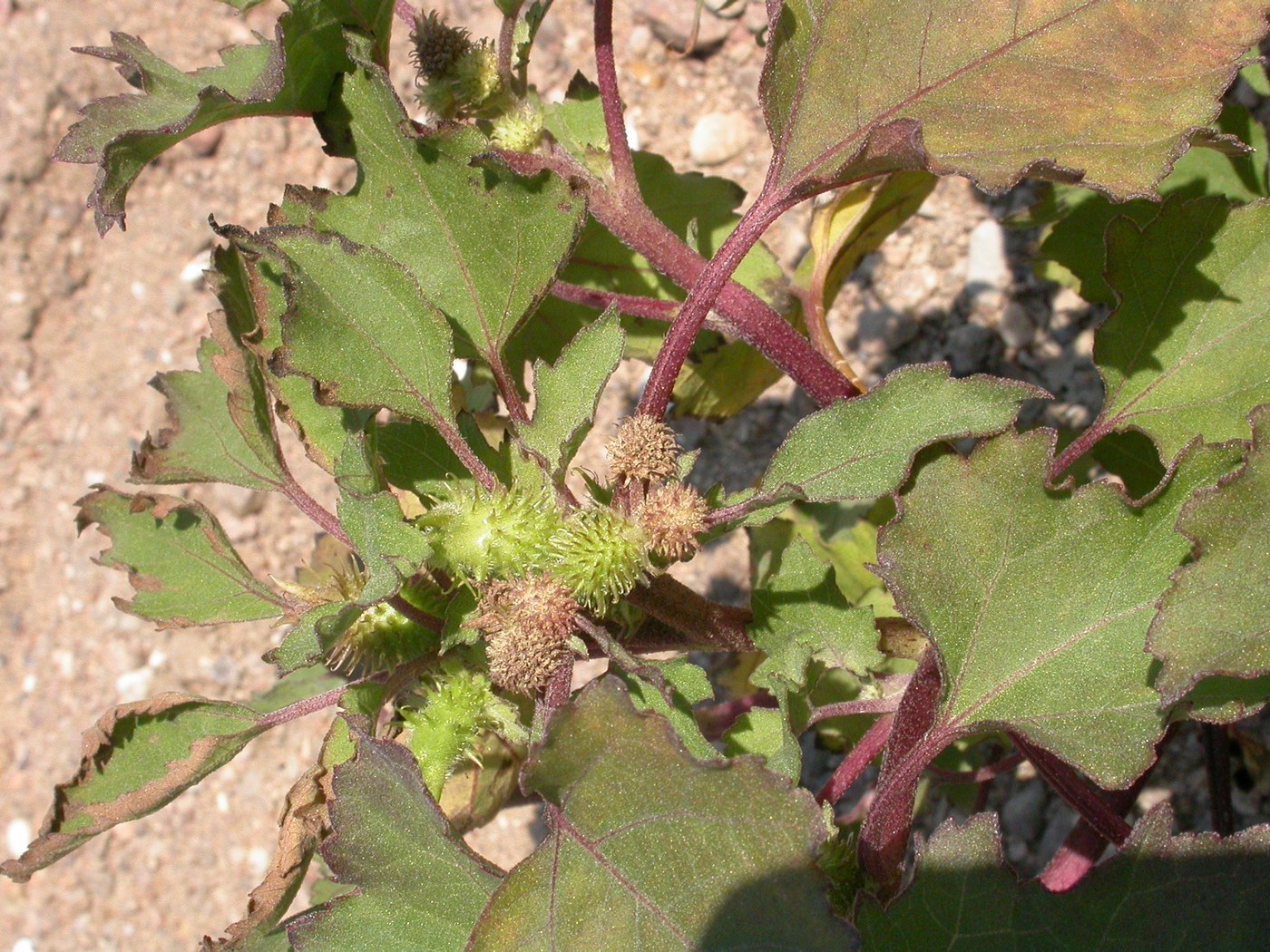
Cocklebur (Xanthium strumarium) is a coarse, fast-growing annual with broad, rough-textured leaves and distinctive spiny, hooked burs. It is an extremely undemanding plant of open, disturbed ground, and its main horticultural note is how readily it grows and spreads.
Light
Cocklebur is a full-sun plant. It thrives in open, unshaded sites and grows vigorously with all-day direct light. In shade it becomes weak and spindly and rarely reaches full size, so give it the sunniest, most exposed position available.
Water
It prefers moist to average soils and is naturally at home along riverbanks, ditches, and low ground that stays damp. Water to keep the soil from drying out completely during active growth, though established plants are tough and tolerate a fair range of conditions. It is happiest with reliable moisture but does not require constant wetness.
Soil & Potting
Undemanding about soil, cocklebur grows in a wide range from sandy to heavy clay, and tolerates poor, compacted, or disturbed ground that defeats fussier plants. It favors soils that hold some moisture. If grown in a container, use a general-purpose mix with adequate drainage; the plant's coarse taproot appreciates a deep pot.
Humidity & Temperature
A warm-season annual, cocklebur germinates and grows through the heat of late spring and summer and is killed by frost. It has no special humidity requirements and adapts to a broad range of temperature and climate conditions, provided the growing season is warm enough to complete its cycle.
Feeding
This is not a plant that needs feeding. It grows lustily even in poor, unimproved soil, and extra fertility simply produces larger plants. A cocklebur in a garden or container will thrive with little or no supplemental fertilizer.
Propagation
Cocklebur reproduces by seed carried in its hooked burs, which cling to fur, clothing, and equipment (the natural mechanism that made it the inspiration for hook-and-loop fastener design). The two seeds in each bur famously germinate in different years, spreading emergence over time. Sow seed in warm soil in a sunny spot; germination is easy. Note that this plant self-seeds prolifically and can become weedy, so many growers remove burs before they mature.
Repotting / Pruning
As a single-season annual, cocklebur is not repotted or overwintered. Its growth is generally left unpruned, though you can pinch or cut it back to limit size. The most important management task is removing the burs before they ripen and scatter, since the plant reseeds aggressively.
Common Problems & Pests
Cocklebur is robust and largely trouble-free, which is part of why it behaves as a weed. Rust and other leaf fungal spots may appear in damp, crowded conditions but rarely threaten the plant. Various leaf-feeding insects may chew the foliage without serious harm. The real management challenge is its vigor and prolific self-seeding rather than any pest or disease.
Seasonal Care Tips
Sow or allow seed to germinate in warm late-spring soil. Through summer, the plant grows quickly with moist to average soil and full sun. Burs form and ripen in late summer and autumn; remove them before they scatter if you want to prevent spread. Frost ends the plant's cycle, after which the dead stalks can be cleared.
Frequently asked questions
Is cocklebur hard to grow?
Not at all. It is a rugged, fast-growing annual that thrives in full sun with moist to average soil and needs little care. If anything, the challenge is keeping it from spreading, since it self-seeds prolifically.
How does cocklebur spread?
By its hooked burs, which catch on fur, clothing, and equipment and get carried to new ground. Each bur holds two seeds that tend to germinate in different years, staggering emergence over time.
How do I keep cocklebur from taking over?
Remove the spiny burs before they ripen and scatter, and pull unwanted seedlings while young. Because it reseeds aggressively, staying on top of bur removal each season is the key to controlling it.
What growing conditions does cocklebur prefer?
Full sun and moist to average soil suit it best. It is naturally found on damp, disturbed open ground and tolerates a wide range of soils, but it grows weak and spindly in shade.