Cocklebur
Xanthium strumarium
Cocklebur is a coarse annual weed famous for its hard, hooked burs that cling to fur and clothing. It is a serious agricultural and pasture pest.
- Light
- Full sun
- Water
- Moist to average soils
- Difficulty
- Easy
Got a plant like this?
Identify any plant from a photo, free.
Overview
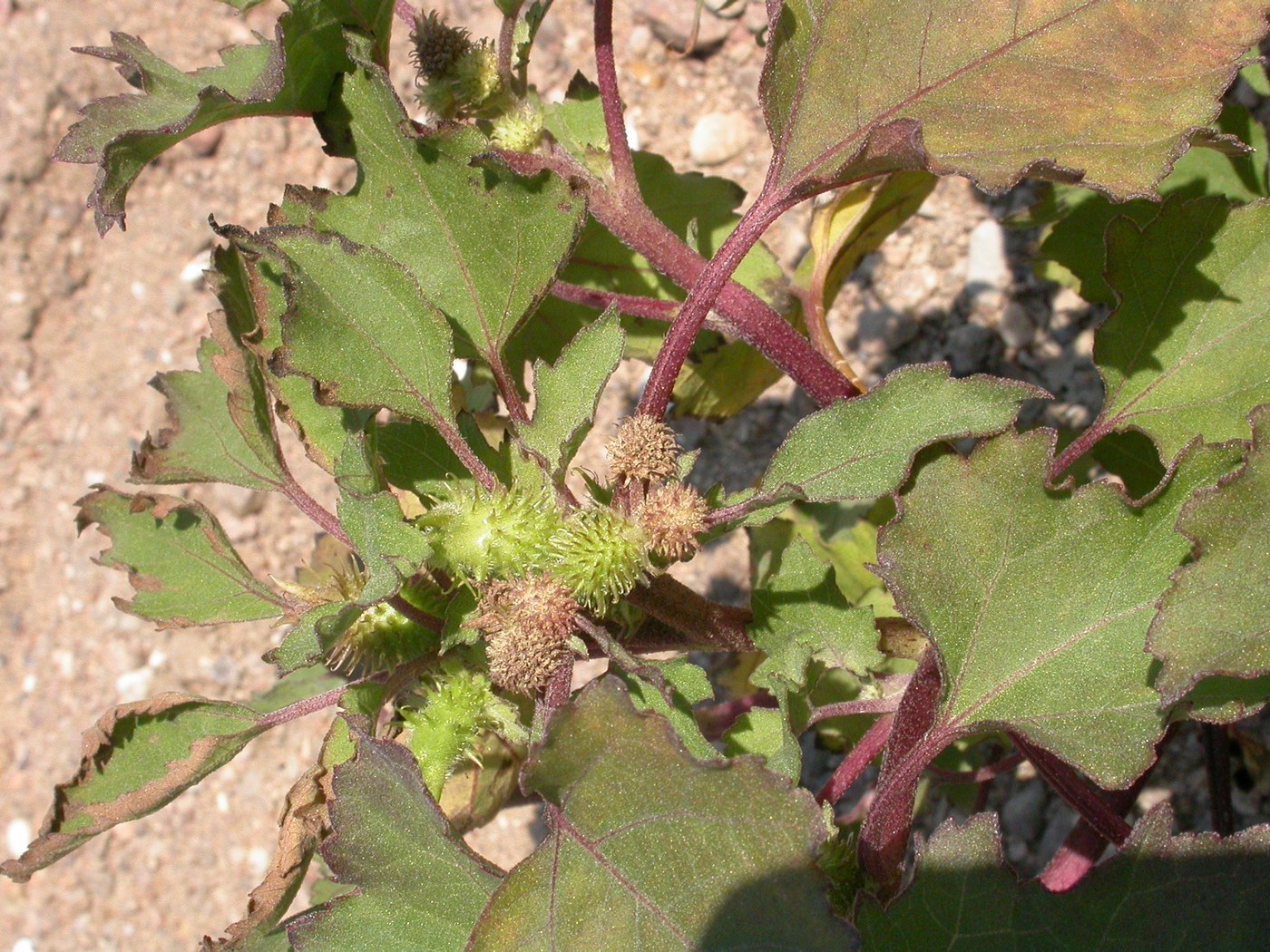
Cocklebur (Xanthium strumarium) is a coarse, branching annual weed native to the Americas and now naturalized worldwide. It is best known for its oval, spiny burs, which are covered in hooked prickles that catch on animal fur, clothing, and machinery, dispersing the seeds widely.
The plant grows quickly in disturbed, often moist ground and can reach several feet tall. Its hooked burs were a famous inspiration in the history of Velcro, whose inventor studied how the burs grip fibers.
Cocklebur is a notable agricultural and pasture weed that competes vigorously in disturbed and cultivated ground.
How to identify it
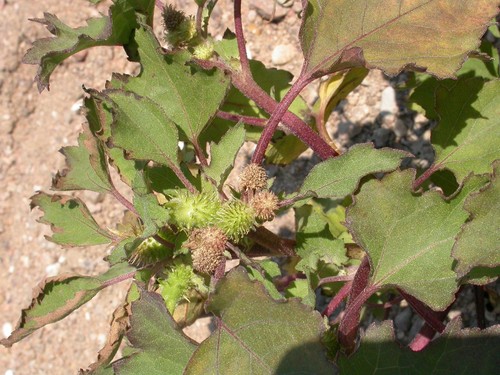
Recognize cocklebur by its rough triangular leaves and hard, hooked oval burs.
- Burs: Oval, about 1 inch long, densely covered with hooked spines and two longer beaks at the tip
- Leaves: Large, rough, triangular to heart-shaped, with toothed or lobed margins and long stalks
- Stems: Stout, branching, often spotted with purple or black, sometimes with short spines
- Habit: Bushy annual, 2-5 feet tall
- Flowers: Inconspicuous greenish flowers; male and female on the same plant
Care & growing
Managed as a weed, not cultivated.
- Manual: Pull or hoe young plants before burs form
- Timing: Critical to remove before seed set, as burs spread readily
- It thrives in moist, disturbed, sunny ground and needs no care to persist
- Herbicides are effective on seedlings in cropland
Habitat & origin
Native to the Americas, cocklebur is now found nearly worldwide in temperate and subtropical regions.
It grows in moist, disturbed, sunny sites: riverbanks, floodplains, fields, ditches, lake margins, pastures, and waste ground. It often colonizes recently flooded or cultivated soil and tolerates a wide range of conditions.
Frequently asked questions
Did cocklebur inspire Velcro?
The hooked burs of plants like cocklebur and burdock inspired the inventor of Velcro, who studied how their tiny hooks grip fibers and fur.
How do cockleburs spread?
The hooked, spiny burs cling to animal fur, clothing, and equipment, carrying the seeds to new locations, and they also float and disperse in floodwater.
How do I control cocklebur?
Pull or hoe young plants before they form burs, and treat seedlings with herbicide in cropland.
How do I recognize cocklebur?
Look for large, rough triangular leaves, stout branching stems often spotted with purple, and hard oval burs about an inch long covered in hooked spines with two beaks at the tip.
Cocklebur guides
In-depth guides for identifying, growing, and caring for Cocklebur.
How to Care for Cocklebur
A rugged, fast-growing annual of open ground: full sun and moist to average soil are all this vigorous plant asks.
Cocklebur Identification Guide
Identify cocklebur (Xanthium strumarium) by its large rough triangular leaves, coarse upright stems, and oval burs covered in hooked spines.