
Cocklebur Identification Guide
Identify cocklebur (Xanthium strumarium) by its large rough triangular leaves, coarse upright stems, and oval burs covered in hooked spines.
Read the full Cocklebur encyclopedia entry →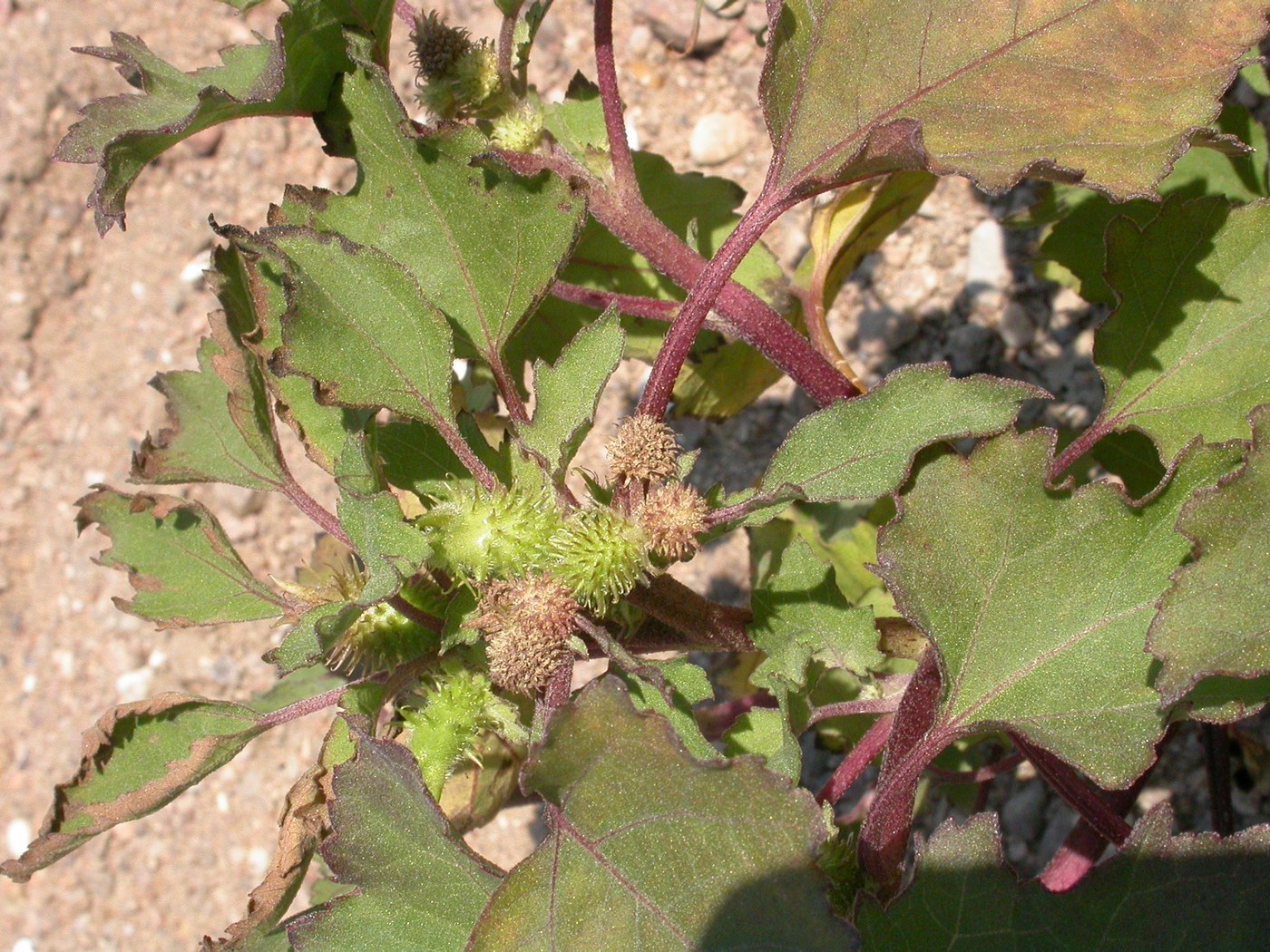
Key Identifying Features
Cocklebur (Xanthium strumarium) is a coarse, branching annual broadleaf weed best known for its oval seed burs covered in hooked spines that cling tightly to clothing and animal fur. Combined with large, rough, triangular leaves and stout speckled stems, it is easy to recognize, especially once the burs form.
- Oval burs (about 1 inch) covered in stiff hooked prickles, ending in two beaks
- Large, rough-textured, triangular to heart-shaped leaves
- Stout, often purple-spotted, bristly stems
- Coarse, branching plant 1-4 feet tall
Leaves & Stems
Leaves are alternate, large (2-6 inches), broadly triangular to heart-shaped, with shallow lobes and toothed edges, and feel sandpapery rough on both sides. They sit on long stalks. Stems are stout, ridged, rough, and often spotted or streaked with purple or black, branching freely. Note: cocklebur has no spines on the stem (unlike spiny cocklebur, a related species with leaf-base spines).
Flowers & Fruit
Cocklebur is wind-pollinated with inconspicuous greenish flowers in late summer: male flower clusters at the branch tips, female flowers below. The fruit is the unmistakable feature: a hard, woody, football-shaped bur, roughly 1 inch long, densely covered with hooked spines and tipped with two curved beaks. Each bur holds two seeds. Burs persist on the plant and cling to anything that brushes them.
How to Tell It Apart from Look-Alikes
- Sandbur: a grass with small round spiny burs; cocklebur is a broadleaf with large hooked oval burs and big triangular leaves.
- Burdock (Arctium): has round bur-clusters with hooks too, but huge rhubarb-like basal leaves and purple thistle flowers; cocklebur leaves are triangular and rough, and burs are oval with two beaks.
- Jimsonweed seedlings: can resemble young cocklebur, but jimsonweed has smooth leaves and a foul smell.
The two-beaked, hook-covered oval bur + rough triangular leaves + spotted stem confirm cocklebur.
Where You'll Find It
Cocklebur grows in moist, disturbed, sunny ground: stream banks, floodplains, field edges, ditches, pastures, sandbars, and crop fields across North America and worldwide. It tolerates periodic flooding and often appears on drying mudflats and shorelines.
Quick ID Checklist
- Coarse annual, 1-4 feet, branching
- Hooked, oval burs with two beak-like points
- Large rough, triangular/heart-shaped leaves
- Stout stems, often purple-spotted
- Burs cling to clothes and fur
- Moist, disturbed ground and shorelines
Frequently asked questions
What makes cocklebur easy to identify?
Its hard, oval burs covered in hooked spines and tipped with two curved beaks are unmistakable, especially paired with large, rough, triangular leaves and a spotted stem.
How is cocklebur different from sandbur?
Cocklebur is a broadleaf plant with big triangular leaves and large (about 1 inch) hooked oval burs, while sandbur is a grass with narrow blades and small round spiny burs.
What do cocklebur leaves look like?
They are large (2-6 inches), broadly triangular to heart-shaped with shallow lobes and toothed edges, sit on long stalks, and feel sandpapery rough on both sides.
Where is cocklebur usually found?
In moist, disturbed, sunny areas such as floodplains, stream banks, ditches, field edges, and drying mudflats, where it readily colonizes bare ground.