
Colorado Blue Spruce Identification Guide
How to identify Colorado blue spruce (Picea pungens) by its stiff, sharp, silvery-blue needles and stiff papery cones.
Read the full Colorado Blue Spruce encyclopedia entry →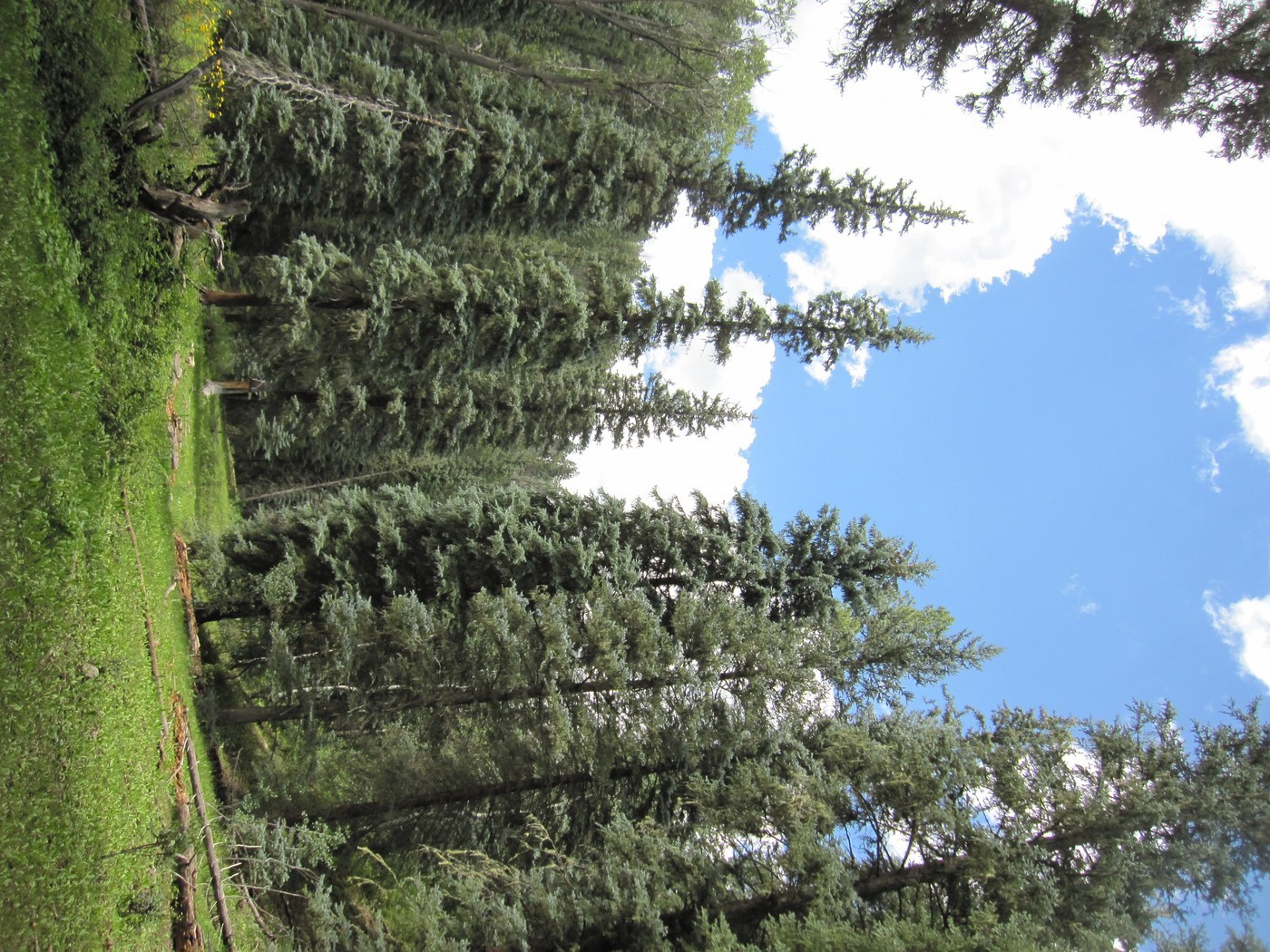
Key Identifying Features
Colorado blue spruce (Picea pungens) is a stately evergreen conifer prized for its stiff, sharply pointed, silvery-blue to powder-blue needles. It grows 50–75 feet tall (often smaller in cultivation) with a dense, symmetrical, narrowly pyramidal (conical) form and horizontal branches.
- Stiff, sharp, four-sided needles that are silvery-blue to blue-green
- Needles borne singly on small woody pegs (sterigmata) all around the twig
- Light tan, papery cones 2.5–4 inches with flexible, wavy-edged scales
- Dense, perfectly conical, formal silhouette
Leaves & Stems
The needles are the signature: 1–1.5 inches long, stiff, four-sided (square in cross-section so they roll between the fingers), and very sharply pointed — the species name pungens means "sharp." Their color ranges from green-blue to an intense silvery powder-blue, the blue coming from a waxy bloom; cultivars like 'Hoopsii' are especially blue. Each needle attaches to a tiny woody peg (sterigma) that remains on the twig after the needle drops, leaving the bare twig rough and bumpy — a key spruce trait. Bark is gray-brown and furrowed into scaly ridges.
Flowers & Fruit
Like all spruces, the cones hang downward (pendent). They are 2.5–4 inches long, cylindrical, and light tan to straw-colored, with thin, papery, flexible scales that have wavy, irregularly toothed margins. Cones mature in one season and dangle from the upper branches before dropping whole.
How to Tell It Apart from Look-Alikes
First, confirm it is a spruce, not a fir or pine: spruce needles are attached singly (not in bundles like pines) on woody pegs, are square and roll easily, and the cones hang down (fir cones stand upright and shatter on the tree). Among spruces, blue spruce stands out for its very stiff, sharp, silvery-blue needles; white spruce and Norway spruce are greener with softer or less sharp needles, and Norway spruce has much longer (4–6+ inch) cones and drooping branchlets. The sharpness and blue color are the clinchers.
Where You'll Find It
Native to the central and southern Rocky Mountains (Colorado, Utah, Wyoming, and nearby states), where it grows along mountain streams and moist slopes at 6,000–9,000 feet. Far more often, you will encounter it as a popular ornamental and Christmas tree planted in yards, parks, and windbreaks across temperate regions.
Quick ID Checklist
- Needles: stiff, sharp, four-sided (roll easily), silvery-blue
- Twig: rough with woody pegs where needles attach
- Cones: hang down, tan, papery, 2.5–4 inches, wavy scale edges
- Form: dense, symmetrical, narrow pyramid
- Origin: Rocky Mountains; widely planted as an ornamental
A conical evergreen with stiff, prickly, silvery-blue needles on pegged twigs and hanging papery cones is Colorado blue spruce.
Frequently asked questions
How do I know it's a spruce and not a fir or pine?
Spruce needles attach singly on tiny woody pegs and are four-sided so they roll easily between your fingers, and spruce cones hang downward. Pines bundle needles in groups, and fir cones stand upright and disintegrate on the branch.
Why are the needles blue?
The silvery-blue color comes from a waxy, powdery coating (bloom) on the needles. The intensity varies, and selected cultivars are bred for an especially bright powder-blue.
How do I tell blue spruce from Norway spruce?
Blue spruce has stiff, very sharp, often silvery-blue needles and cones 2.5 to 4 inches long, while Norway spruce has greener, softer needles, drooping branchlets, and much longer cones, typically 4 to 6 inches or more.
Why is the twig rough after needles fall off?
Each needle sits on a small woody peg called a sterigma that stays attached when the needle drops, leaving the bare twig bumpy and rough, which is a reliable way to recognize spruces.