How to Care for Comfrey
Grow Comfrey (Symphytum officinale), a vigorous, easy-care perennial herb with bell-shaped flowers, using this full guide to light, water and soil.
Read the full Comfrey encyclopedia entry →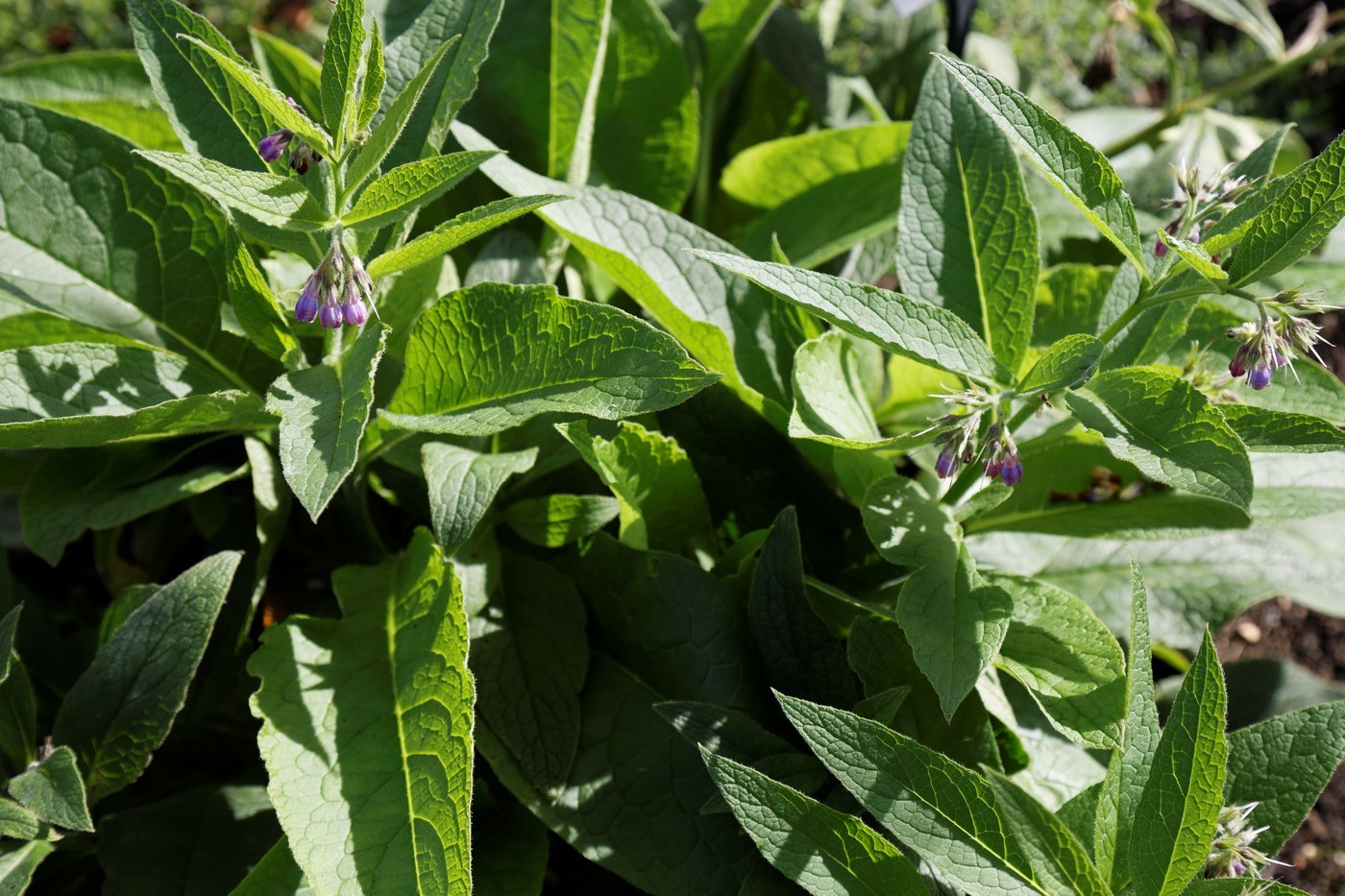
Comfrey (Symphytum officinale) is a robust, fast-growing perennial with large, bristly leaves and nodding clusters of bell-shaped flowers in shades of pink, purple, and cream. It is remarkably vigorous and nearly indestructible once established, making it an easy choice for the ornamental border or a naturalistic planting.
Light
Comfrey grows in full sun to part shade. It performs beautifully in dappled or partial shade, which helps keep the large leaves from wilting in intense heat, but it will also thrive in full sun as long as the soil stays moist. In deep shade it grows more slowly and flowers less freely.
Water
Give comfrey regular water; it thrives in consistently moist soil and its deep taproot lets it draw moisture from well below the surface. Water during dry spells to keep the lush foliage looking its best. Comfrey tolerates damp ground far better than most perennials, so it suits low spots that stay wet.
Soil & Potting
Comfrey is unfussy about soil and grows in clay, loam, or poor ground, but it flourishes in deep, rich, moisture-retentive soil amended with compost. A neutral pH is ideal. Its taproot goes down deep, so containers should be tall and roomy; in the ground, choose a permanent spot because the root is very difficult to remove once established.
Humidity & Temperature
This is a hardy perennial, thriving roughly in USDA zones 3 through 9. It dies back to the ground in winter and reliably returns each spring. It tolerates a wide range of humidity and shrugs off cold once dormant.
Feeding
Comfrey is a heavy feeder that responds to rich soil, but it rarely needs much supplemental fertilizer. A spring top-dressing of compost or well-rotted manure keeps the foliage lush. Overfeeding is seldom a problem given its vigor.
Propagation
Comfrey is extremely easy to propagate from root cuttings or crown divisions. Any piece of root left in the ground can sprout a new plant, so lift and divide in early spring or fall. You can also grow it from seed, though root division is faster and more reliable.
Repotting / Pruning
Divide crowded clumps every few years in spring or autumn to keep them vigorous. Cut the foliage back to a few inches above the ground several times per season to encourage a fresh flush of leaves and to tidy the plant. It regrows quickly after cutting. In containers, repot into a larger, deep pot when the taproot fills the space.
Common Problems & Pests
Comfrey is largely trouble-free. In damp, crowded conditions it can develop rust or powdery mildew on the leaves; improving air circulation and cutting back affected foliage resolves this. Slugs may nibble young growth in spring. The plant's main drawback is its enthusiasm: it self-seeds and spreads by root, so site it where it can be contained.
Seasonal Care Tips
In spring, divide if needed and top-dress with compost as new growth emerges. Through summer, cut back the foliage periodically for fresh leaves and steady moisture. In fall, let the plant die back naturally; the crown is fully hardy and needs no special protection. Remove spent flower stems if you want to limit self-seeding.
Frequently asked questions
Is comfrey hard to get rid of once planted?
Yes. Comfrey has a deep taproot, and any fragment left in the soil can regrow. Choose its location carefully, because moving or removing an established plant is very difficult.
How often should I cut comfrey back?
You can cut the foliage back to a few inches several times through the growing season. It regrows quickly, and repeated cutting keeps the leaves fresh and the plant tidy.
Does comfrey grow well in shade?
It grows in full sun to part shade and actually appreciates some afternoon shade in hot climates, which keeps the large leaves from wilting. In deep shade it grows and flowers less.
How do I propagate comfrey?
The easiest method is root cuttings or crown division in spring or fall. Even a small piece of root will sprout a new plant, so it multiplies readily.
Comfrey identified by the community
Recent Comfrey specimens identified with Plant Identifier.