Comfrey
Symphytum officinale
Comfrey is a vigorous, deep-rooted perennial famous as a garden fertilizer. Its rough leaves and bell-shaped flowers grow back fast, making it a favorite for nutrient-rich liquid plant feeds.
- Light
- Full sun to part shade
- Water
- Regular; thrives in moist soil
- Difficulty
- Easy
Got a plant like this?
Identify any plant from a photo, free.
Overview
Comfrey (Symphytum officinale) is a robust perennial herb in the borage family (Boraginaceae), native to Europe and parts of Asia.
Its deep taproot mines minerals from far below the surface, and its fast-growing leaves are widely cut and composted or steeped into a liquid plant feed prized by organic gardeners. The popular sterile cultivar 'Bocking 14' (Russian comfrey) is grown specifically for this purpose because it does not self-seed.
It is a clumping plant that bulks up quickly and returns vigorously each year, so it is usually given a permanent spot in the garden.
How to identify it
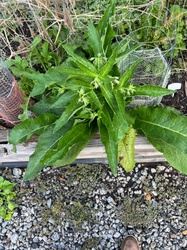
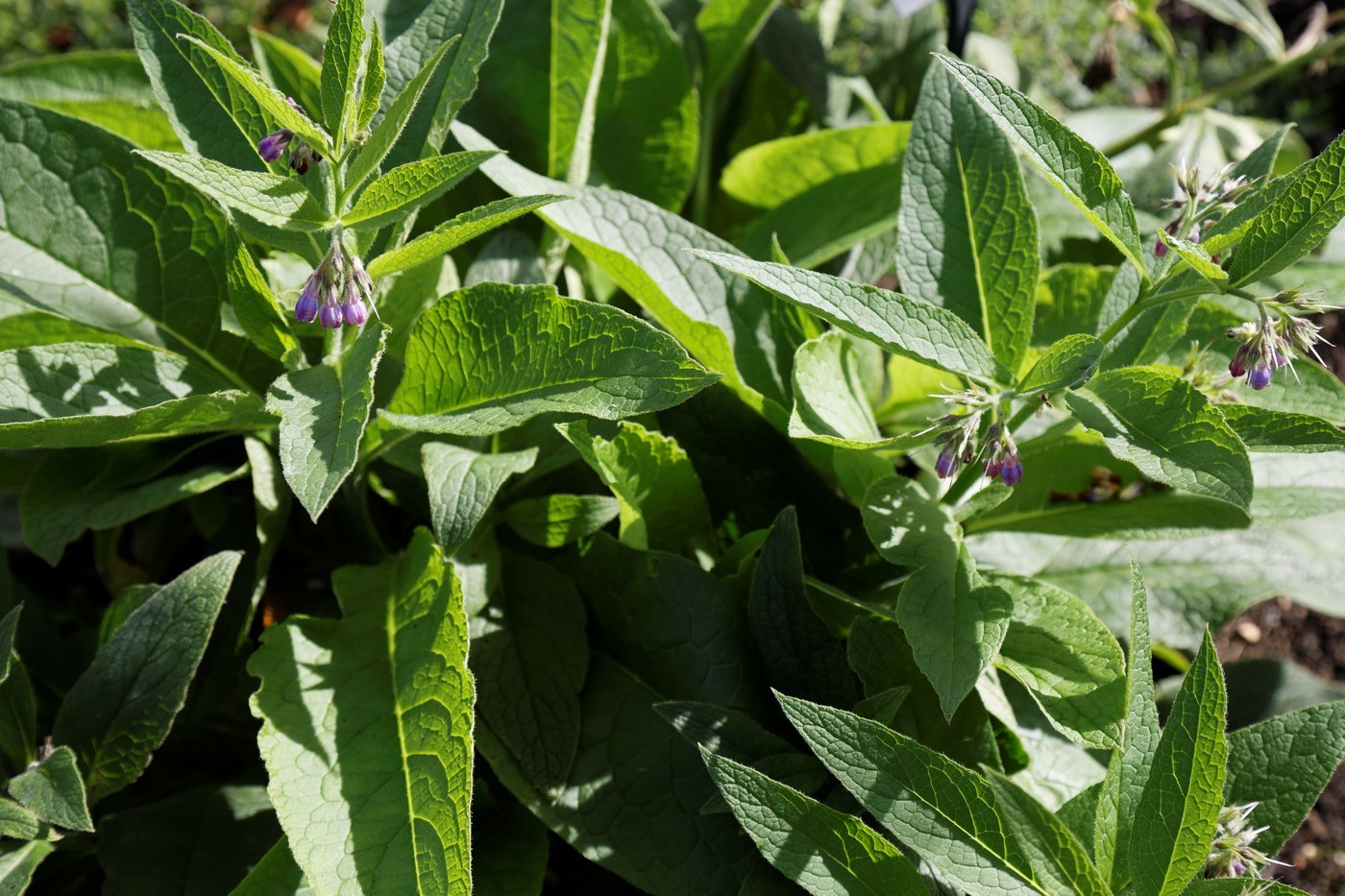
- Leaves: large, lance-shaped, rough and hairy, dark green, with prominent veins; lower leaves can be 30 cm or more long
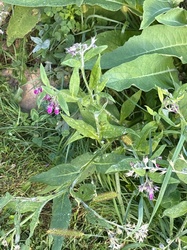
- Flowers: nodding clusters of tubular, bell-shaped blooms in cream, pink, purple or blue, in late spring to summer
- Stems: stout, bristly, branching, 0.6-1.2 m tall
- Roots: thick, black-skinned, deep taproot that resprouts readily
- Habit: clumping perennial that bulks up quickly
Care & growing
Light: Full sun to partial shade.
Water: Likes consistent moisture and tolerates damp ground; very resilient once established.
Soil: Almost any soil; especially lush in deep, fertile, moist ground.
Temperature: Hardy through about USDA zones 3-9; dies back in winter and returns vigorously.
Feeding: Rarely needs feeding; it is itself a fertilizer source.
Propagation: Easiest from root cuttings or crown division. Note that any root fragment can regrow, so place it where you want it permanently; choose sterile 'Bocking 14' to avoid seeding.
Habitat & origin
Comfrey is native to Europe and western Asia, where it grows in damp meadows, ditches, riverbanks and other moist, fertile ground. It has naturalized in North America and elsewhere.
In gardens it is grown in dedicated patches for chop-and-drop mulching and liquid feed, often tucked into a corner because of its size and persistence.
Frequently asked questions
Why do gardeners grow comfrey?
Its deep roots draw up minerals and its fast-growing leaves make an excellent liquid feed and mulch, especially high in potassium for fruiting plants.
Will comfrey spread out of control?
Common comfrey self-seeds and regrows from root fragments, so it can spread. The sterile cultivar 'Bocking 14' is recommended because it does not set seed.
What is comfrey tea?
It is a liquid fertilizer made by steeping comfrey leaves in water until they break down; the strained liquid is diluted and used to feed plants.
Comfrey guides
In-depth guides for identifying, growing, and caring for Comfrey.
How to Care for Comfrey
Grow Comfrey (Symphytum officinale), a vigorous, easy-care perennial herb with bell-shaped flowers, using this full guide to light, water and soil.
Comfrey Identification Guide
Identify comfrey (Symphytum) by its large bristly hairy leaves, winged stems, and nodding coiled clusters of bell-shaped purple, pink, or cream flowers.
Comfrey identified by the community
Real specimens identified with Plant Identifier.