Coneflower Identification Guide
How to recognize purple coneflower (Echinacea) by its raised, spiky central cone, drooping ray petals, and coarse, hairy foliage.
Read the full Coneflower encyclopedia entry →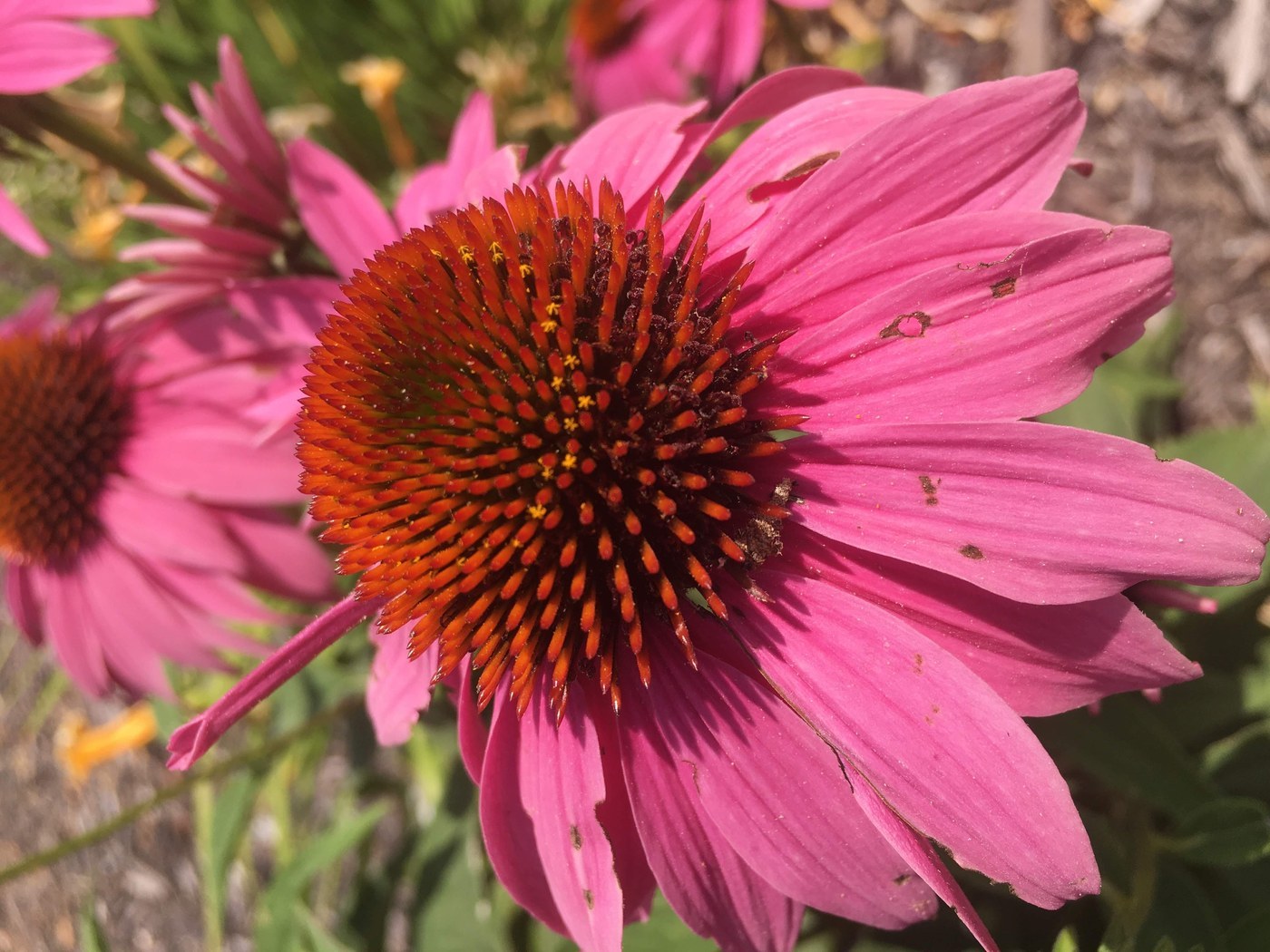
Key Identifying Features
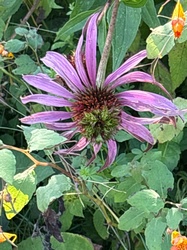
Coneflowers (genus Echinacea, most often Echinacea purpurea) are easy to spot once you know the signature raised, dome-shaped center cone. The cone is bristly and stiff, starting greenish and aging to coppery-orange or bronze. Around it radiate ray florets that droop slightly downward from the cone, giving the flower a gently swept-back, shuttlecock look.
- Flower color: rosy-purple to pink-purple petals (wild types); cultivars add white, orange, yellow, and red
- Central cone: prominent, spiny, orange-brown when mature
- Height: typically 2-4 ft on stiff, upright stems
- Bloom season: early summer to fall
Leaves & Stems
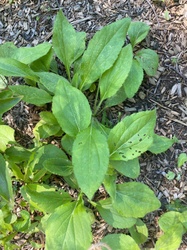
Foliage is coarse, dark green, and noticeably rough to the touch thanks to short, stiff hairs. Lower leaves are broadly lance-shaped to oval (often 3-8 in long) with toothed or coarsely serrated margins and prominent veins. Leaves are alternate on the stem and become smaller and stalkless higher up. Stems are rigid, hairy, and usually unbranched or sparingly branched, each topped by a single flower head, which is why coneflowers make such good cut flowers.
Flowers & Fruit
Each "flower" is a composite head. The ray petals (15-25) surround a cone packed with tiny disk florets that open progressively from the base upward. As the season ends, the cone dries to a hard, spiky seedhead that holds dark, four-sided seeds prized by goldfinches. The persistent winter seedheads are themselves a strong ID clue.
How to Tell It Apart from Look-Alikes
- Black-eyed Susan (Rudbeckia): golden-yellow rays and a rounded, dark brown-to-black central button, not a tall spiny cone; petals point outward/upward, not drooping.
- Gloriosa daisy / Mexican hat: smaller or differently shaped cones; Mexican hat has a tall thimble cone but yellow-red rays.
- Asters and daisies: flat or only slightly raised centers, never the stiff spiny cone.
- Cultivar confusion: white-flowered Echinacea still has the same orange spiny cone and rough leaves — check the cone, not just petal color.
The combination of drooping pink-purple petals + spiky orange cone + sandpapery toothed leaves is essentially diagnostic.
Where You'll Find It
Native to central and eastern North American prairies, open woods, and roadsides, coneflowers are also one of the most planted perennials in sunny borders and pollinator gardens. They thrive in full sun and well-drained soil and are drought-tolerant once established. In the wild look for them in tallgrass prairie remnants and dry meadows.
Quick ID Checklist
- Tall, spiny orange-brown central cone
- Drooping ray petals, usually pink-purple
- Rough, hairy, toothed dark green leaves, alternate
- Stiff upright stems, mostly one head per stem
- Persistent spiky seedheads into winter
- Full-sun prairie or garden setting
Frequently asked questions
How do I tell a coneflower from a black-eyed Susan?
Coneflowers have a tall, spiny, raised cone and usually pink-purple drooping petals, while black-eyed Susans have golden-yellow petals around a rounded, flat-to-domed dark brown or black center.
Are all coneflowers purple?
No. The wild species is rosy-purple, but garden cultivars come in white, yellow, orange, and red. The spiny orange cone and rough, toothed leaves remain consistent regardless of petal color.
Why are the petals pointing downward?
The drooping, swept-back ray petals are a natural feature of Echinacea and one of its best ID traits, distinguishing it from daisies and Rudbeckia whose petals stay more horizontal.
What are the spiky brown balls left after blooming?
Those are the dried seedheads. The central cone hardens into a bristly structure full of seeds that finches eat, and it persists through winter, making it a reliable identifier even out of bloom.
Coneflower identified by the community
Recent Coneflower specimens identified with Plant Identifier.