Coneflower
Echinacea purpurea
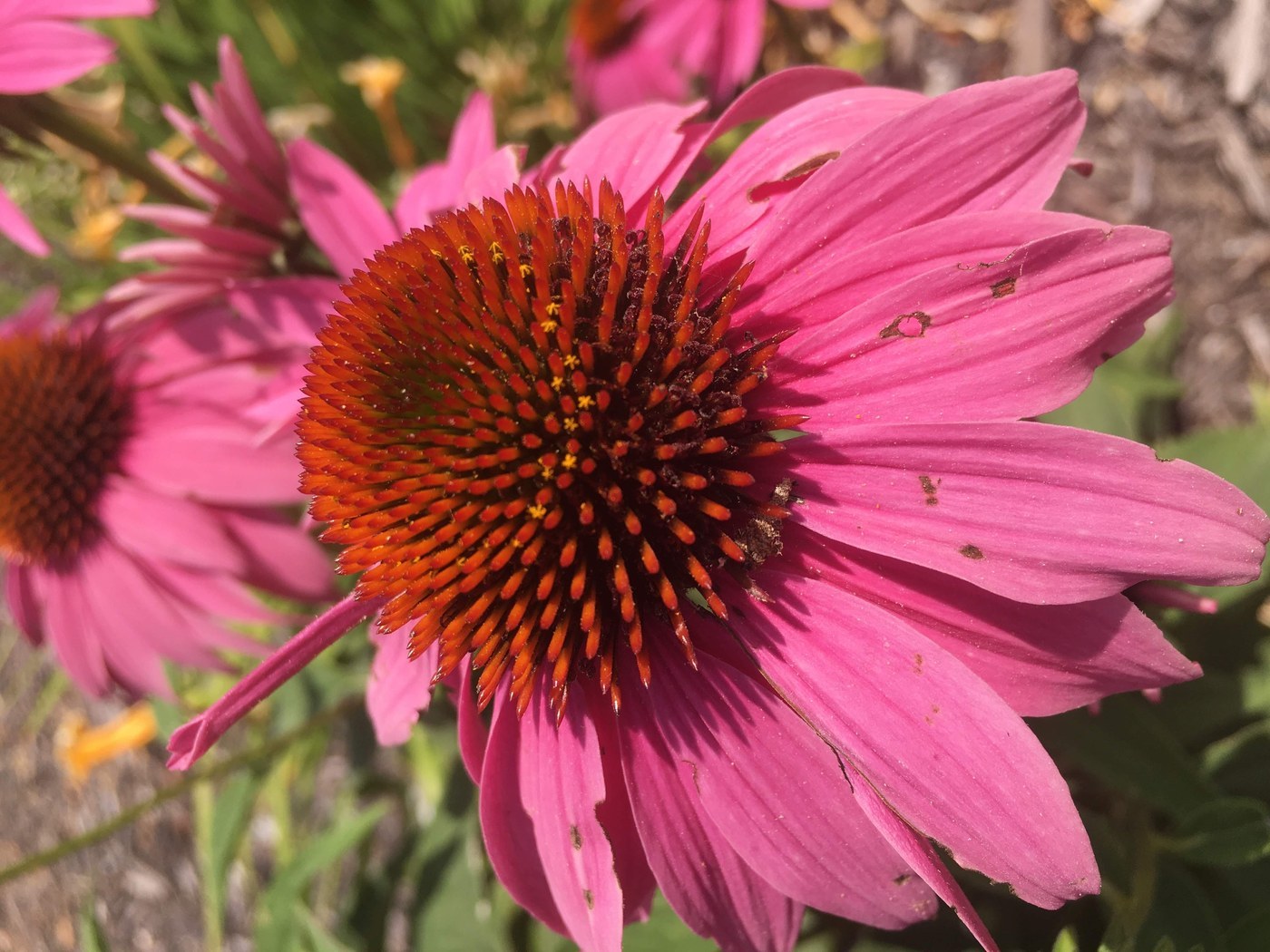
A rugged North American prairie perennial with daisy-like purple-pink petals around a spiny, copper-orange central cone. Beloved by pollinators and goldfinches.
- Light
- Full sun
- Water
- Weekly; drought-tolerant once established
- Difficulty
- Easy
Got a plant like this?
Identify any plant from a photo, free.
Overview
Coneflower is one of the most popular and dependable perennials for sunny gardens, prized for its long summer-to-fall bloom and tough constitution. The classic species, Echinacea purpurea, produces sturdy stems topped with rosy-purple flowers and a distinctive raised cone.
Native to the central and eastern United States, it thrives on neglect and tolerates heat, humidity, and lean soil. Modern breeding has expanded the color range to oranges, reds, whites, and yellows, but the wild purple form remains a garden staple.
Beyond ornament, coneflower is a magnet for bees and butterflies, and its seed heads feed finches into winter, making it a cornerstone of pollinator and native-plant gardens.
How to identify it
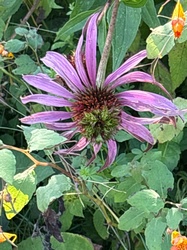
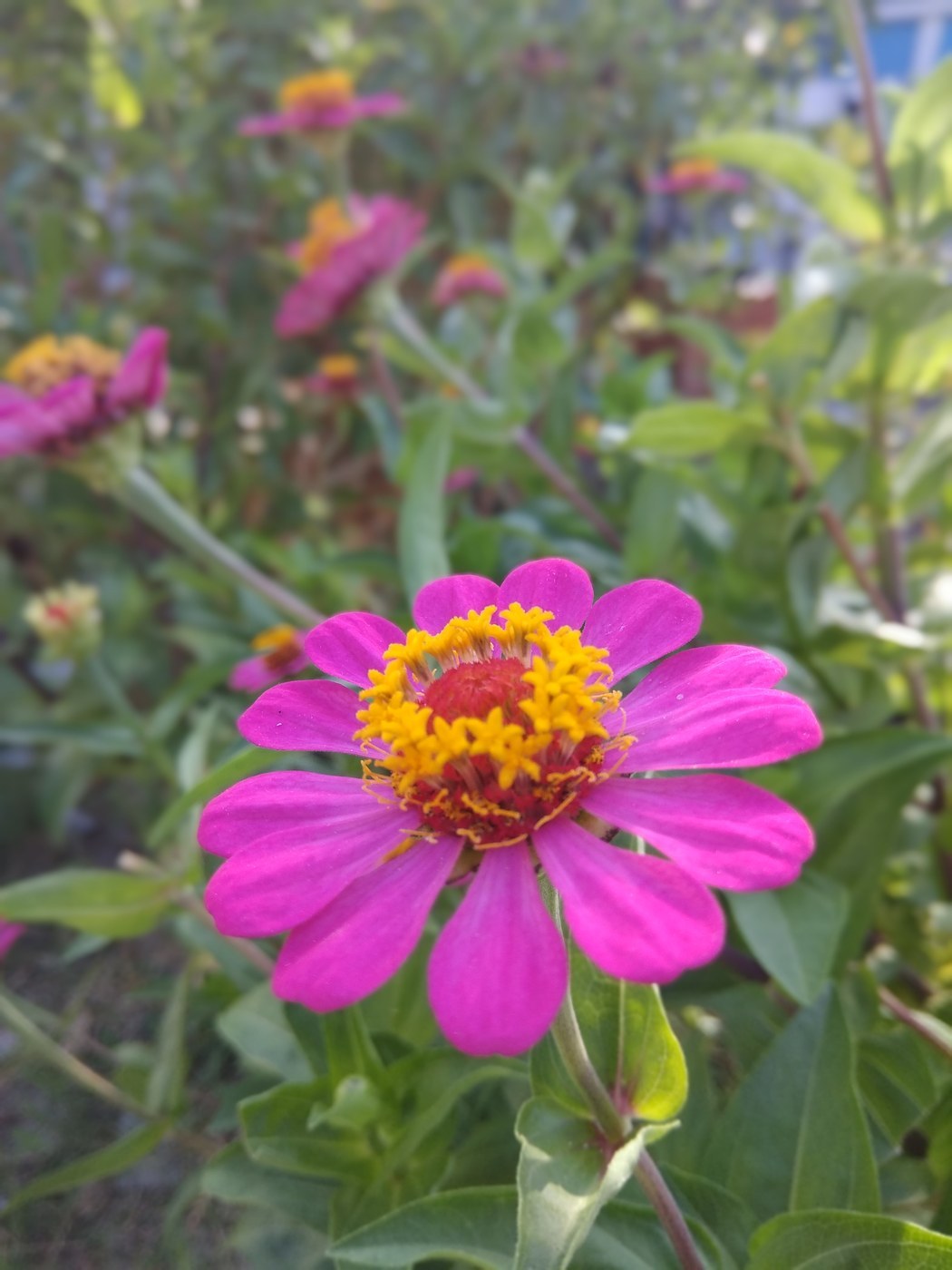
- Flowers: 3-5 in. daisy-like blooms with drooping rosy-purple ray petals around a domed, spiky copper-orange center
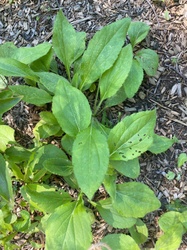
- Leaves: Coarse, dark green, lance-shaped, rough to the touch, with toothed edges
- Habit: Upright clump 2-4 ft tall on stiff, branching stems
- Cone: The central disk is bristly and persists as a seed head after petals fade
- Bloom time: Mid-summer through early fall
Care & growing
Light: Full sun for best flowering; tolerates light afternoon shade.
Water: Water regularly the first season to establish, then it is notably drought-tolerant. Avoid soggy soil.
Soil: Average, well-drained soil; tolerates poor and rocky ground. Dislikes wet winter feet.
Temperature: Cold-hardy in USDA zones 3-9.
Feeding: Minimal; a single spring application of compost is plenty. Over-feeding causes floppy growth.
Propagation: By seed, division every 3-4 years in spring, or root cuttings. Leave seed heads for self-sowing and bird food.
Habitat & origin
Coneflower is native to the prairies, open woodlands, and dry meadows of the central and southeastern United States. It evolved to handle full sun, periodic drought, and lean soils.
Today it is grown across temperate gardens worldwide as an ornamental and pollinator plant.
Frequently asked questions
Should I deadhead coneflowers?
You can deadhead to encourage more blooms, but leaving spent flowers provides seeds for birds and allows self-seeding. Many gardeners leave the last flush standing for winter interest.
Why are my coneflowers flopping?
Floppy stems usually come from too much shade or overly rich, over-fertilized soil. Give them full sun and lean conditions for sturdy, upright growth.
Are coneflowers perennial?
Yes, they are hardy perennials in zones 3-9 and return reliably for years, though individual clumps benefit from division every few years.
Do coneflowers spread?
They form expanding clumps and self-sow modestly from dropped seed, but they are not aggressively invasive.
Coneflower guides
In-depth guides for identifying, growing, and caring for Coneflower.
How to Care for Coneflower
Grow tough, drought-tolerant Echinacea purpurea in full sun with lean, well-drained soil for months of daisy-like blooms and pollinators.
Coneflower Identification Guide
How to recognize purple coneflower (Echinacea) by its raised, spiky central cone, drooping ray petals, and coarse, hairy foliage.
Coneflower identified by the community
Real specimens identified with Plant Identifier.