
Coral Bark Maple Identification Guide
Identify the coral bark maple (Acer palmatum 'Sango-kaku') by its glowing coral-red winter twigs, light green palmate leaves edged in red, and golden-yellow fall color.
Read the full Coral Bark Maple encyclopedia entry →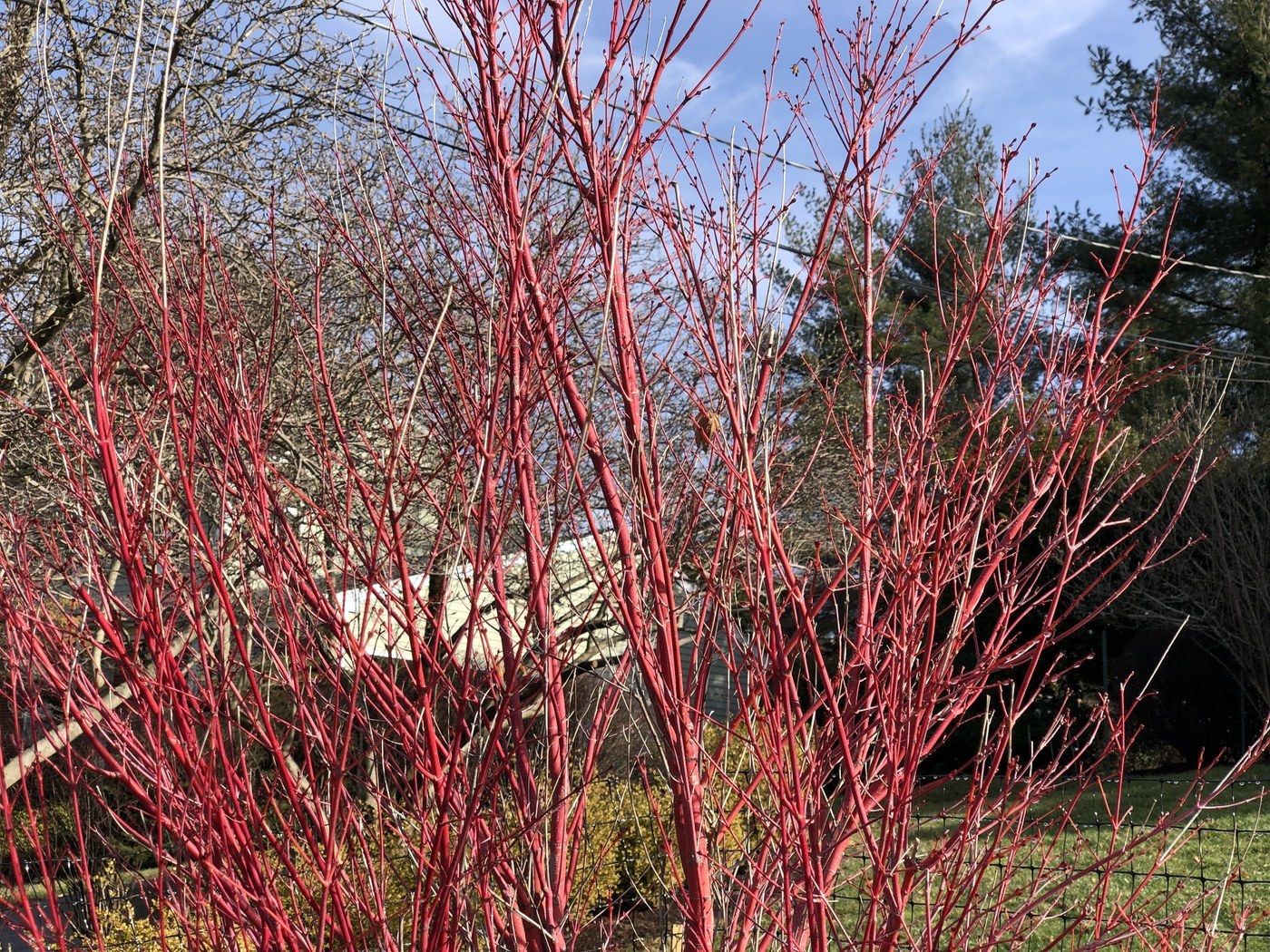
Key Identifying Features
Coral bark maple (Acer palmatum 'Sango-kaku', also spelled 'Senkaki') is an upright Japanese maple grown above all for its winter bark. Identify it by:
- Bright coral-red to salmon-pink young branches and twigs, most intense in winter and on new growth
- Light green palmate leaves with 5-7 lobes, often edged in reddish tones in spring
- Clear golden-yellow fall color, sometimes with apricot-orange tints
- An upright, vase-shaped form maturing to 15-25 ft
The red winter twigs glowing against snow or a dull landscape are the unmistakable signature.
Leaves & Stems
Leaves are opposite, palmately lobed with 5-7 sharply pointed, toothed lobes, 2-4 inches across — the classic Japanese maple hand shape. The foliage is a soft light green, often with reddish to pinkish margins when young, maturing greener through summer. In autumn the leaves turn a luminous yellow to gold, frequently with orange edges, before dropping to reveal the bark show.
The bark is the headline: the youngest twigs and one-to-three-year-old branches are a striking coral-red, salmon, or pink-red, brightest in cold weather and in full sun. Older trunk bark grays and the color is best on new wood, so the brilliant color concentrates in the upper canopy. The form is upright and rounded.
Flowers & Fruit
Spring brings small reddish-purple flowers in pendant clusters, modest but adding seasonal interest. Fruit is the maple's typical paired samara (winged "helicopter" seed), sometimes red-tinged, ripening and dispersing in late summer to fall.
How to Tell It Apart from Look-Alikes
- Other green Japanese maples: same leaf shape but brown or gray twigs, lacking the coral color — the bark is the decisive difference.
- Bloodgood and red-leaf cultivars: have dark red-purple summer leaves; coral bark's leaves are light green, and its draw is the twig color, not leaf color.
- Red-twig dogwood (Cornus): also has bright red winter stems but is a multi-stemmed shrub with simple opposite oval leaves and white flower clusters, not palmate maple leaves or samaras.
- 'Beni-kawa' or 'Winter Flame': similar coral-bark cultivars; 'Sango-kaku' is the classic and most common.
The coral-red winter twigs + light green palmate maple leaves + golden fall combination is diagnostic.
Where You'll Find It
A cultivated ornamental in USDA zones 5-8, planted as a specimen and especially for winter interest in gardens, courtyards, and near entries where the bark can be appreciated against snow. It likes moist, well-drained soil and full sun to part shade (sun deepens the bark color). It is not a wild plant.
Quick ID Checklist
- Upright vase-shaped Japanese maple, 15-25 ft
- Coral-red/salmon young twigs and branches, vivid in winter
- Light green palmate 5-7-lobed leaves, often red-edged when young
- Golden-yellow (to orange) fall color
- Opposite branching; small reddish spring flowers; paired samaras
An upright maple whose bare winter branches glow coral-red, leafing out light green and turning gold in fall, is the coral bark maple.
Frequently asked questions
When is the coral bark color most visible?
In winter, after the leaves drop. Cold temperatures intensify the coral-red to salmon hue, and the color is strongest on young twigs and new growth, especially those exposed to full sun.
How is it different from a red-leaf Japanese maple like Bloodgood?
Coral bark maple has light green leaves and its claim to fame is its coral-red winter twigs. Bloodgood and similar cultivars have dark red-purple leaves all summer but ordinary brown-gray bark.
Is coral bark maple the same as red-twig dogwood?
No. Both have red winter stems, but coral bark maple is an upright tree with palmate maple leaves and winged seeds, while red-twig dogwood is a shrub with simple opposite leaves and white berry-clustered flowers.
Why is the bright bark only on the upper branches?
The coral color develops best on young, one-to-three-year-old wood. As branches age the bark turns gray-brown, so the most vivid red concentrates on the newest growth in the upper canopy.