
Coral Bells Identification Guide
Identify coral bells (Heuchera) by their mounded rosettes of rounded, lobed, often colorful leaves and airy wands of tiny bell-shaped flowers.
Read the full Coral Bells encyclopedia entry →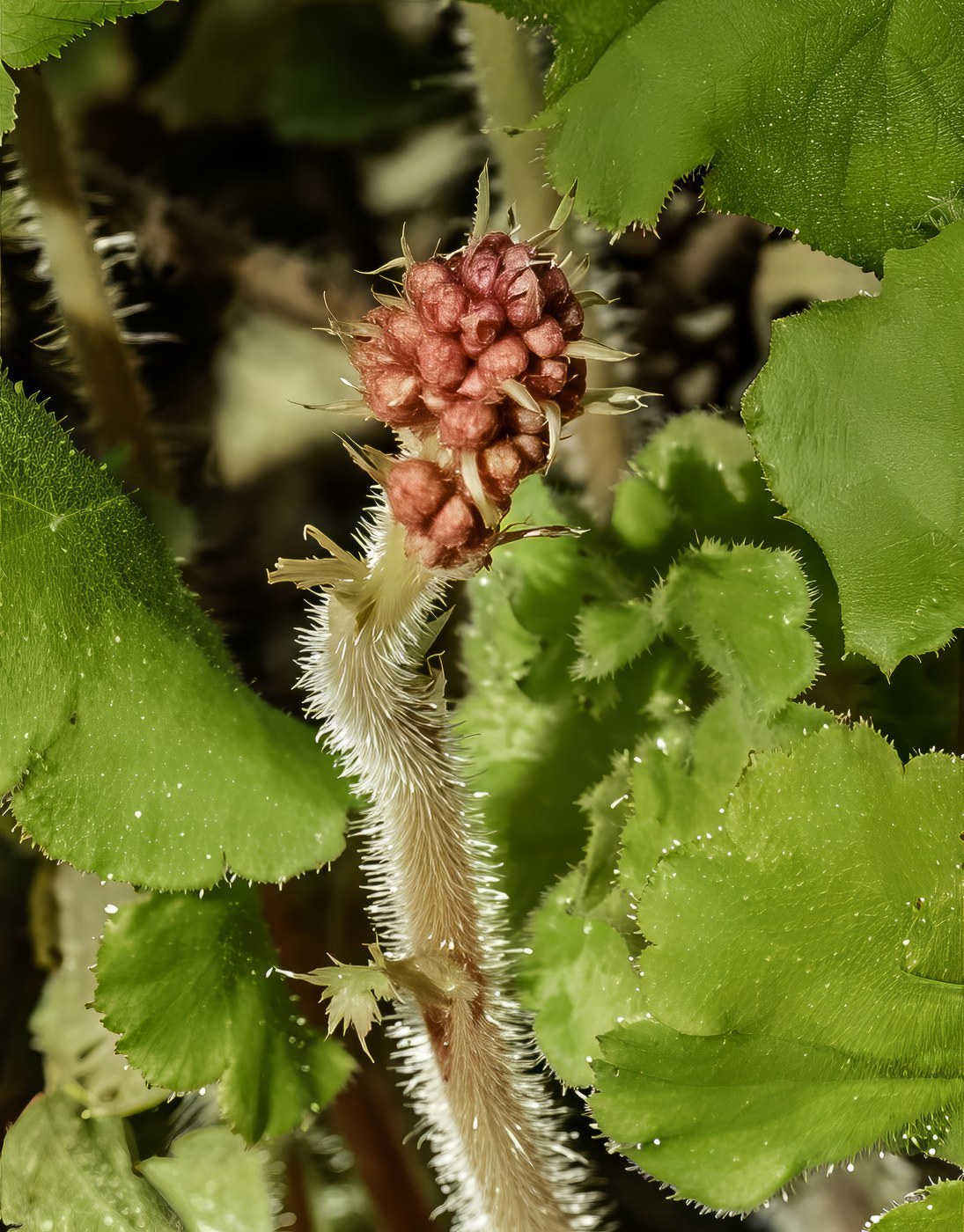
Key Identifying Features
Coral bells (Heuchera) are grown mainly for their mound of rounded, lobed leaves in a huge range of colors, topped in late spring by slender, wiry stalks of tiny bell-shaped flowers.
- Leaves: rounded, lobed and toothed, often heavily colored (purple, amber, lime, silver-marbled)
- Habit: low basal rosette/mound, evergreen to semi-evergreen
- Flowers: tiny bells on tall, airy, leafless wands
- Bloom: late spring to summer
Leaves & Stems
The leaves are the main ID feature: roughly heart-shaped to rounded with 5-7 shallow lobes and gently scalloped, toothed margins, carried on long hairy petioles from a central crown. Foliage is often palmately veined and may be solid green, deep burgundy-purple, caramel, chartreuse, or silver-veined/marbled depending on variety. Plants form a tight, ground-level mound with no true upright stems — only the slender flower scapes.
Flowers & Fruit
Flower scapes rise well above the foliage as thin, branched panicles bearing many small, nodding, bell- or urn-shaped flowers, typically in coral-red, pink, white, or greenish tones (the coral-red species Heuchera sanguinea gives the common name). The tiny flowers are followed by small dry capsules with fine seeds. The airy, see-through flower spray is distinctive.
How to Tell It Apart from Look-Alikes
- Foamflower (Tiarella): very close relative with similar lobed leaves but fluffier, foamy white flower spikes and often more deeply cut, pointed leaf lobes.
- Foamy bells (× Heucherella): the hybrid between the two — intermediate, hard to separate; check the flower shape (bells vs. foam).
- Geranium (cranesbill): lobed leaves too, but flowers are flat 5-petaled saucers, not bells.
- Hosta: much larger, with parallel-veined undivided leaves — no lobes.
The defining combo is a mound of rounded, lobed, often colorful leaves + tall wiry wands of tiny bells.
Where You'll Find It
Coral bells are popular in part-shade borders, woodland edges, and containers; the colorful-leaved hybrids brighten shady spots. Wild Heuchera species grow in rocky woods and slopes across North America. They prefer moist, well-drained soil and part shade, though some tolerate sun.
Quick ID Checklist
- Low mound/rosette of rounded, lobed and toothed leaves
- Leaves often colored or silver-marbled
- Long hairy petioles, palmate veins
- Tall, airy wands of tiny bell flowers
- Evergreen to semi-evergreen clump
- Part-shade garden or rocky woodland setting
Frequently asked questions
How do I tell coral bells from foamflower?
Both have lobed leaves and grow in shade, but coral bells (Heuchera) have small bell-shaped flowers, while foamflower (Tiarella) has fluffy, foamy white flower spikes and usually more deeply cut leaf lobes.
Why are my coral bells leaves purple (or lime, or silver)?
Leaf color is a varietal trait. Modern Heuchera hybrids were bred for foliage in burgundy, caramel, chartreuse, and silver-marbled patterns; the leaf shape and bell flowers still identify them as coral bells.
Where did the name 'coral bells' come from?
From Heuchera sanguinea, whose dangling flowers are coral-red and bell-shaped. Many hybrids now have pink, white, or greenish bells, but the name stuck.
Can I identify coral bells without flowers?
Yes. Look for a low mound of rounded, shallowly lobed, toothed leaves on long hairy stalks, often brightly colored or silver-veined, arising from a central crown.