
How to Care for Coral Cactus
Grow Coral Cactus (Euphorbia lactea cristata): a sculptural grafted succulent. Learn its bright-light, sparse-water needs and warmth-loving indoor care.
Read the full Coral Cactus encyclopedia entry →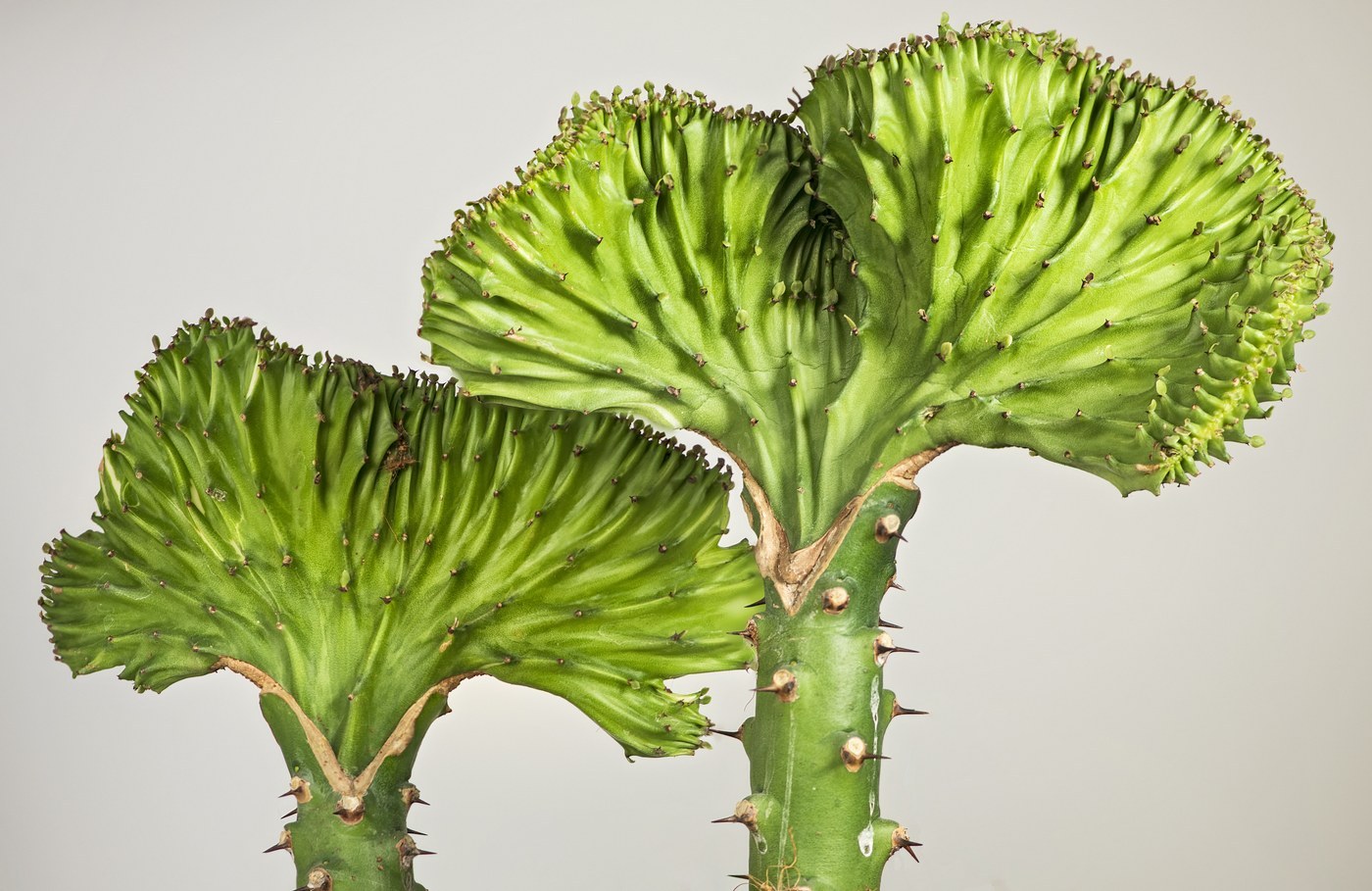
Coral cactus (Euphorbia lactea cristata) is not a true cactus but a striking grafted succulent: a fan-shaped, crested Euphorbia lactea joined onto a rootstock, usually another euphorbia. Its coral-like, wavy crest makes it a sculptural houseplant, and its grafted nature makes care moderately demanding, since both partners must stay healthy.
Light
Provide bright, indirect light. A spot near a bright window with filtered sun keeps the crest colorful and compact. Some gentle direct morning sun is fine, but harsh, intense midday sun can scorch the fleshy crest, while too little light causes dull color and weak, stretched growth. Rotate the plant occasionally for even shape.
Water
Water sparingly, allowing the soil to dry out well between waterings. As a succulent, coral cactus stores water and is far more tolerant of drought than of excess moisture; overwatering is the leading cause of failure, quickly rotting the graft union or roots. Water thoroughly, let the pot drain fully, then wait until the mix is dry before watering again. Cut back further in winter.
Soil & Potting
Use a fast-draining, gritty succulent or cactus mix, ideally lightened further with extra perlite, pumice, or coarse sand. Good drainage is critical to protect the vulnerable graft. Always plant in a container with drainage holes; a snug pot is fine, as these plants dislike sitting in large volumes of damp soil.
Humidity & Temperature
Coral cactus prefers warm, dry conditions and average-to-low household humidity. Keep it comfortably warm, ideally above roughly 15C, and protect it from cold drafts and any frost, which it cannot survive. Avoid sudden temperature swings and chilly windowsills in winter.
Feeding
Feed lightly during the active growing season in spring and summer, using a diluted succulent or cactus fertilizer perhaps once a month. Do not over-feed, as excessive nutrients can distort growth. Stop feeding entirely in autumn and winter when the plant rests.
Propagation
Because coral cactus is a graft of two plants, it does not come true or propagate easily from simple cuttings the way a single succulent does; reproducing it reliably requires re-grafting a crested scion onto a suitable euphorbia rootstock, a technique for experienced growers. Most people simply maintain the plant they have rather than propagating it. Note that all euphorbias exude a milky sap when cut, so wear gloves and protect skin and eyes when handling.
Repotting / Pruning
Repot only every couple of years, or when the plant becomes unstable or outgrows its pot, doing so in spring into fresh gritty mix; handle the graft gently. Pruning is generally unnecessary and best avoided, since cutting the crest is difficult and stresses the plant. If the rootstock sends up its own smooth shoots below the graft, remove them so they do not overtake the decorative crest.
Common Problems & Pests
Overwatering and poor drainage cause rot at the graft or roots, the most serious and common problem; keep the mix dry between waterings. A blackening or softening graft union signals trouble. Watch for mealybugs and scale, which hide in the crest's folds; treat promptly. Sudden leaf or crest yellowing can indicate cold damage or root stress. Insufficient light leads to fading color and etiolated growth.
Seasonal Care Tips
In spring and summer, give bright indirect light, water when the soil dries, and feed lightly during active growth. In autumn, reduce watering as growth slows. In winter, keep the plant warm, dry, and away from cold glass and drafts, watering only enough to stop it shriveling. Year-round, protect it from frost and from prolonged wet soil.
Frequently asked questions
Is coral cactus really a cactus?
No. Despite the name it is a grafted succulent, made by joining a crested Euphorbia lactea onto a euphorbia rootstock. It needs succulent-style care rather than true cactus care, though both like bright light and sparse water.
Why is the base of my coral cactus turning black or soft?
A blackening, softening graft union or base almost always means rot from overwatering or poor drainage. Let the soil dry fully between waterings, use a gritty fast-draining mix in a pot with drainage holes, and keep it warm.
How often should I water a coral cactus?
Sparingly. Water thoroughly, let it drain, then wait until the mix is completely dry before watering again, roughly every couple of weeks in warm growth and much less in winter. When in doubt, wait longer.
Why is my coral cactus losing its color?
Fading, dull color usually means too little light. Move it to a brighter spot with bright indirect light and some gentle morning sun, but avoid harsh midday sun that can scorch the crest.