Coral Cactus
Euphorbia lactea cristata
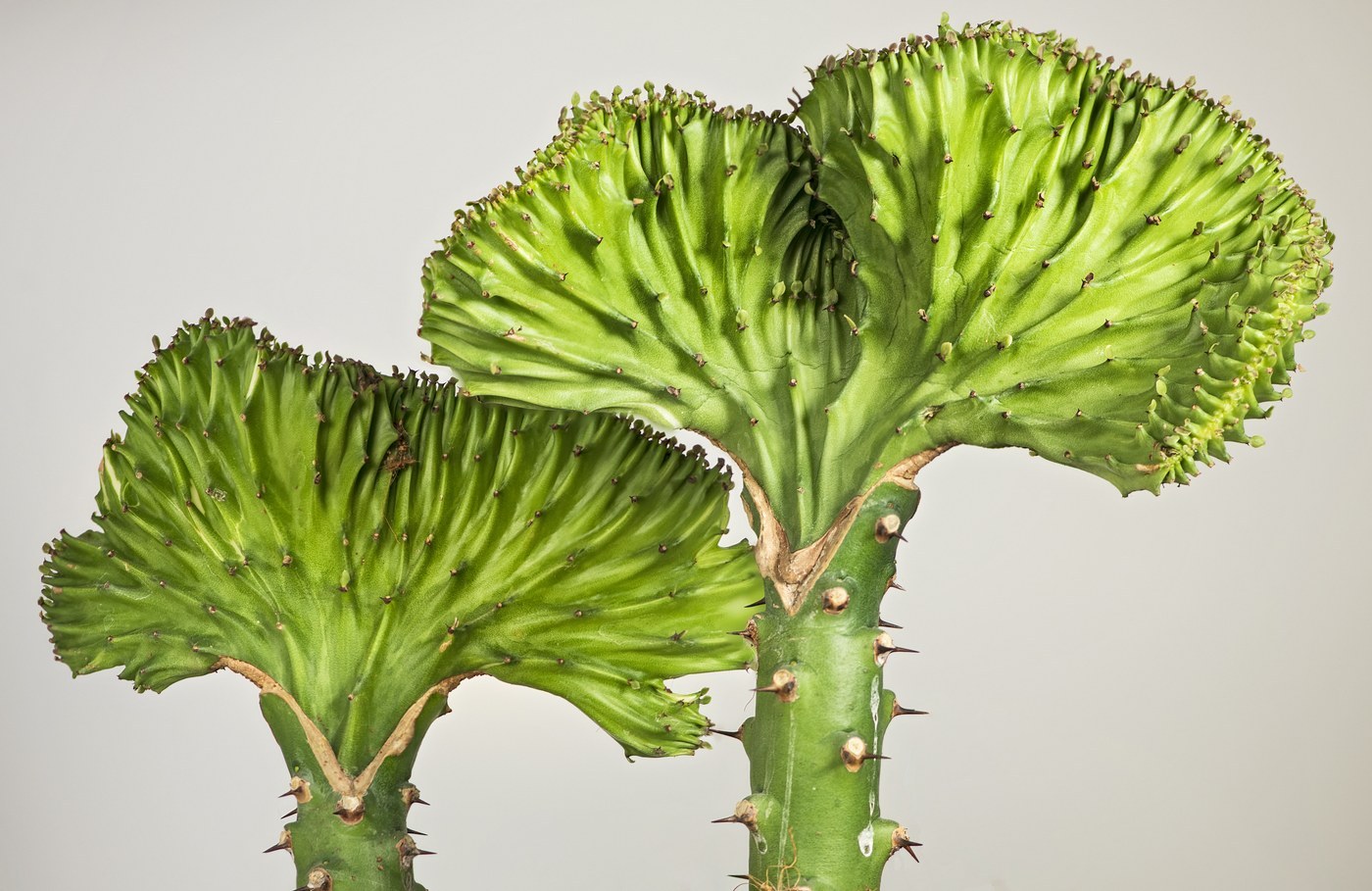
The coral cactus is a grafted novelty plant combining a fan-shaped, crested Euphorbia top with a separate Euphorbia rootstock, resembling a piece of coral or a crested ridge. It is a Euphorbia, not a cactus.
- Light
- Bright indirect light
- Water
- Sparingly; let soil dry
- Difficulty
- Moderate
Got a plant like this?
Identify any plant from a photo, free.
Overview
The coral cactus is not a cactus and usually not even a single plant. It is a graft: a crested (fasciated) form of Euphorbia lactea, which grows in a wavy, fan-like crest, joined to the top of a straight Euphorbia neriifolia rootstock.
The crested top results from a mutation that causes the growing point to spread into a ruffled, coral-like ridge rather than a single stem. The result is a sculptural, ornamental plant in greens, often edged in cream, purple, or red.
Like all euphorbias, it exudes a milky sap when cut and is best handled with gloves.
How to identify it
- A wavy, fan-shaped or crested ('brain' or coral-like) top
- Mounted on a separate, straight columnar rootstock at a visible graft point
- Crest edges often colored cream, purple, pink, or red
- Exudes milky white sap when cut
- Overall resembles a piece of marine coral
Care & growing
- Light: Bright indirect light; some gentle direct sun, but avoid harsh midday scorching
- Water: Water sparingly when soil is dry; very sensitive to overwatering and rot
- Soil: Well-draining cactus or succulent mix
- Temperature: Warm; protect from cold below about 50 F
- Feeding: Light feeding during the growing season
- Propagation: Difficult for home growers; typically requires re-grafting
Habitat & origin
The parent species Euphorbia lactea is native to tropical Asia, particularly India. The crested form is a cultivated mutation, not a wild plant.
The coral cactus as sold is a nursery-produced ornamental, grown indoors worldwide as an unusual, decorative houseplant.
Frequently asked questions
Is the coral cactus actually a cactus?
No. It is a Euphorbia, not a true cactus, and it is usually a graft of two different Euphorbia plants.
Why is the top dying but the base looks fine?
The two grafted halves can become incompatible, or the crested top can rot from overwatering. The rootstock may survive even if the crest fails.
How do I keep it healthy?
Give bright indirect light, water sparingly only when dry, use fast-draining soil, and keep it warm and away from cold drafts.
Coral Cactus guides
In-depth guides for identifying, growing, and caring for Coral Cactus.
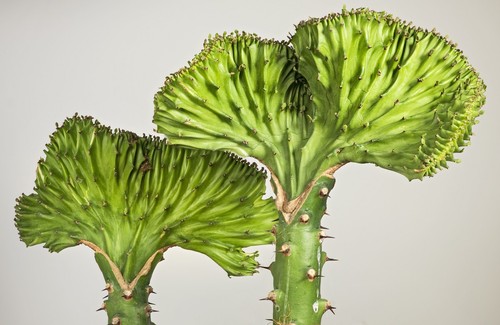
How to Care for Coral Cactus
Grow Coral Cactus (Euphorbia lactea cristata): a sculptural grafted succulent. Learn its bright-light, sparse-water needs and warmth-loving indoor care.
Coral Cactus Identification Guide
How to identify the Coral Cactus, a grafted Euphorbia with a fan-shaped crested crown atop a straight green stem.