
Coral Cactus Identification Guide
How to identify the Coral Cactus, a grafted Euphorbia with a fan-shaped crested crown atop a straight green stem.
Read the full Coral Cactus encyclopedia entry →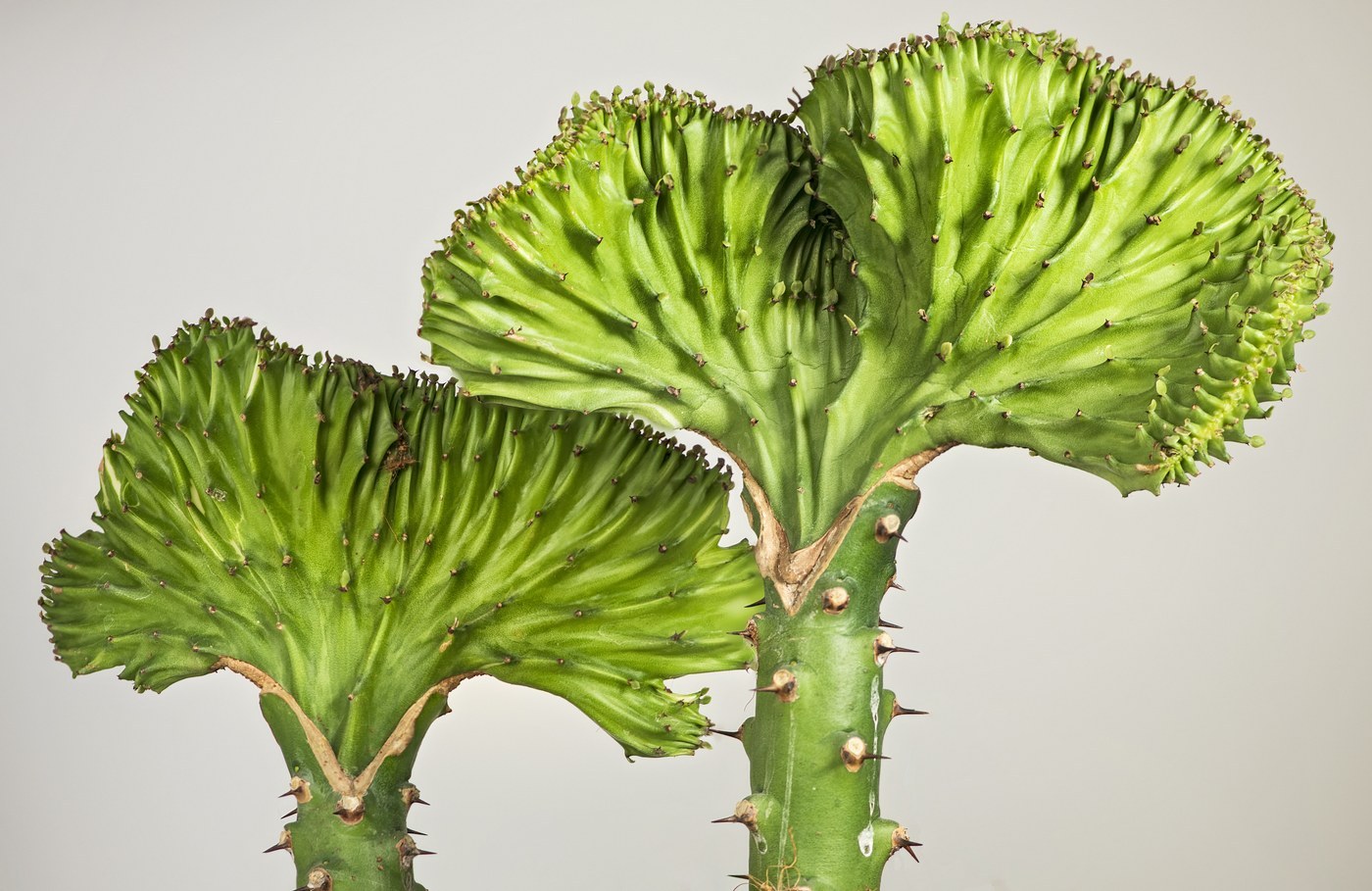
Key Identifying Features
The Coral Cactus (Euphorbia lactea 'Cristata', grafted) is not a cactus at all but a grafted, crested Euphorbia that resembles a piece of sea coral.
- A fan-shaped, wavy, crested crown on top
- Mounted on a straight green columnar rootstock (usually Euphorbia neriifolia)
- A visible graft joint between crest and base
- Crest often ruffled, ridged, and edged in pink, purple, white, or green
Stems & Crest
The showy top is a crest (fasciation) — a mutation where the growing point fans out into a broad, undulating, brain-like or coral-like ridge instead of a normal stem. The crest margin carries small thorns and a wavy, scalloped edge often colored cream, pink, or purple. This crest is grafted onto a sturdy upright green Euphorbia stem that does the rooting and feeding, with the graft union clearly visible where the two meet. Like all euphorbias, cut tissue bleeds milky white sap — a sign it isn't a true cactus.
Flowers & Fruit
The coral cactus rarely flowers in cultivation, and its euphorbia blooms would be tiny and inconspicuous anyway. Identification rests entirely on the grafted crested form and milky sap, not flowers.
How to Tell It Apart from Look-Alikes
- True crested cacti: also fan-shaped, but have areoles and watery sap; coral cactus has milky latex.
- Ungrafted Euphorbia lactea: the normal form is an upright candelabra; the coral cactus is its crested mutant on a rootstock.
- Moon cactus: also grafted, but the top is a colored ball, not a coral-like fan.
The fan/coral-shaped crest on a straight green stem with a graft seam and milky sap is the definitive ID.
Where You'll Find It
Sold worldwide as a striking indoor novelty houseplant. It needs bright indirect light, warmth, and fast-draining soil. Because it's a graft of two species, it can be finicky and is frost-tender.
Quick ID Checklist
- Fan-shaped, wavy, coral-like crested top
- Straight green columnar rootstock below
- Visible graft seam between the two
- Small thorns and colored ruffled crest edge
- Milky white sap when cut
- Sold as an indoor novelty plant
Frequently asked questions
Is the coral cactus actually a cactus?
No. It's a grafted Euphorbia. The milky white sap and the grafted crested form are the clearest signs it isn't a true cactus.
Why is the top a fan shape?
The crown is a crested (fasciated) mutation where the growing tip fans out into a coral-like ridge, then grafted onto a straight green rootstock.
Why is my coral cactus's crest browning or dying back?
Graft incompatibility, rot from overwatering, or cold stress can cause dieback. The two grafted species don't always thrive together long-term.
What is the graft joint on a coral cactus?
It is the seam where the crested Euphorbia crown is joined onto a separate straight green columnar rootstock that does the rooting and feeding.