
How to Care for Coreopsis
Coreopsis delivers months of cheerful golden daisies in full sun with lean soil and little water; deadhead for nonstop bloom.
Read the full Coreopsis encyclopedia entry →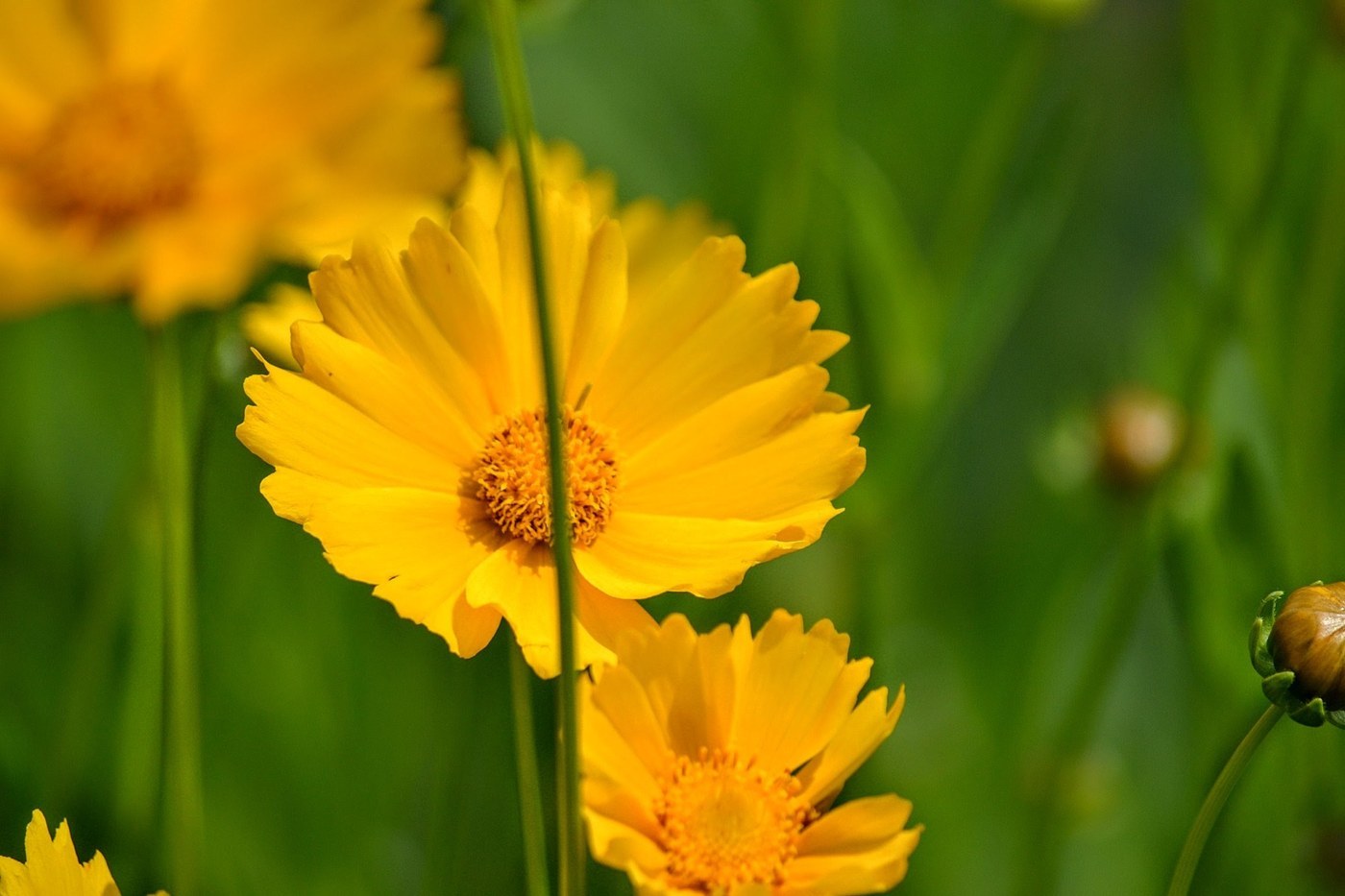
Coreopsis (Coreopsis grandiflora), often called tickseed, is a tough, sun-loving perennial that produces a long season of bright golden-yellow daisy flowers. It is an easy, drought-tolerant plant beloved for filling borders and attracting pollinators with minimal care.
Light
Coreopsis needs full sun, a minimum of six hours of direct light daily. Full sun produces compact, sturdy plants covered in flowers. In shade the plants stretch, flop, and bloom sparsely, so give them the brightest, most open spot you have.
Water
Water requirements are low. Coreopsis is notably drought tolerant once established, thriving on occasional deep watering. Water new plantings regularly through their first season to build a strong root system, then reduce watering. Established plants prefer soil that dries between waterings; soggy ground leads to root rot and short-lived plants.
Soil & Potting
Coreopsis prefers average to lean, well-drained soil and tolerates sandy or rocky ground. Sharp drainage is essential, especially through winter. Avoid heavy, wet clay and overly fertile soil, which produce weak, floppy growth. In containers use a free-draining potting mix and a pot with ample drainage holes.
Humidity & Temperature
This is an adaptable plant that handles heat, wind, and a range of humidity levels well. It is hardy across a broad temperature range and comes back reliably in temperate zones. Good air circulation helps prevent foliage diseases in humid climates. No special humidity provisions are needed.
Feeding
Coreopsis is a light feeder that performs best in lean soil. Heavy feeding causes lush foliage, weak floppy stems, and fewer flowers. A single light application of balanced fertilizer or a thin layer of compost in spring is more than enough. In fertile garden soil, skip fertilizer altogether.
Propagation
Propagate by seed, division, or basal cuttings. Sow seed in spring; many strains bloom the first year. Divide established clumps every two to three years in spring or fall to rejuvenate them and expand your planting. Basal stem cuttings taken in spring also root readily. Division also keeps older plants vigorous, since Coreopsis can be short-lived without periodic renewal.
Repotting / Pruning
Deadheading is the key task: removing spent flowers regularly keeps Coreopsis blooming continuously for months. When flowering slows and the plant looks tired in midsummer, shear it back by about a third to spark a fresh flush of growth and blooms. Cut back the foliage after frost or in late winter. Divide and replant crowded clumps every few years to maintain vigor.
Common Problems & Pests
Coreopsis is largely pest-free. In damp or crowded conditions it can develop powdery mildew, downy mildew, or leaf spots, so ensure good spacing and airflow. Root and crown rot occur in poorly drained or overwatered soil, so prioritize drainage. Aphids and occasional slugs may appear but rarely cause serious harm. Floppy, sparse plants usually mean too much shade or too much water and fertilizer.
Seasonal Care Tips
In spring, plant or divide clumps and give a light feeding if the soil is poor. Through summer, deadhead diligently and shear back midseason for a second wave of bloom. In fall, allow some seed heads to remain for self-sowing and pollinator interest, or tidy up as desired. In cold climates a light mulch helps overwinter the crown; ensure it does not sit in soggy soil, which is the biggest winter threat.
Frequently asked questions
How do I keep Coreopsis blooming all summer?
Deadhead spent flowers regularly to prevent seed set and encourage new buds. When bloom slows in midsummer, shear the whole plant back by about a third to trigger a fresh flush of growth and flowers.
Why is my Coreopsis flopping over?
Flopping usually means too little sun or soil that is too rich and moist. Grow it in full sun and lean, well-drained soil, and avoid heavy fertilizer and overwatering, which produce weak, leggy stems.
Is Coreopsis a perennial that comes back every year?
Yes, Coreopsis grandiflora is a hardy perennial, though it can be short-lived. Dividing clumps every two to three years and letting some plants self-sow keeps the planting vigorous and long-lasting.
How often should I water established Coreopsis?
Very little. Once established it is quite drought tolerant, so water deeply only during extended dry spells and let the soil dry between waterings. Constantly wet soil leads to root rot.