Coreopsis
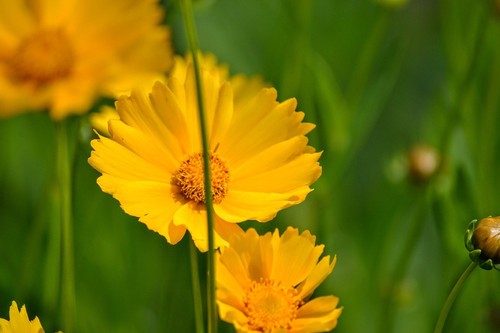
Coreopsis grandiflora
Coreopsis, or tickseed, is a cheerful, sun-loving plant smothered in daisy-like flowers, usually golden yellow, from early summer to fall. It's tough, drought-tolerant and a magnet for pollinators.
- Light
- Full sun
- Water
- Low; drought tolerant once established
- Difficulty
- Easy
Got a plant like this?
Identify any plant from a photo, free.
Overview
Coreopsis (commonly called tickseed) is a North American genus of annuals and perennials in the daisy family, prized for long-lasting, brightly colored flowers and easy care. Coreopsis grandiflora and C. lanceolata are classic golden-yellow perennials, while threadleaf types (C. verticillata) add fine foliage and softer hues.
Few plants bloom as generously or as long. Given sun and decent drainage, coreopsis flowers from early summer well into autumn, especially if deadheaded, making it a backbone of low-maintenance and pollinator gardens.
How to identify it
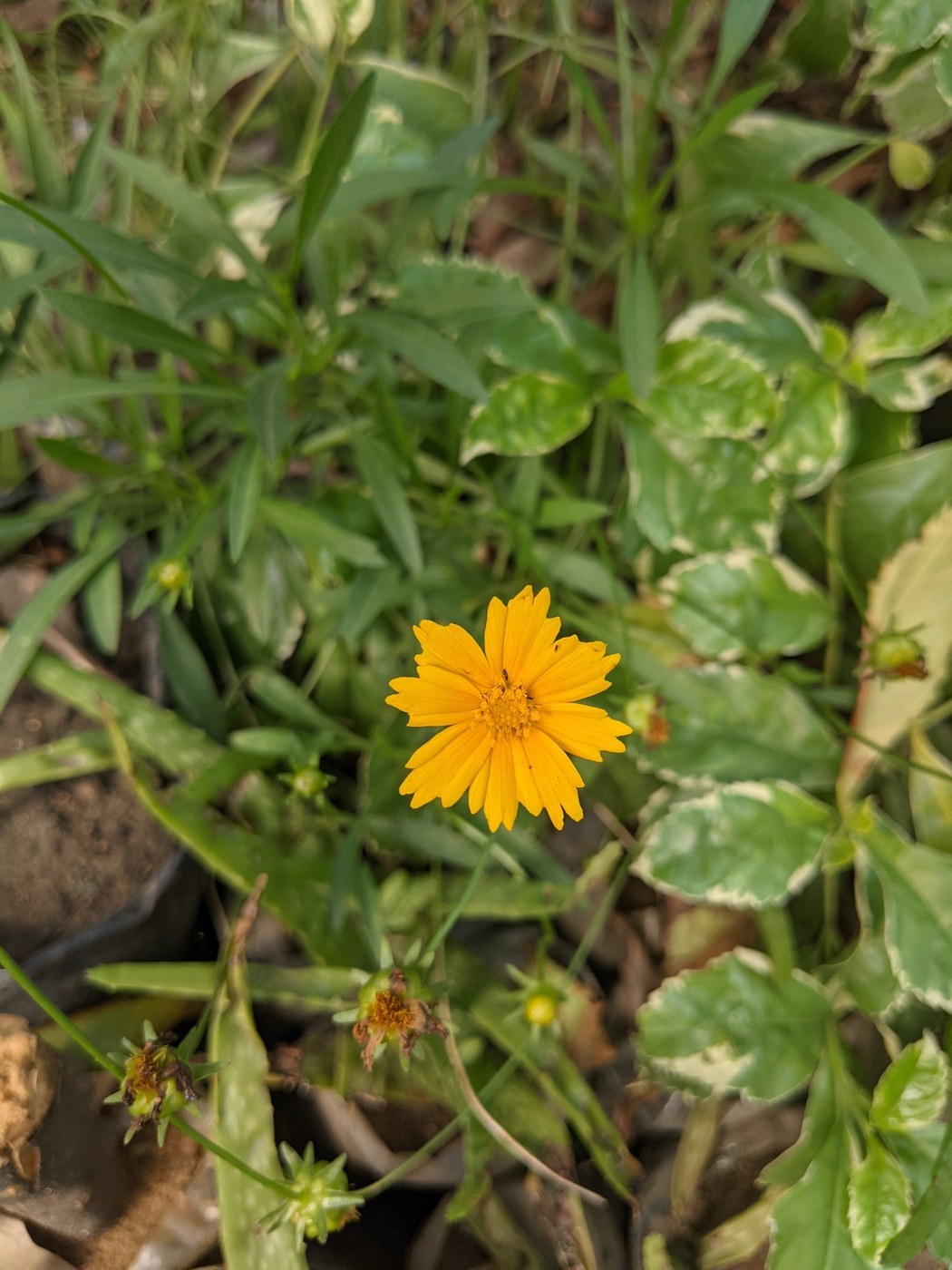
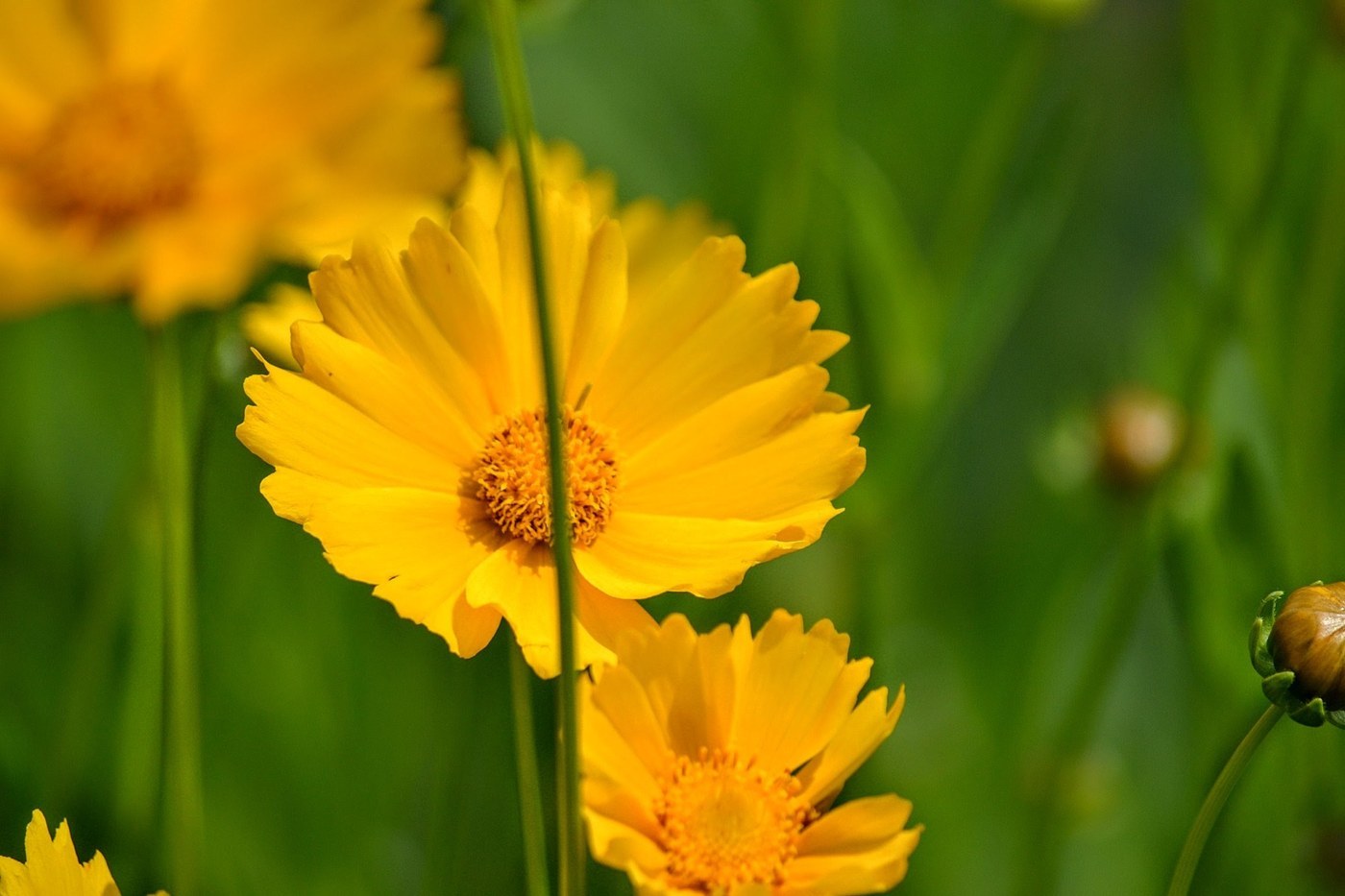
Daisy-like flowers with notched petal tips are characteristic.
- Flowers: single or double daisy-like blooms 1-2 in across; ray petals usually golden yellow (also pink, red, bicolor in cultivars) with toothed or notched tips
- Leaves: vary from broad lance-shaped to very fine and thread-like (threadleaf types)
- Habit: bushy clumps 1-3 ft tall depending on species
- Seeds: small dark seeds said to resemble ticks, giving the name 'tickseed'
Care & growing
Coreopsis is one of the easiest sun perennials.
- Light: full sun for best, most prolific flowering
- Water: low; drought tolerant once established, dislikes wet soil
- Soil: average to lean, well-drained soil; tolerates poor ground
- Temperature: most perennial types hardy in zones 4-9
- Feeding: minimal; rich soil reduces flowering and causes flop
- Maintenance: deadhead or shear after the first flush for repeat bloom into fall
- Propagation: division, cuttings or seed
Habitat & origin
Coreopsis is native to North America, particularly the central and eastern United States, growing in prairies, meadows, open woods and roadsides on sunny, well-drained sites.
Well adapted to heat, drought and poor soil, it is widely grown in pollinator gardens, prairie plantings, wildflower meadows and sunny borders, and several states recognize it as an official wildflower.
Frequently asked questions
How do I get coreopsis to keep blooming?
Deadhead spent flowers, or shear the whole plant back after the first big flush. Regular removal of old blooms keeps it flowering into fall.
Is coreopsis drought tolerant?
Yes, once established it handles heat and dry spells well, which makes it great for low-water and prairie-style gardens.
Why is my coreopsis flopping over?
Usually too-rich soil or too much shade. Grow it in full sun and lean, well-drained soil for sturdier, more compact plants.
Is coreopsis a perennial?
Many species are perennial (such as C. grandiflora and C. verticillata), while some are annuals. Check the specific type you're growing.
Coreopsis guides
In-depth guides for identifying, growing, and caring for Coreopsis.