
Corn Poppy Identification Guide
Learn to recognize the corn poppy by its papery scarlet petals, hairy stems, and finely divided leaves. This guide covers the features that separate it from other red poppies.
Read the full Corn Poppy encyclopedia entry →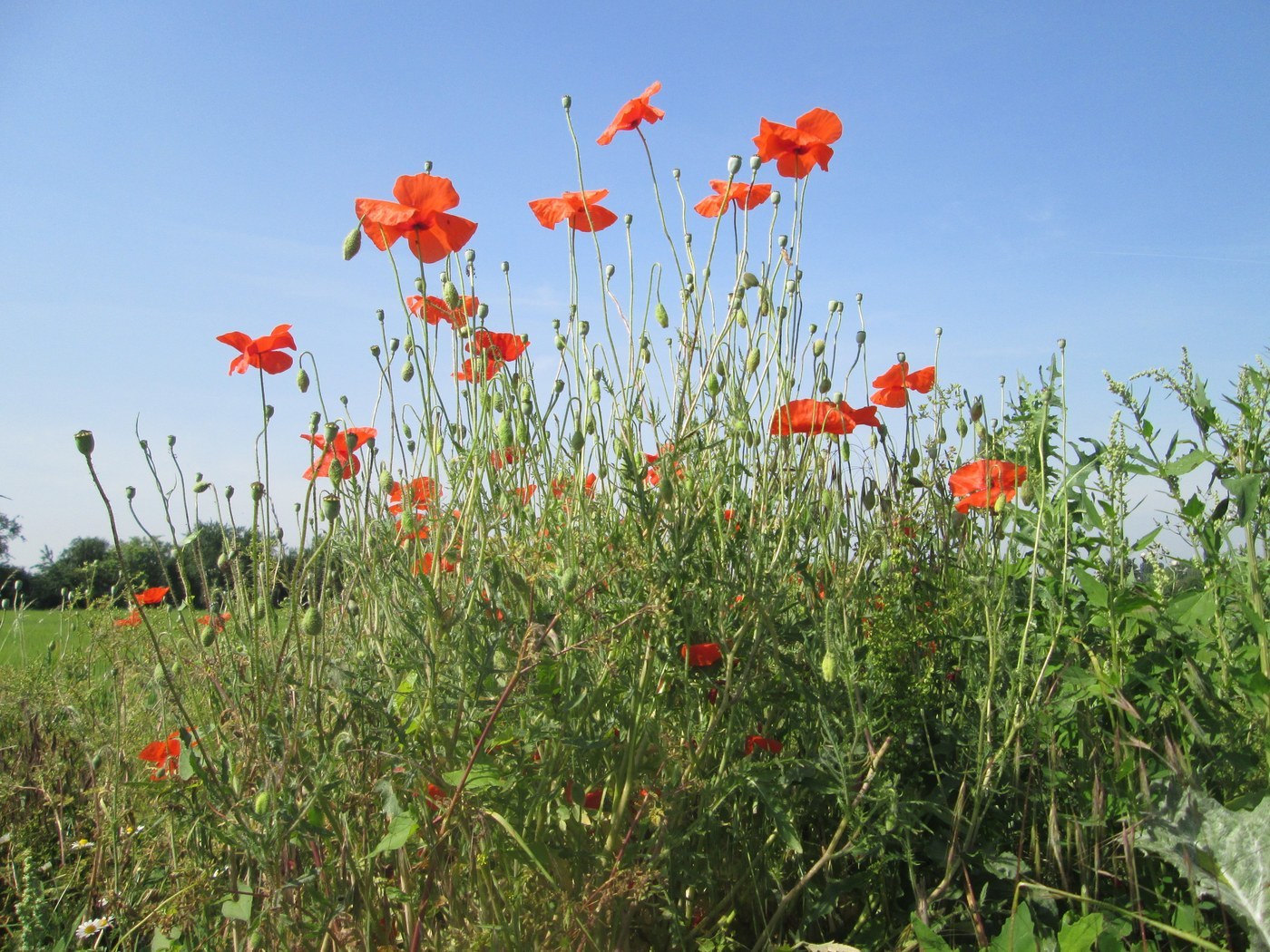
Key Identifying Features
The corn poppy (Papaver rhoeas), also called field or Flanders poppy, is an annual wildflower famous for its blood-red blooms in disturbed ground and grainfields.
- Flowers: 5-9 cm across with 4 silky, crinkled scarlet petals, usually with a dark blotch at the base
- Stamens: a dense ring of dark blue-black anthers around a flat-topped seed capsule
- Stems: slender, bristly-hairy, branching, holding flowers well above the foliage
- Sap: white, milky latex when broken
- Height: typically 30-70 cm tall
Leaves & Stems
Leaves are alternate, deeply and irregularly pinnately lobed (cut almost to the midrib) with toothed segments, and covered in coarse bristly hairs. Lower leaves are stalked; upper ones clasp the stem. The whole plant feels rough to the touch. Stems carry stiff, spreading hairs, an important detail separating it from smoother relatives. Buds are nodding (drooping) and hairy before opening, then lift upright as the flower expands.
Flowers & Fruit
Each flower is short-lived, opening from a hairy two-part bud that splits and falls away. The four petals overlap to look almost circular. After flowering, the plant forms a distinctive smooth, rounded-to-flat-topped seed capsule (less than twice as long as wide) topped by a flattened disc with 8-12 rays. The capsule opens by tiny pores under the cap, scattering thousands of minute seeds. This rounded, hairless capsule is one of the most reliable ID traits.
How to Tell It Apart from Look-Alikes
- Long-headed poppy (Papaver dubium): has a longer, club-shaped capsule and paler, often unblotched orange-red petals
- Prickly poppy (Papaver argemone): smaller petals with gaps between them and a bristly, ribbed capsule
- Oriental poppy (Papaver orientale): a robust perennial with much larger flowers and very hairy, blue-green foliage
- California poppy (Eschscholzia): orange, finely lacy blue-green leaves, smooth conical capsule, no dark anthers
The combination of rounded smooth capsule + bristly stems + dark anthers + papery red petals confirms corn poppy.
Where You'll Find It
A classic plant of cultivated and disturbed soils: arable field margins, roadsides, railway banks, building sites and recently turned earth. Native to Europe, North Africa and temperate Asia, it is now widely naturalized in North America and elsewhere. It flowers late spring through summer and thrives in full sun on well-drained ground.
Quick ID Checklist
- Four crinkled, papery scarlet petals, often dark-blotched
- Ring of blue-black anthers around the central capsule
- Bristly-hairy, branching stems
- Deeply lobed, rough, toothed leaves
- Milky white sap
- Smooth, rounded capsule with flat-topped disc
- Growing in disturbed soil or grainfields
Frequently asked questions
How do I tell corn poppy from California poppy?
Corn poppy has red papery petals with dark anthers and a rounded smooth capsule, while California poppy has orange petals, lacy blue-green leaves and a long conical seed pod with no dark central anthers.
Is the dark blotch always present?
Many corn poppies show a black basal blotch on each petal, but some plants lack it. Use the rounded capsule and bristly stems alongside petal color for a confident ID.
What does the seed capsule look like?
It is a smooth, hairless, rounded capsule less than twice as long as wide, capped by a flat disc with radiating ridges that release seed through small pores.
Where is corn poppy most likely found?
Look in disturbed ground such as field edges, roadsides, construction sites and grainfields in full sun, where it blooms from late spring into summer.