
How to Care for Cotoneaster
Cotoneaster horizontalis is a tough, low-spreading shrub with herringbone branches, spring flowers, and bright fall berries.
Read the full Cotoneaster encyclopedia entry →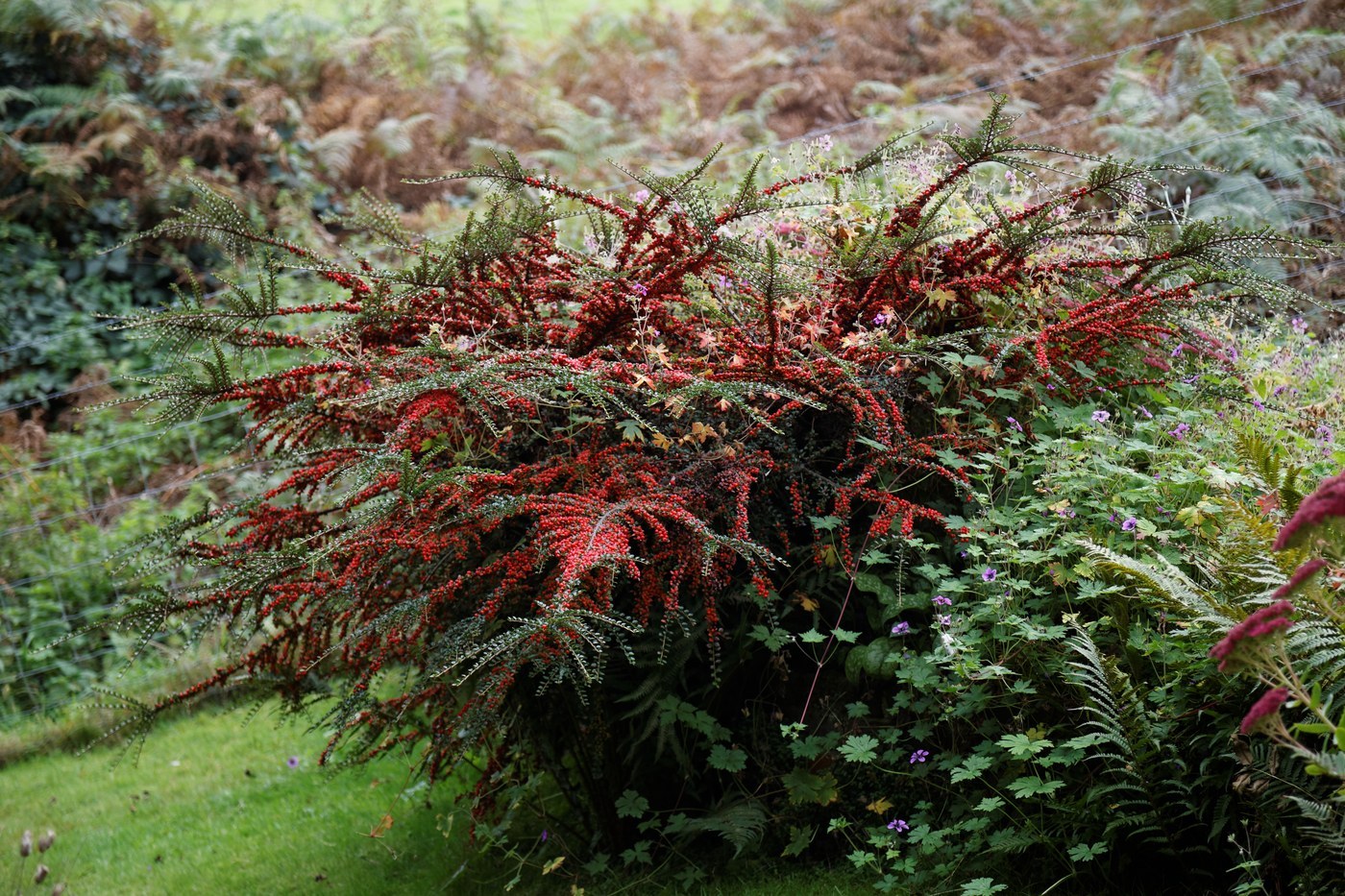
Cotoneaster horizontalis, often called rockspray cotoneaster, is a durable low-growing shrub with a distinctive herringbone branching pattern. It is prized for its small glossy leaves, tiny spring flowers, and showy autumn berries, and it excels cascading over walls, banks, and rock gardens.
Light
Cotoneaster grows well in full sun to part shade. The heaviest flowering and best berry set come with full sun, while it still performs acceptably in light shade. Too much shade thins the growth and reduces its ornamental display.
Water
Water regularly during the first season to establish a strong root system. Once established, cotoneaster is notably drought tolerant and needs only low to moderate water, relying on occasional deep soaks during prolonged dry spells. It dislikes constantly wet soil.
Soil & Potting
This adaptable shrub tolerates a wide range of soils, including poor, rocky, and chalky ground, as long as drainage is good. It is not fussy about pH. Heavy, waterlogged soil is the main thing to avoid. In containers, use a free-draining loam-based mix.
Humidity & Temperature
Cotoneaster is tough and cold hardy, handling a broad range of temperatures and typical outdoor humidity without complaint. It withstands wind and exposed sites well, making it a reliable choice for challenging spots.
Feeding
Feeding needs are minimal. A single application of balanced slow-release fertilizer or a topdressing of compost in early spring is sufficient. Overfeeding encourages soft growth and can reduce berry production, so keep it light.
Propagation
Propagate from semi-ripe cuttings taken in summer, which root readily in a gritty mix. Seeds can be sown but require cold stratification and are slow and variable. Low branches that touch the ground often self-layer and can be separated once rooted.
Repotting / Pruning
Cotoneaster needs little pruning; simply remove dead, damaged, or crossing branches and shape lightly after flowering to preserve the natural herringbone form. It responds well to hard renovation pruning if it outgrows its space. Repot container specimens every couple of years into fresh mix.
Common Problems & Pests
The most serious issue is fireblight, a bacterial disease that blackens shoots and requires prompt removal of affected wood with sterilized tools. Watch also for scale insects, aphids, and cotoneaster webber caterpillars that spin webbing over foliage. Good airflow and avoiding waterlogging reduce most problems.
Seasonal Care Tips
Enjoy small flowers in spring followed by bright berries in autumn that persist into winter. Do any needed pruning after flowering. Water new plantings through their first dry summer, then let established shrubs largely fend for themselves. Mulch in spring to conserve moisture and suppress weeds.
Frequently asked questions
How much water does cotoneaster need?
Water regularly the first season to establish it, then only low to moderate water. Established plants are drought tolerant and need deep soaking only during extended dry spells.
When should I prune cotoneaster?
Prune lightly after flowering to shape it and remove dead or crossing branches. It tolerates hard renovation pruning if it outgrows its space.
Why are the shoots on my cotoneaster turning black?
Blackened, wilted shoots often indicate fireblight, a bacterial disease. Cut well below affected areas with sterilized tools and dispose of the prunings to stop it spreading.
Does cotoneaster grow in poor soil?
Yes. It tolerates poor, rocky, and chalky soils across a wide pH range, as long as drainage is good. Avoid heavy, waterlogged ground.