
Coulter Pine Identification Guide
Identify Coulter Pine (Pinus coulteri) by its dark blue-green needles in threes and the heaviest pine cones in the world, bristling with hooked claws.
Read the full Coulter Pine encyclopedia entry →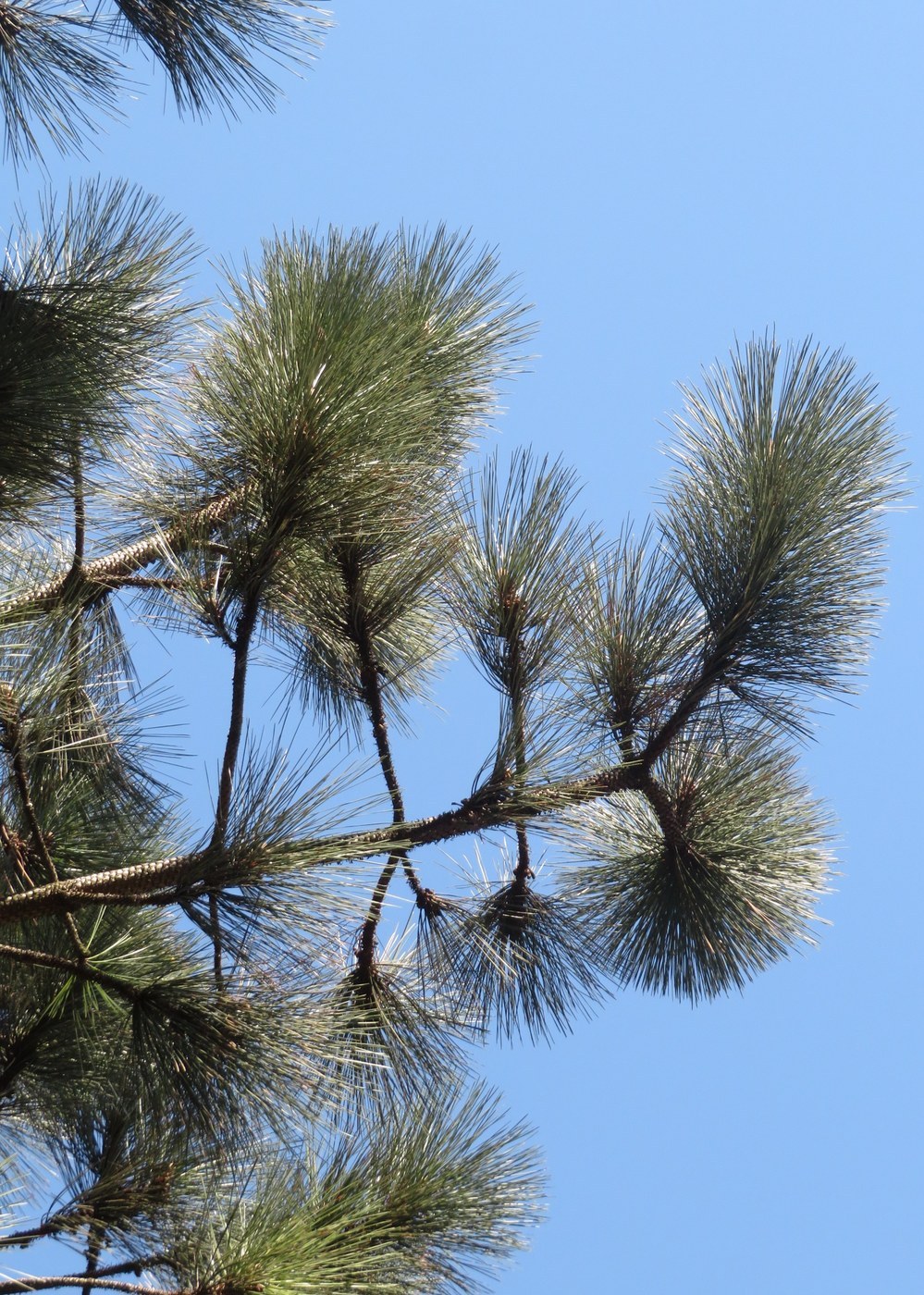
Key Identifying Features
Coulter Pine (Pinus coulteri) is famous for producing the heaviest cones of any pine, sometimes weighing 4–10 pounds — earning the nickname "widowmaker" for cones falling from height. It is a medium-sized pine of southern California and Baja mountains with a stout trunk and stiff, gray-green foliage.
- Massive, spiny cones that are wider and heavier than any other pine's
- Long needles in bundles of three, stiff and bluish-green
- A straight, single main trunk (unlike forked Gray Pine)
- Dark gray-brown, deeply furrowed bark
Leaves & Stems
Needles are in fascicles of three, very long at 8–12 inches, and noticeably stiff and stout with a grayish blue-green cast. They cluster densely toward branch ends, giving a fuller, darker crown than Gray Pine. Branches are heavy and stout to support the enormous cones. The bark is thick, dark, and ridged.
Flowers & Fruit
The cone is the showstopper: 8–14 inches long, golden-brown, and extraordinarily heavy (the record holder among pines). Each scale ends in a long, curved, talon-like claw, making the cone look armored. Cones mature in two years and persist on the branches. Large, hard seeds are released. Pollen cones are small and yellowish in spring.
How to Tell It Apart from Look-Alikes
- Gray Pine also has huge cones but distinctly gray, sparse, see-through foliage and a forked trunk; Coulter has denser, darker needles and a single straight trunk.
- Jeffrey and Ponderosa Pines share the southern mountains but have much smaller cones (the easiest tell) and don't have the talon-clawed scales.
- If you find a football-sized cone with hooked claws and the foliage is dark blue-green on a straight-trunked tree, it's Coulter.
Where You'll Find It
Coulter Pine grows in the coastal and interior mountain ranges of southern and central California into northern Baja California, typically at 3,000–7,000 ft on dry, rocky slopes. It often mixes with chaparral, oaks, and other pines in semi-arid montane settings, and is adapted to periodic fire.
Quick ID Checklist
- Heaviest pine cones in the world (4–10 lb)
- Cone scales with long hooked claws
- Needles in 3s, 8–12 in, stiff blue-green
- Single straight trunk, stout branches
- Southern California / Baja mountains
Frequently asked questions
Does Coulter Pine really have the heaviest cones?
Yes. Coulter Pine produces the heaviest cones of any pine species, often 4–10 pounds, with long curved claws on each scale — the single most reliable ID feature.
How do I distinguish Coulter Pine from Gray Pine?
Coulter has dense, dark blue-green foliage and a straight single trunk, while Gray Pine has sparse, pale gray see-through foliage and a forked, leaning trunk.
What do Coulter Pine needles look like?
They grow in bundles of three, are very long at 8–12 inches, and are stiff and stout with a grayish blue-green color, clustering densely toward the branch ends to form a full, dark crown.
Where can I see Coulter Pine?
Look in the dry mountain ranges of southern and central California and northern Baja California, generally between 3,000 and 7,000 feet on rocky slopes.