
How to Care for Cranberry
Growing guide to Vaccinium macrocarpon: a low, spreading bog shrub needing full sun, wet, highly acidic peaty soil.
Read the full Cranberry encyclopedia entry →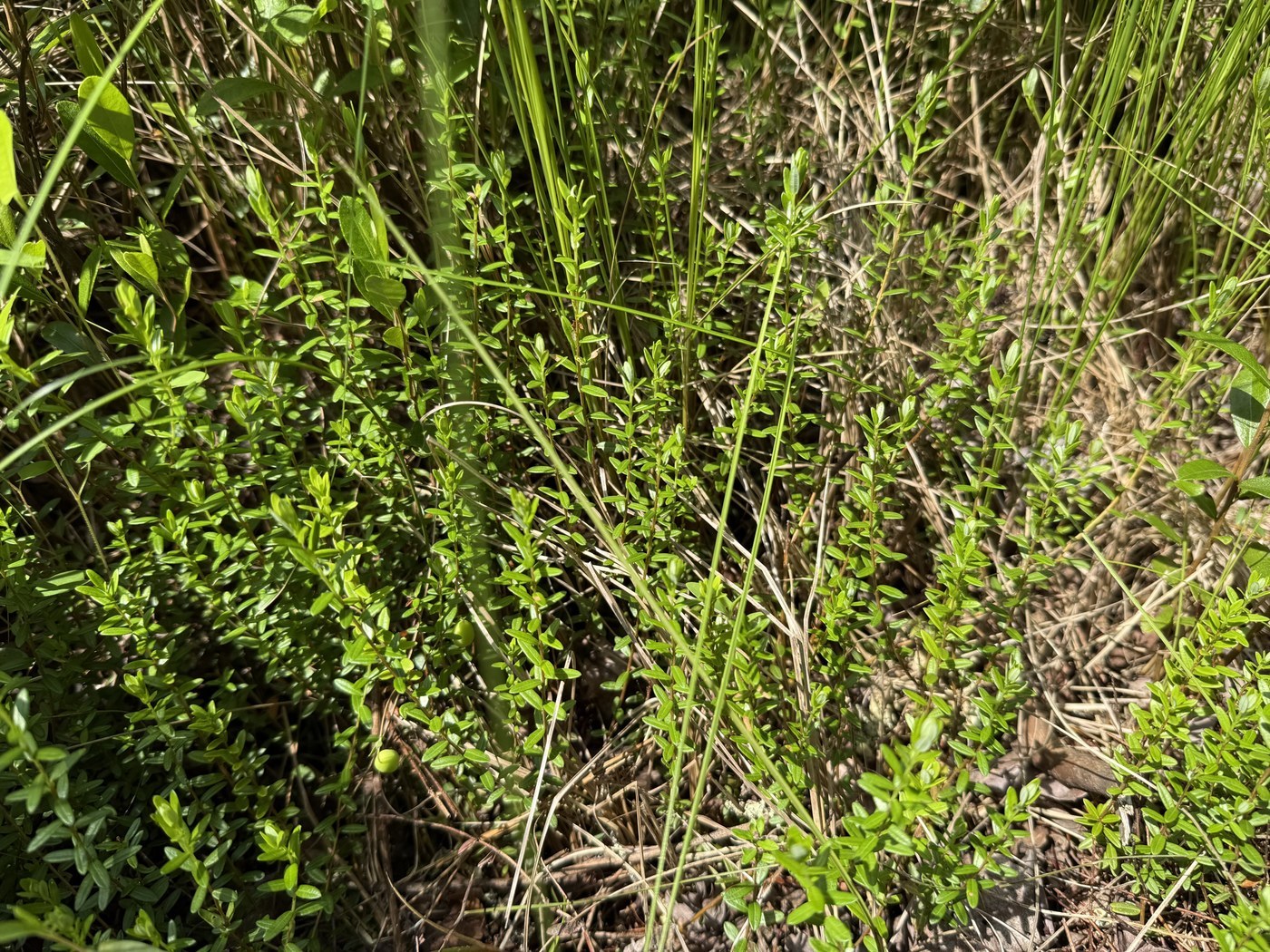
The cranberry (Vaccinium macrocarpon) is a low, wiry, evergreen bog shrub that spreads by trailing runners to form a dense mat of fine stems and tiny leaves. It is one of the more demanding plants to grow because it insists on constant moisture, very acidic soil, and full sun, but a grower who can recreate its native bog conditions is rewarded with an attractive, long-lived groundcover.
Light
Cranberries need full sun, ideally 6 or more hours daily, to grow vigorously, flower, and set fruit. In shade the runners grow thin and sparse and fruiting is poor. Choose the most open, sunniest site you can offer, and in containers place the bed where nothing overshadows it.
Water
This is the crux of cranberry care: the plants demand constant moisture and thrive in wet, boggy conditions that would rot most shrubs. The soil must never dry out. Water frequently, even daily in warm weather, to keep the root zone continuously damp. Note that despite popular images of flooded fields, cranberries are not grown submerged; the flooding used commercially is a seasonal harvesting and winter-protection technique, not the growing condition. Day to day, the plants simply require perpetually moist, water-retentive ground.
Soil & Potting
Cranberries require a highly acidic, peaty, sandy medium with a pH of roughly 4.0-5.5, far more acidic than most garden plants tolerate. A classic mix is peat-heavy soil blended with sand, kept low in nutrients. In ordinary garden soil they fail, so most growers build a dedicated bed lined to retain moisture or grow them in large containers or troughs filled with a peat-sand mix. Never add lime, and use rainwater rather than hard, alkaline tap water where possible to keep the medium acidic.
Humidity & Temperature
Cranberries are hardy, cool-climate plants that need a period of winter chill to fruit well and tolerate very cold winters when the crowns are protected. They grow actively in the mild temperatures of spring and summer. In regions with hard freezes, a winter mulch or the traditional flood protects the low evergreen mat from desiccating cold and ice damage. They handle humid conditions naturally given their bog origins.
Feeding
Feed sparingly. Cranberries are adapted to lean, nutrient-poor bogs and are easily harmed by excess fertilizer, especially high nitrogen, which pushes runner growth at the expense of fruit. Use a light application of an acidifying fertilizer formulated for acid-loving plants such as those sold for rhododendrons or blueberries, applied in spring during active growth.
Propagation
Cranberries propagate readily from cuttings taken from the trailing runners. In spring, cut healthy vine sections several inches long and press or plant them into the moist peat-sand bed, where they root along their length. Established plantings also spread on their own as runners root at the nodes. Growing from seed is slow and unpredictable, so vegetative propagation is preferred.
Repotting / Pruning
Cranberries need little pruning, but you can trim back excessive runners to encourage the upright fruiting uprights and keep the mat tidy and productive. In container culture, top up or refresh the peaty medium periodically and divide or replant when the bed becomes crowded and matted. Any pruning is best done in early spring before growth resumes.
Common Problems & Pests
The most frequent failures are cultural: soil that dries out, or a pH that drifts too high because of alkaline water or added lime, both of which cause weak growth and yellowing. Keep the medium wet and acidic to avoid this. Cranberries can host fungal diseases such as fruit rots and leaf spots in stagnant, poorly aerated conditions, and pests including fruitworms and tipworms may appear. Good sun, air movement, and clean, healthy plantings minimize trouble.
Seasonal Care Tips
In spring, refresh mulch, feed lightly with an acidic fertilizer, and take runner cuttings as growth resumes. Through summer, the priority is unrelenting moisture as pink flowers give way to developing fruit; never let the bed dry. In autumn the fruit colors up and the evergreen foliage may take on bronze tones. Over winter, protect the low crowns from freeze damage with mulch or the traditional flood in cold regions.
Frequently asked questions
Do cranberries grow underwater?
No. Cranberry vines grow on moist, boggy land, not submerged. The flooded fields seen in photos are a seasonal technique used for harvesting and winter protection, not the plant's day-to-day growing condition.
Why is cranberry considered hard to grow?
It demands a narrow set of conditions all at once: constant moisture, very acidic peaty soil around pH 4-5.5, and full sun. Recreating these bog conditions in an ordinary garden takes a dedicated, well-managed bed.
What soil do cranberries need?
A highly acidic, peat-and-sand medium with a pH of about 4.0-5.5 that stays constantly moist. Never add lime, and use rainwater where possible since hard tap water raises the pH over time.
How do I propagate cranberries?
Take several-inch cuttings from the trailing runners in spring and plant them into the moist peaty bed, where they root readily. Established plants also spread naturally as runners root at their nodes.