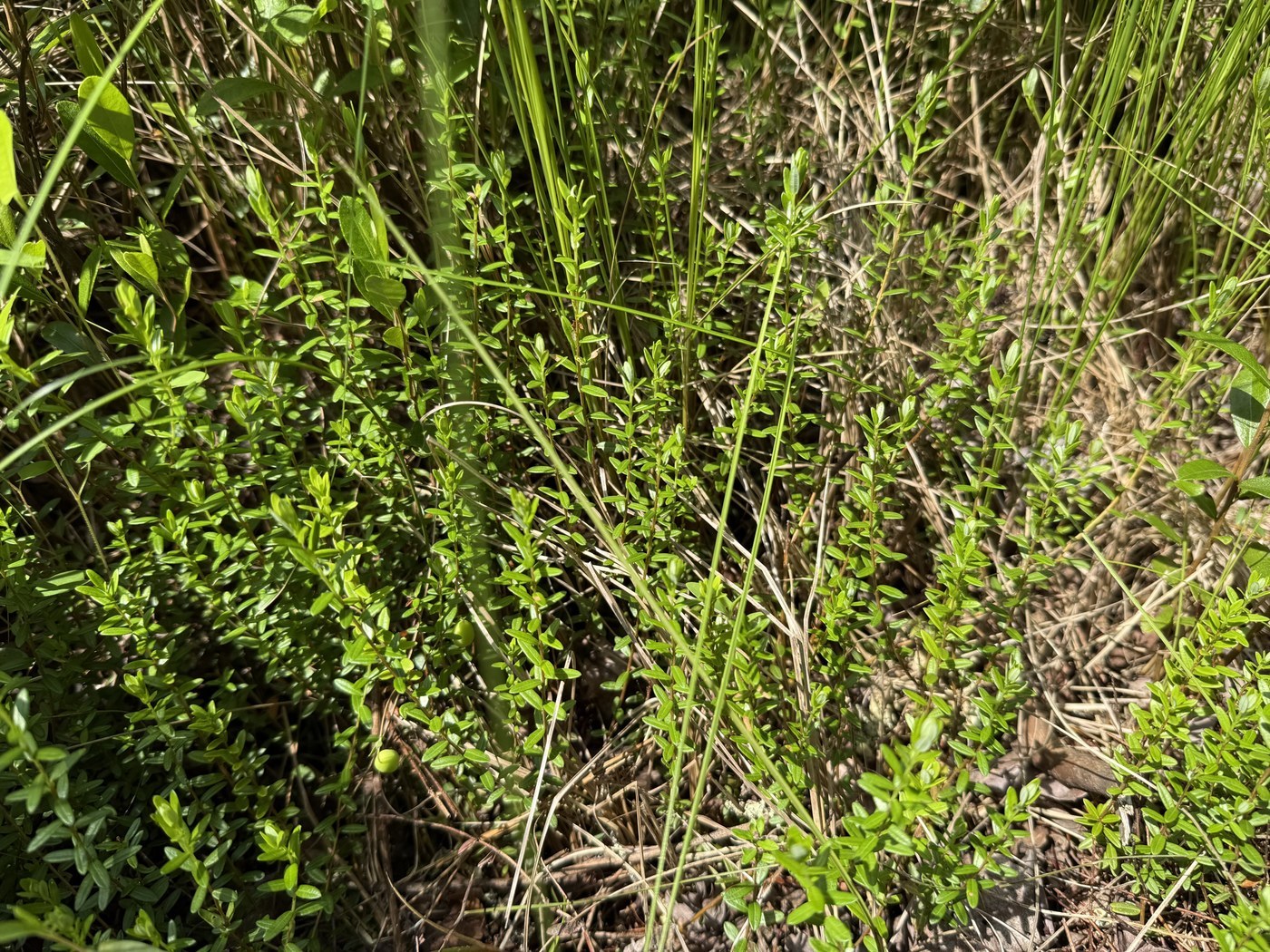
Cranberry
Vaccinium macrocarpon
A low, trailing evergreen shrub native to North American wetlands, grown for its red berries. It requires acidic, consistently moist, peaty soil to thrive.
- Light
- Full sun
- Water
- Constant moisture; needs wet, acidic conditions
- Difficulty
- Hard
Got a plant like this?
Identify any plant from a photo, free.
Overview
The American cranberry is a low, creeping evergreen shrub in the heath family, closely related to blueberries. It grows naturally in acidic bogs and wetlands of North America, spreading by slender horizontal runners that root as they go.
Cranberries are known for their red fruit; commercial bogs are often flooded so the berries float for collection. They are demanding to grow, requiring specific acidic, wet, low-nutrient conditions.
How to identify it
Identifying features:
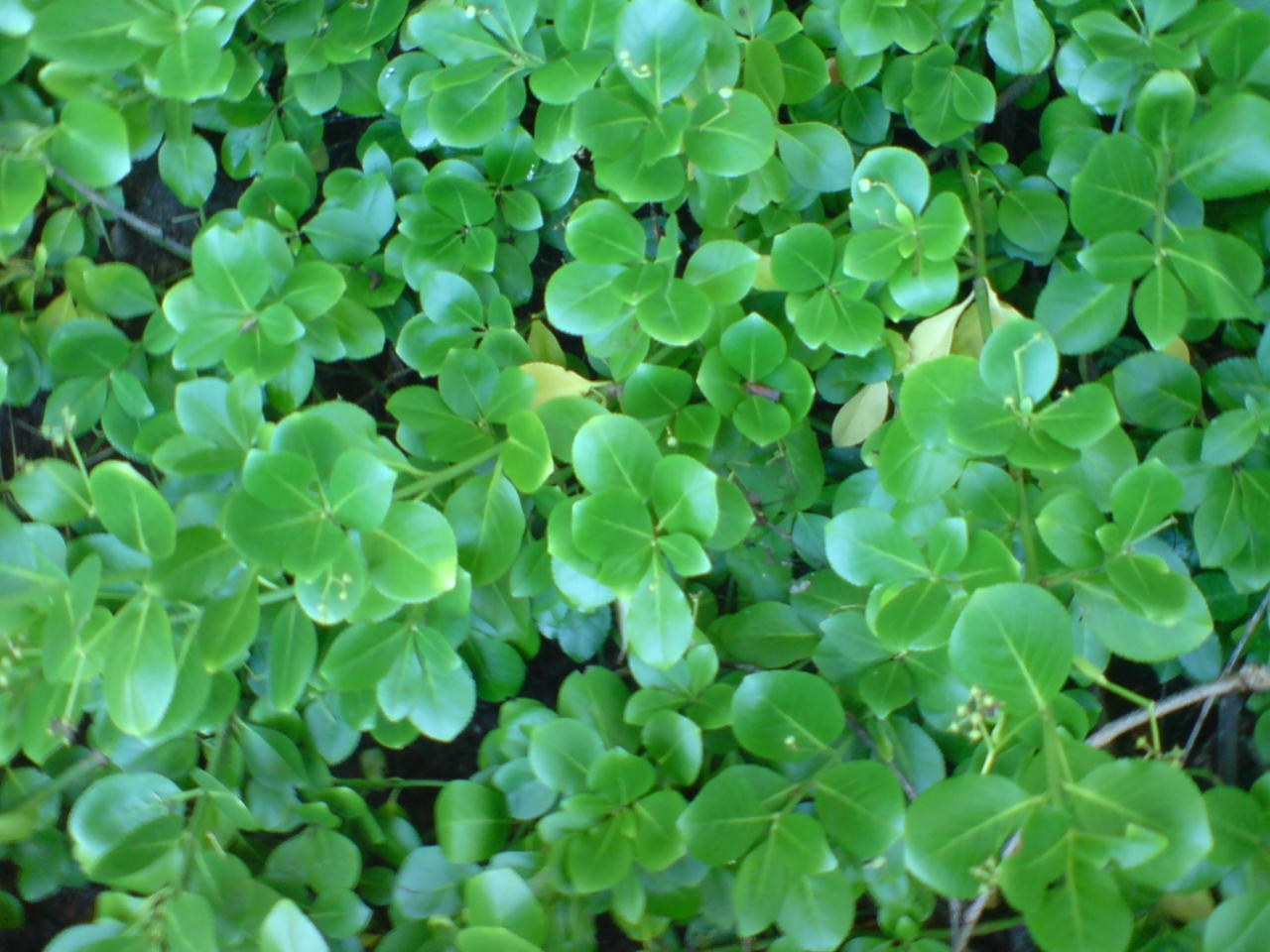
- Habit: Low, trailing, mat-forming evergreen shrub with wiry stems that root along the ground; uprights only a few centimeters tall
- Leaves: Small, oval, leathery, dark green (often bronzing in winter), 0.5-1.5 cm
- Flowers: Small, pale pink, with strongly reflexed petals resembling a crane's head, on slender stalks in early summer
- Fruit: Round, firm berries ripening to deep red, about 1-2 cm, with small internal air pockets that let them float
- Spread: By long, thin runners
Care & growing
Light: Full sun for good flowering and fruiting.
Water: Requires constantly moist conditions; the soil must never dry out. Cranberries grow in or near wetlands, not standing water year-round (commercial bogs are flooded only at certain times).
Soil: Strongly acidic (pH 4.0-5.5), high in peat and organic matter, with poor fertility. This is the key challenge for home growers.
Temperature: Very cold-hardy, suited to USDA zones 2-7; needs winter chill.
Feeding: Minimal; cranberries are adapted to low-nutrient soils and are easily over-fertilized.
Propagation: From rooted runners or cuttings. Patience is required, as new plantings may take 3-4 years to fruit well.
Habitat & origin
Vaccinium macrocarpon is native to northeastern North America, growing in acidic bogs, marshes, and wet meadows from Canada south to the Appalachians.
It is cultivated in managed bogs in Massachusetts, Wisconsin, New Jersey, Oregon, and Quebec. The smaller European cranberry (Vaccinium oxycoccos) occupies similar habitats across northern Eurasia.
Frequently asked questions
Do cranberries grow underwater?
No. Cranberries grow on dry vines in acidic bogs; commercial bogs are flooded only at harvest so the berries float for easy collection, and at times for winter protection.
Why are cranberries hard to grow at home?
They need very specific conditions: strongly acidic, peaty, low-nutrient soil that stays consistently moist, plus full sun and winter chill, which are difficult to replicate.
How long until cranberry plants produce fruit?
New plantings often take 3-4 years before producing a meaningful crop, then can fruit for decades.
Are cranberries related to blueberries?
Yes. Both are in the genus Vaccinium in the heath family, sharing a need for acidic soil.
Cranberry guides
In-depth guides for identifying, growing, and caring for Cranberry.
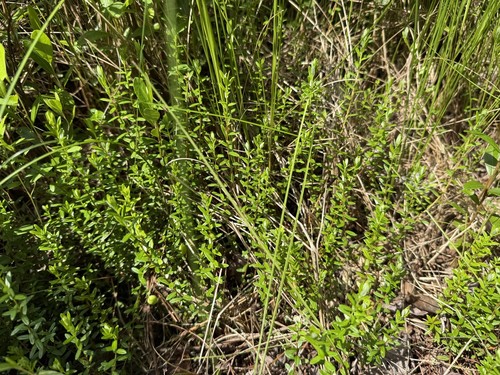
How to Care for Cranberry
Growing guide to Vaccinium macrocarpon: a low, spreading bog shrub needing full sun, wet, highly acidic peaty soil.
Cranberry Identification Guide
Identify the cranberry (Vaccinium macrocarpon) by its low trailing wiry vines, tiny evergreen leaves, pink shooting-star flowers, and firm red berries in bogs.