
Cranberry Identification Guide
Identify the cranberry (Vaccinium macrocarpon) by its low trailing wiry vines, tiny evergreen leaves, pink shooting-star flowers, and firm red berries in bogs.
Read the full Cranberry encyclopedia entry →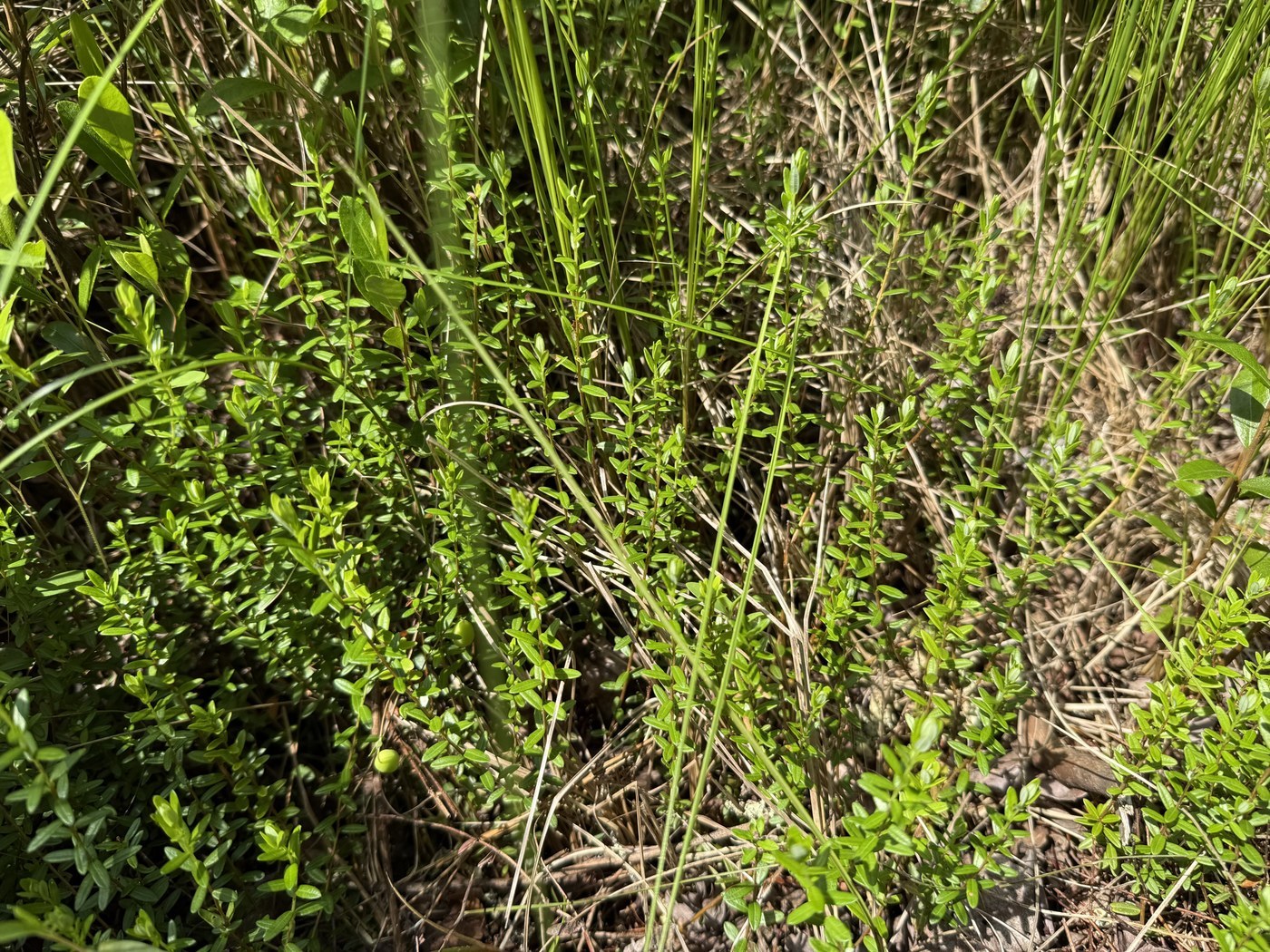
Key Identifying Features
The cranberry (Vaccinium macrocarpon, American cranberry) is a low, creeping, evergreen dwarf shrub with slender, wiry, trailing stems that root as they spread, forming dense mats only 10-20 cm tall. Diagnostic clues are the tiny leathery oblong leaves, distinctive pink 'shooting-star' nodding flowers, and firm, glossy red berries borne on upright shoots, almost always in acidic boggy ground.
Leaves & Stems
- Leaves are small (6-18 mm), alternate, oblong-elliptical, leathery and evergreen, dark green above and pale/whitish beneath, with smooth, slightly rolled-under margins.
- Stems are thin, wiry, and trailing, with short upright flowering branchlets.
- Foliage often turns bronze-purplish in winter.
Flowers & Fruit
- Flowers are pink, nodding, about 1 cm, with four petals sharply reflexed (swept back) so the protruding stamens form a pointed 'beak' — resembling a shooting star or a crane's head (the source of the name).
- They appear in early summer on the upright shoots.
- Fruit is a round to oval berry, 1-2 cm, ripening glossy deep red, firm with a distinctive bounce, and tart.
- Berries sit on slender stalks and persist into autumn/winter.
How to Tell It Apart from Look-Alikes
- Lingonberry / cowberry (Vaccinium vitis-idaea): also low and red-berried, but flowers are bell-shaped (not reflexed) and leaves are broader with a notched tip.
- Bearberry (Arctostaphylos uva-ursi): has spoon-shaped leaves and mealy (not juicy) red berries, with urn-shaped flowers.
- Small/European cranberry (V. oxycoccos): very similar but smaller in all parts, with triangular leaves.
- The reflexed pink shooting-star flower + wiry trailing bog habit + firm tart red berry confirms cranberry.
Where You'll Find It
Cranberries grow in cool-temperate acidic wetlands: bogs, fens, and the edges of marshes and ponds in North America, often in peaty, waterlogged, nutrient-poor soils. Commercially they are grown in constructed bogs that are flooded for harvest, where the buoyant berries float. They demand acidic, moist conditions and full sun.
Quick ID Checklist
- Low, creeping, wiry trailing evergreen mat-forming vine
- Tiny leathery oblong leaves, pale beneath, edges rolled under
- Nodding pink flowers with reflexed petals (shooting-star look)
- Firm, glossy, tart red berries that 'bounce'
- Grows in acidic bogs and wet peaty ground
Frequently asked questions
Where do wild cranberries grow?
In cool, acidic wetlands such as bogs, fens, and marsh edges with peaty, waterlogged, nutrient-poor soil. If you find low trailing red-berried vines in a bog, cranberry is a strong candidate.
What do cranberry flowers look like?
They are small, nodding, and pink, with the four petals swept sharply backward so the stamens stick out like a pointed beak, giving a shooting-star or crane-head appearance that gives the plant its name.
How do I tell cranberry from lingonberry or bearberry?
Cranberry has wiry trailing stems, tiny rolled-edge leaves, reflexed pink flowers, and firm juicy tart berries. Lingonberry has bell-shaped flowers and notch-tipped leaves, and bearberry has spoon-shaped leaves and dry, mealy berries.
Is it true that cranberries bounce?
Yes. Ripe, firm cranberries have small internal air pockets and are notably firm, so good berries actually bounce, a trait historically used to sort them. Soft berries that do not bounce are overripe or spoiled.