
How to Care for Creeping Buttercup
A tough, cheerful groundcover with glossy yellow flowers that thrives in damp soil and spreads freely by runners.
Read the full Creeping Buttercup encyclopedia entry →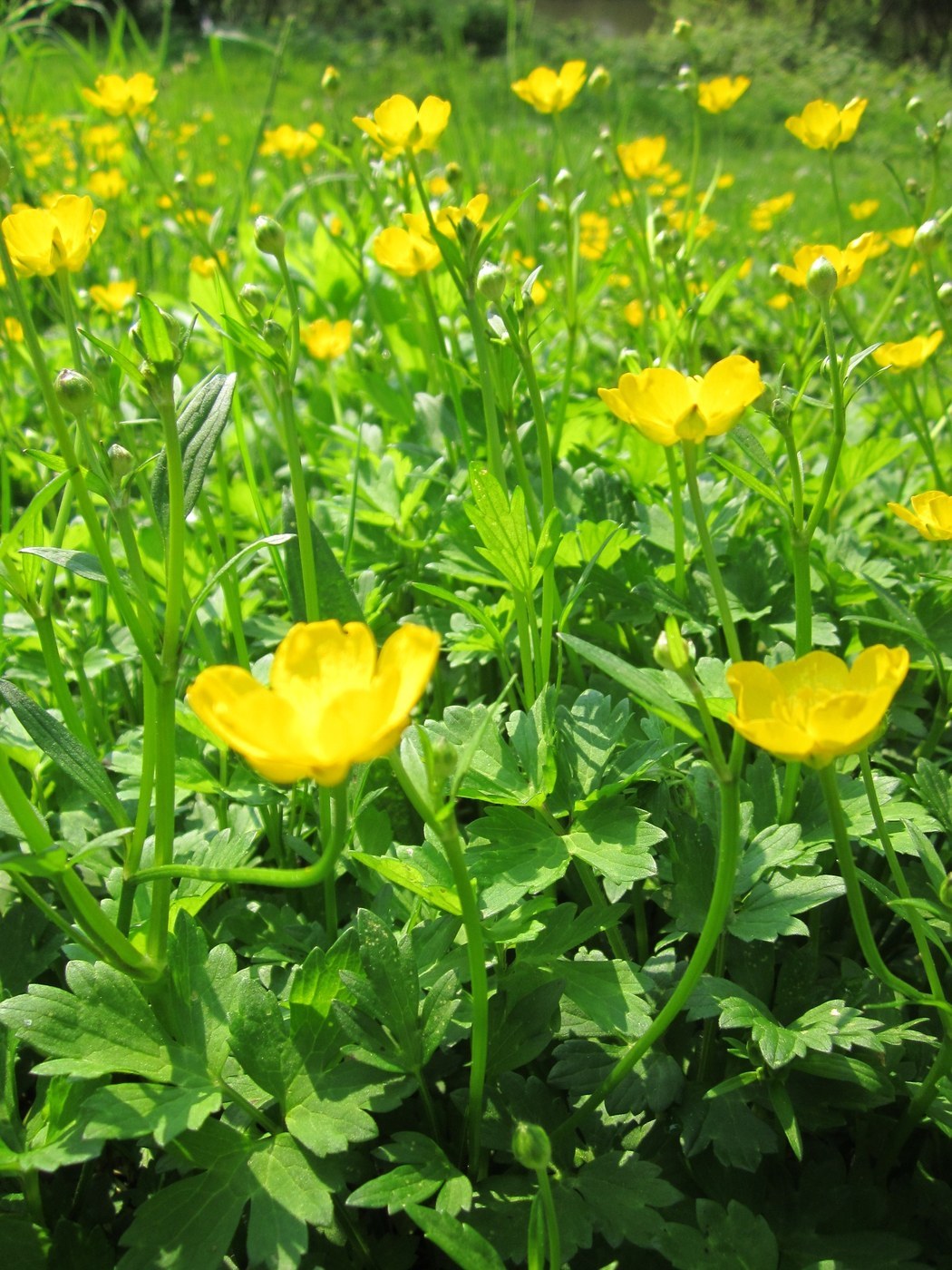
Creeping Buttercup (Ranunculus repens) is a low, spreading perennial with glossy, five-petaled golden-yellow flowers and lobed leaves. It roots along creeping stems (stolons) to form dense mats, making it an easy, resilient groundcover for damp spots - so vigorous, in fact, that its main challenge is keeping it contained.
Light
Creeping buttercup grows happily in full sun to partial shade. It flowers most freely in sunnier positions but tolerates dappled or part shade well, which is part of its adaptability. In deep shade it grows more leaf than flower but still spreads readily.
Water
This plant loves moisture and thrives in consistently moist to wet soils. It is well suited to low, damp ground, the edges of ponds and ditches, and areas that stay soggy where other plants struggle. Keep the soil reliably moist, especially in sun and during dry spells; it will wilt and slow in prolonged drought but usually rebounds once moisture returns. Its love of wet conditions is central to its easy nature.
Soil & Potting
It is unfussy about soil and grows in clay, loam, and heavy, poorly drained ground that stays damp. Rich, moisture-retentive soil suits it best. It tolerates the compacted, wet conditions many ornamentals dislike. In containers, use a moisture-retentive mix and never let the pot dry out, though its spreading habit means it can quickly fill and escape a pot.
Humidity & Temperature
Creeping buttercup is a hardy temperate perennial that shrugs off cold winters, dying back and re-emerging in spring. Ambient humidity is unimportant; it is soil moisture that matters. It prefers cool-to-mild growing conditions and can struggle in prolonged intense heat unless kept moist and shaded.
Feeding
This is a low-maintenance plant that rarely needs feeding and grows lushly even in poor, heavy soils. If growth is weak, a light application of a balanced general fertilizer or a topdressing of compost in spring is more than enough. Avoid heavy feeding, which only accelerates its already enthusiastic spread.
Propagation
Creeping buttercup propagates itself almost effortlessly. Its stolons root at the nodes wherever they touch moist soil, so you can simply lift and replant rooted plantlets. It also grows readily from division of established clumps in spring or fall, and from seed. Because it spreads so vigorously on its own, most gardeners find they need to limit rather than encourage it.
Repotting / Pruning
In containers, divide and refresh every year or two as it quickly becomes congested. In the ground, 'pruning' mostly means containment: trim back or dig out wandering runners to keep it in bounds, and mow or shear over the mat to tidy it. Installing a root barrier or growing it in a sunken bottomless pot helps restrict its spread. Remove spent flowers if you want to reduce self-seeding.
Common Problems & Pests
The biggest 'problem' is its own vigor - it spreads aggressively by runners and seed and can overwhelm neighboring plants, so plant it where its enthusiasm is welcome or keep it firmly contained. It is otherwise robust and largely trouble-free. Powdery mildew can appear in crowded, still conditions, and slugs may nibble young foliage, but neither is usually serious. Good spacing and airflow keep it healthy.
Seasonal Care Tips
In spring it surges into growth and blooms; this is the time to divide, replant, and set containment boundaries. Through summer keep the soil moist, especially in sun, and shear back runners to control spread. In fall, growth slows and you can divide or thin congested mats. In winter it dies back in cold climates and rests, re-emerging reliably when the weather warms.
Frequently asked questions
Does creeping buttercup need a lot of water?
Yes. It thrives in moist to wet soils and is ideal for damp, low-lying ground where many plants fail. Keep the soil reliably moist, particularly in sunny spots and during dry weather.
How do I stop creeping buttercup from spreading too much?
It roots along creeping stems wherever they touch moist soil. Trim or dig out wandering runners, install a root barrier or grow it in a sunken bottomless container, and remove spent flowers to cut down on self-seeding.
Will creeping buttercup grow in shade?
Yes. It handles full sun to partial shade. It flowers most in sunnier spots but still grows well and spreads in dappled or part shade, producing more foliage and fewer blooms in deeper shade.
Is creeping buttercup easy to grow?
Very. It tolerates heavy, wet, compacted soils, cold winters, and poor fertility, and it propagates itself readily. The main effort is keeping its vigorous spread under control rather than helping it survive.