
Creeping Buttercup Identification Guide
Identify creeping buttercup (Ranunculus repens) by its glossy yellow five-petaled flowers, three-part toothed leaves often with pale blotches, and rooting runners.
Read the full Creeping Buttercup encyclopedia entry →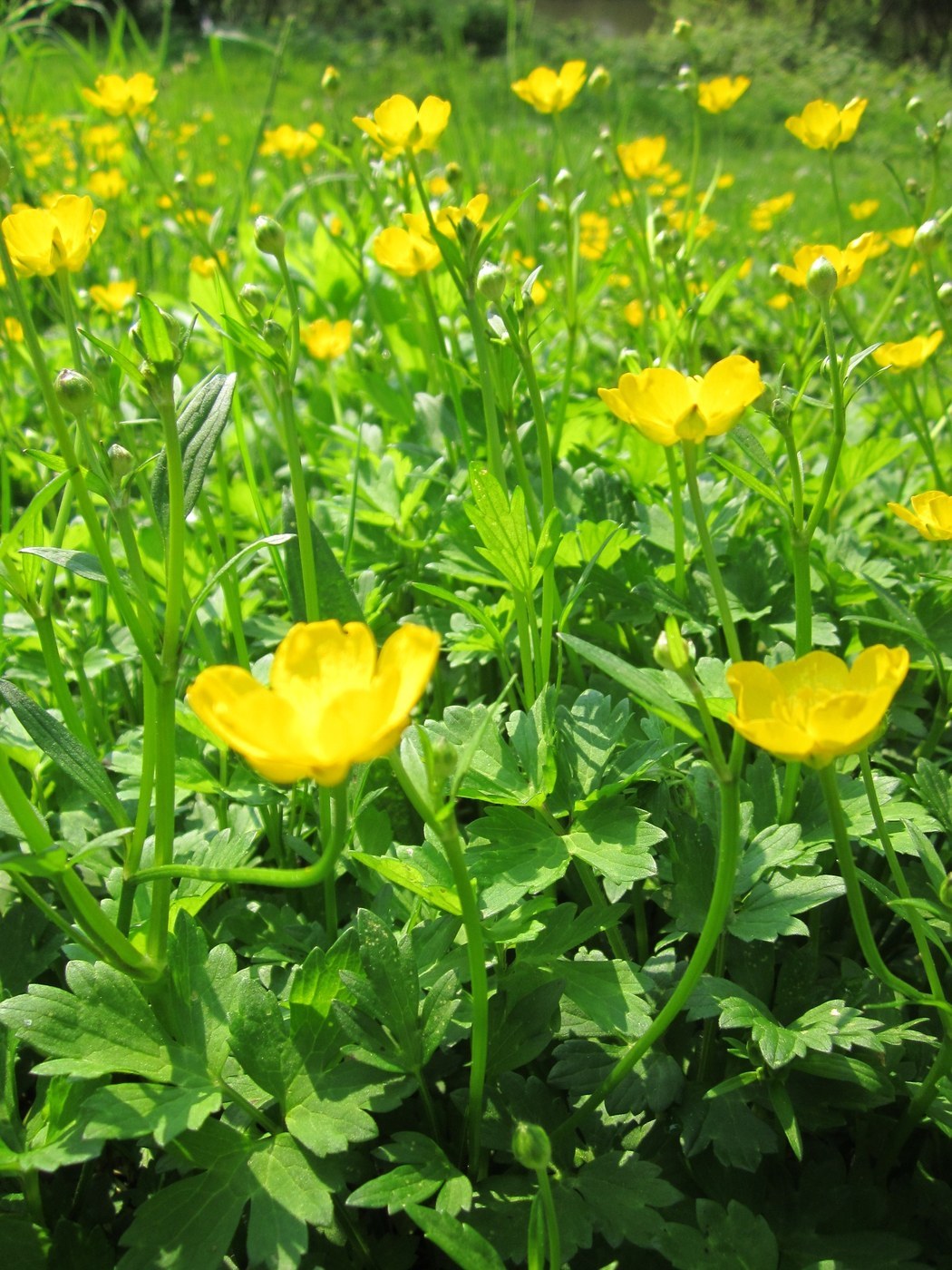
Key Identifying Features
Creeping buttercup (Ranunculus repens) is a low, spreading perennial broadleaf weed of damp ground. It is recognized by its glossy, waxy yellow five-petaled flowers, three-lobed toothed leaves often marked with pale blotches, and above-ground runners (stolons) that root at the nodes to form dense patches.
- Shiny, waxy yellow flowers with five petals
- Three-part (trifoliate) toothed leaves, the middle leaflet on its own stalk
- Pale, whitish blotches often on the leaves
- Creeping runners that root and spread
Leaves & Stems
Leaves are divided into three leaflets, each coarsely toothed and lobed, and the central leaflet sits on a distinct stalk (a useful detail separating it from similar buttercups). Leaves are often mottled with pale grayish-white markings and may be slightly hairy. The plant spreads by long, leafy runners that creep across the soil and root at the nodes, forming mats; flowering stems rise 8-20 inches.
Flowers & Fruit
Flowering peaks in late spring and early summer. Flowers are bright, glossy yellow, about 3/4 to 1 inch across, with five overlapping shiny petals and many stamens; the sepals are pressed against the petals (not bent back). The shine comes from a waxy petal surface that reflects light. Fruit is a small cluster of flattened, short-beaked seeds (achenes).
How to Tell It Apart from Look-Alikes
- Bulbous buttercup (Ranunculus bulbosus): has down-turned (reflexed) sepals and a swollen bulb-like stem base, and does not creep by runners.
- Tall/meadow buttercup (Ranunculus acris): taller, with palmately divided leaves (no stalked central leaflet) and no creeping runners.
- Cinquefoil (Potentilla): has five-petaled yellow flowers too, but leaves with five leaflets and a strawberry-like look.
The creeping rooting runners + stalked central leaflet + glossy yellow flowers with appressed sepals confirm creeping buttercup.
Where You'll Find It
Creeping buttercup favors damp, heavy, poorly drained soils: wet lawns, pastures, ditches, stream banks, gardens, and meadows across North America, Europe, and temperate regions worldwide. Its presence often signals compacted or waterlogged ground.
Quick ID Checklist
- Low perennial spreading by rooting runners
- Glossy yellow 5-petaled flowers with sepals against the petals
- Three-part toothed leaves, central leaflet on a stalk
- Pale blotches often on leaves
- Damp, heavy, poorly drained soil
- Forms dense mats in wet lawns and pastures
Frequently asked questions
What gives creeping buttercup flowers their shine?
The petals have a smooth, waxy surface layer that reflects light, giving the bright yellow flowers their characteristic glossy, almost varnished look.
How do I tell it from bulbous buttercup?
Creeping buttercup spreads by rooting runners and has sepals pressed against the petals, while bulbous buttercup has down-turned (reflexed) sepals, a swollen bulb-like stem base, and no runners.
Why does it form such dense patches?
It sends out long above-ground runners (stolons) that root at the nodes wherever they touch soil, allowing one plant to colonize a wide area and form thick mats.
What do creeping buttercup leaves look like?
The leaves are divided into three coarsely toothed and lobed leaflets, with the central leaflet on its own distinct stalk, and are often mottled with pale grayish-white markings.