Creeping Fig Identification Guide
Recognize Ficus pumila by its small heart-shaped juvenile leaves, self-clinging aerial rootlets, and dense flat growth on walls, and learn its dramatic adult form.
Read the full Creeping Fig encyclopedia entry →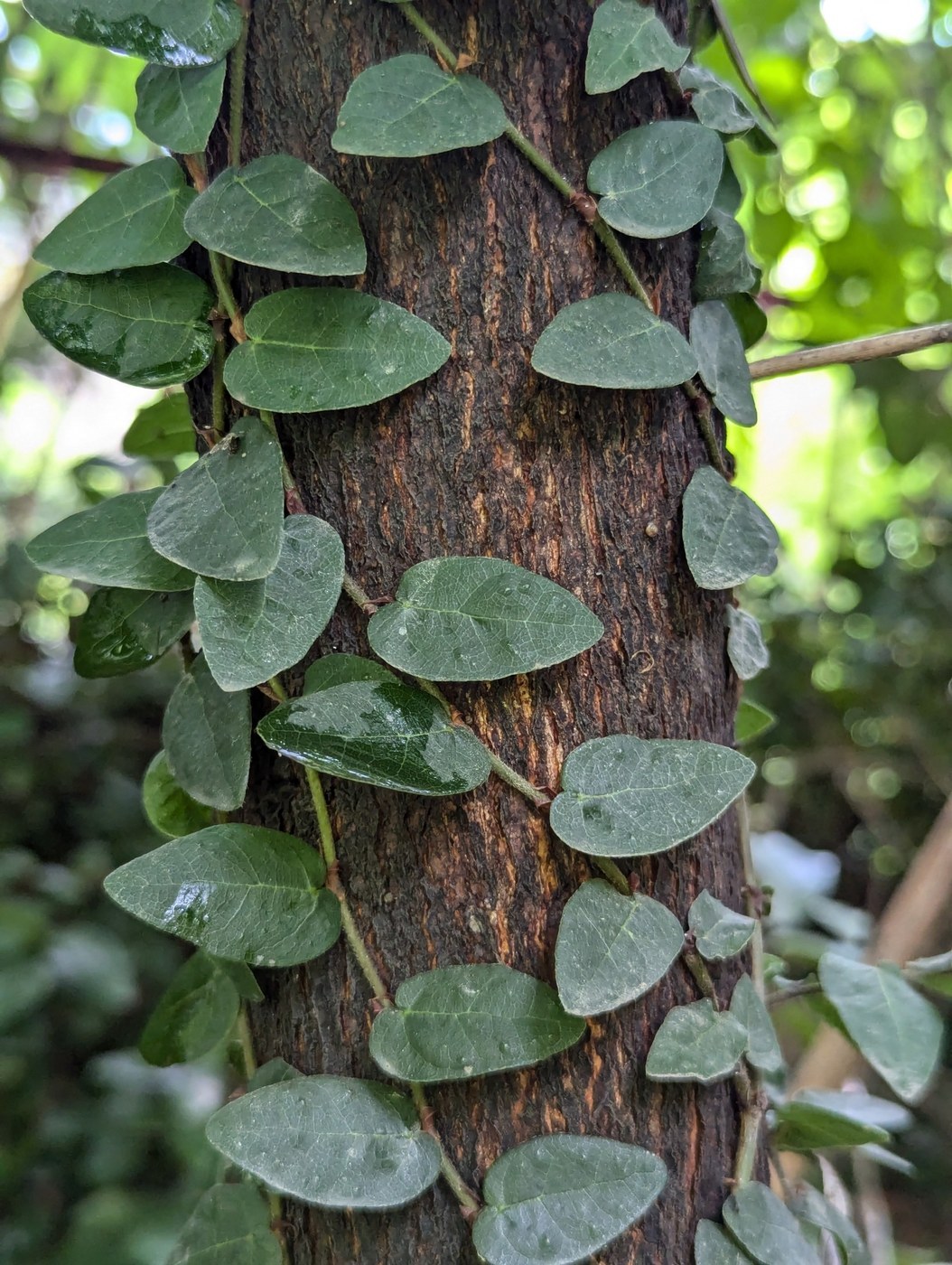
Key Identifying Features
Creeping Fig (Ficus pumila) is a vigorous evergreen climbing fig grown to cover walls and as a small trailing houseplant. Its hallmark is small, heart-shaped juvenile leaves on thin wiry stems that cling flat to surfaces with aerial rootlets.
- Juvenile leaves small (2-3 cm), heart-shaped to oval, thin and slightly puckered
- Stems self-cling to walls, bark, and pots via adhesive aerial roots
- Forms a dense, flat, mat-like carpet over surfaces
- Milky white sap when stems or leaves are cut (typical of Ficus)
Leaves & Stems
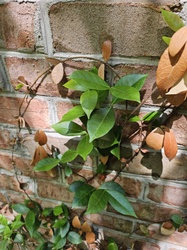
In the common juvenile stage the leaves are small, alternate, heart-shaped, with a slightly quilted texture and a short stalk. They lie nearly flat against whatever the plant climbs. Stems are thin, wiry, and densely branched, rooting at nodes. Variegated and tiny-leaved cultivars ('Variegata', 'Quercifolia' with oak-like leaves, 'Minima') exist but keep the clinging habit.
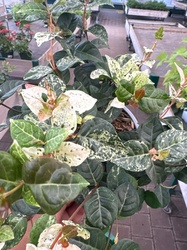
When the plant matures and climbs high, it produces a dramatically different adult growth: woody horizontal branches with much larger, leathery, oblong leaves (up to 10 cm) that stand away from the wall. Seeing both leaf forms on one plant is diagnostic.
Flowers & Fruit
Like all figs, the "flowers" are hidden inside a fig (syconium). Mature adult growth produces large, hard, pear-shaped figs about 5-6 cm long, green ripening to purple, far bigger than the tiny leaves would suggest. These are not the juvenile-stage plant most people grow indoors. Pollination requires a specific fig wasp, so fruit rarely forms outside its native range.
How to Tell It Apart from Look-Alikes
- English ivy (Hedera) also climbs walls with rootlets, but ivy leaves are lobed and palmate, not heart-shaped and entire.
- Climbing hydrangea or other vines lack milky sap; creeping fig bleeds white latex when cut.
- Other small Ficus (e.g. Ficus pumila relatives) keep the heart-leaf and self-clinging trait; the latex plus flat heart leaves confirm the genus and species.
- The shift between tiny clinging juvenile leaves and large leathery adult leaves is unique among common wall climbers.
Where You'll Find It
Native to East Asia (China, Japan, Vietnam). Widely planted in warm climates to cover walls, fences, and topiary frames, and grown indoors as a small trailing or terrarium plant. It can be invasive on masonry, clinging tightly enough to damage paint and mortar.
Quick ID Checklist
- Small heart-shaped juvenile leaves
- Stems self-cling flat to walls with aerial roots
- Dense mat-like coverage
- Milky white sap when cut
- Large leathery leaves and big figs on mature growth
Frequently asked questions
How do I distinguish creeping fig from ivy on a wall?
Both self-cling, but creeping fig has small heart-shaped, untoothed leaves and bleeds milky white sap when cut, while ivy has lobed, palmate leaves and clear sap.
Why do some leaves on my plant look much bigger and leathery?
Those are the adult growth phase. Once creeping fig climbs high and matures, it shifts from small clinging juvenile leaves to woody branches with large, thick oblong leaves.
Is the white sap a sign of disease?
No, the milky latex is normal for the fig genus. It appears whenever you cut or break a stem and helps confirm the plant is a Ficus.
Will it damage my walls?
It can. The adhesive aerial rootlets grip tightly and can pull paint, stucco, and mortar when removed, so it is best kept off finished masonry.
Creeping Fig identified by the community
Recent Creeping Fig specimens identified with Plant Identifier.