How to Care for Creeping Zinnia
Grow creeping zinnia (Sanvitalia procumbens), a low, spreading annual smothered in small golden daisies. Loves full sun and shrugs off drought.
Read the full Creeping Zinnia encyclopedia entry →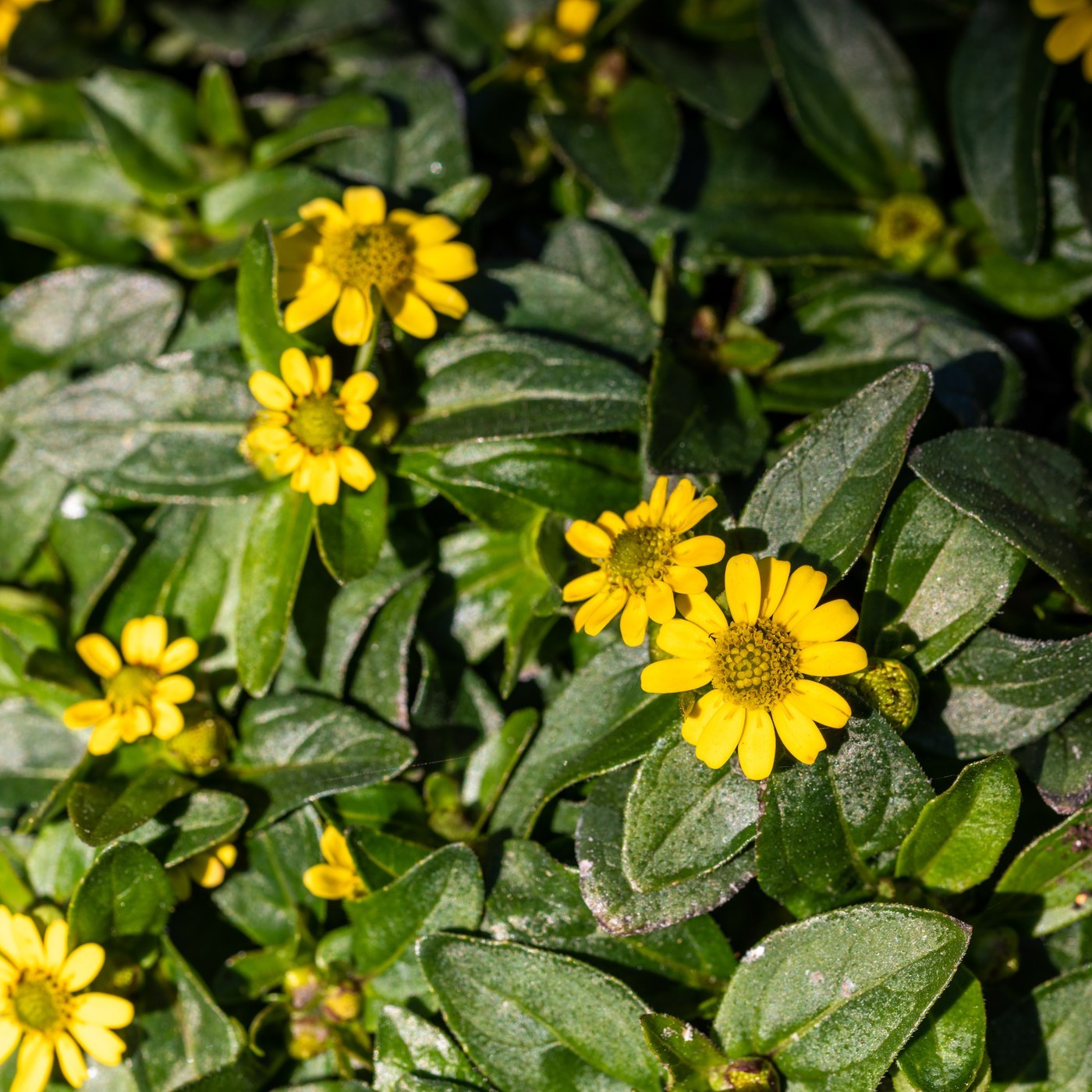
Creeping zinnia (Sanvitalia procumbens) is a low, mounding-to-trailing annual covered in cheerful little golden-yellow daisies with dark centers. Despite the name it isn't a true zinnia, but it shares the same love of heat and sun. It's a superb, easygoing choice for edging, containers and hanging baskets.
Light
Full sun is essential. Creeping zinnia flowers most heavily with at least 6-8 hours of direct light and can bloom nonstop all season in a hot, bright spot. In shade it grows sparse and flowers poorly.
Water
Low to moderate water; it is notably drought-tolerant once established. Let the top of the soil dry between waterings and avoid keeping it soggy, which invites rot. Container plants dry faster and need more regular water than those in the ground, but the plant generally prefers to run on the dry side.
Soil & Potting
Grows in average, well-drained soil and even tolerates poor, sandy ground. Sharp drainage matters far more than fertility. For containers and baskets use a light, free-draining potting mix; its trailing habit spills attractively over edges.
Humidity & Temperature
A warm-season annual that thrives in heat and tolerates dry air. Wait until after the last frost and warm soil to plant, as it is frost-tender. High heat and sun bring out its best, most continuous flowering.
Feeding
A light feeder. Too much fertilizer, especially nitrogen, produces leggy growth and fewer flowers. Poor-to-average soil suits it; if desired, use a dilute balanced or bloom fertilizer occasionally for container plants, but restraint gives the best flowering.
Propagation
Propagated from seed. Sow after the last frost where it is to grow, or start indoors a few weeks early. Seed needs light to germinate, so press it onto the surface and do not bury it. It germinates readily in warmth and often self-sows modestly in the garden.
Repotting / Pruning
As an annual it needs no repotting. It is self-cleaning and generally doesn't require deadheading, though a light shearing mid-season revitalizes plants that grow tired or stretched and encourages a fresh flush of bloom. Pinching young plants encourages a fuller, bushier mound.
Common Problems & Pests
Remarkably trouble-free and pest-resistant. The main risks come from overwatering and poor drainage, which cause root and stem rot, and from crowding in humid, stagnant conditions, which can invite powdery mildew or fungal spotting. Give it sun, airflow and lean, dry-ish soil and problems are rare.
Seasonal Care Tips
Sow or plant out after frost into warm soil. Water to establish, then keep it on the dry side through summer for maximum bloom. Shear lightly if it flags in midsummer heat. It flowers continuously until frost ends the season.
Frequently asked questions
Do I need to deadhead creeping zinnia?
Not usually. It's largely self-cleaning and blooms continuously on its own, though a light midseason shearing refreshes tired plants and triggers a new flush of flowers.
How much water does creeping zinnia need?
Little. It's drought-tolerant once established, so let the soil surface dry between waterings and avoid soggy conditions, which cause rot.
Why is my creeping zinnia leggy with few flowers?
Usually too little sun or too much fertilizer. Grow it in full sun and lean soil, feed sparingly, and pinch young plants to keep them compact.
Can creeping zinnia grow in hanging baskets?
Yes, it's excellent in baskets and containers. Its trailing habit spills over the edges; just use a free-draining mix and give it full sun.
Creeping Zinnia identified by the community
Recent Creeping Zinnia specimens identified with Plant Identifier.