Creeping Zinnia
Sanvitalia procumbens
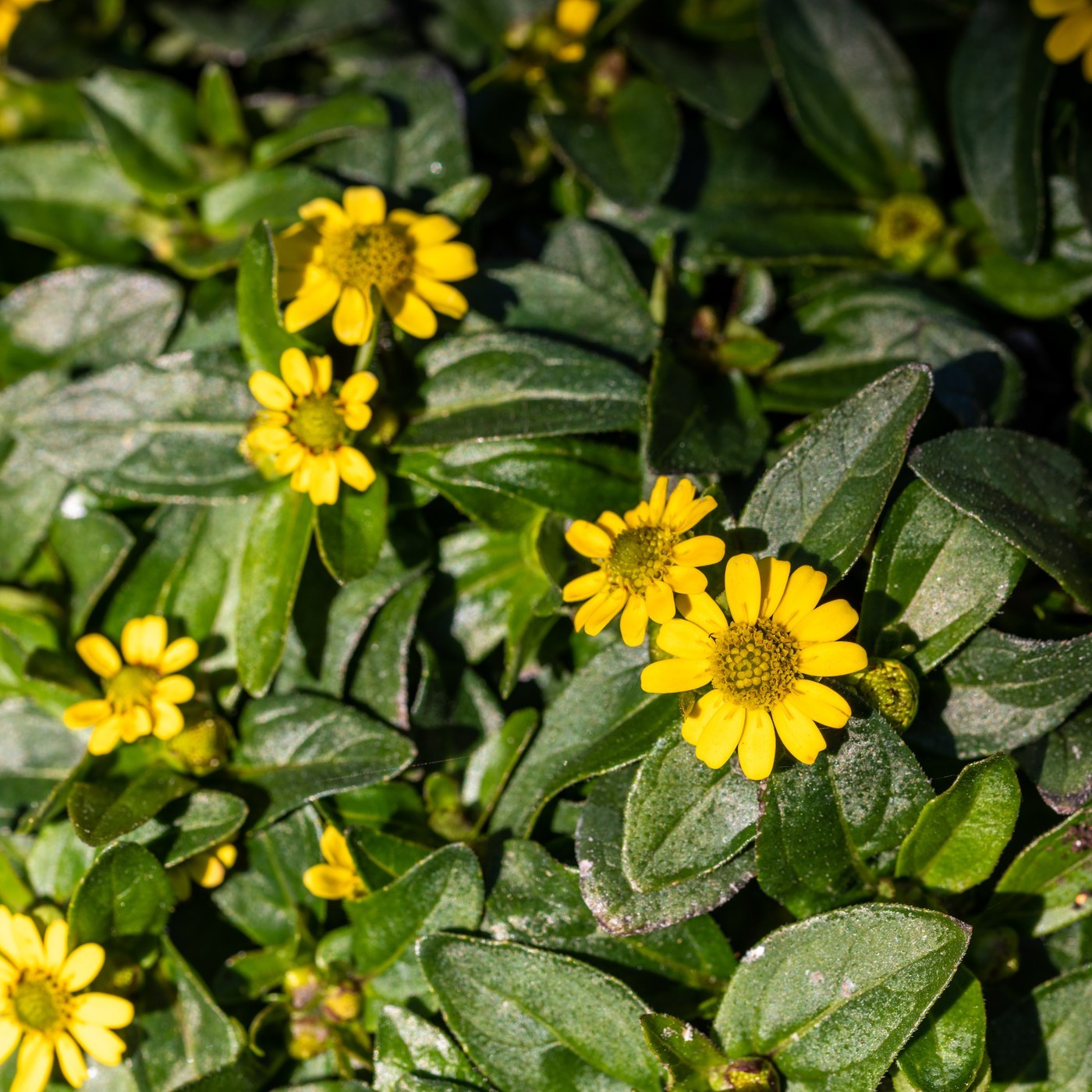
Creeping zinnia is a low, spreading annual smothered in tiny gold-and-black daisy flowers that resemble miniature sunflowers. It is heat- and drought-tolerant, making it ideal for edging, baskets, and groundcover.
- Light
- Full sun
- Water
- Low to moderate; drought tolerant
- Difficulty
- Easy
Got a plant like this?
Identify any plant from a photo, free.
Overview
Creeping zinnia is not a true zinnia but a related member of the daisy family, named for its small zinnia-like blooms. Native to Mexico and the southwestern United States, it forms a dense, low carpet covered in cheerful flowers.
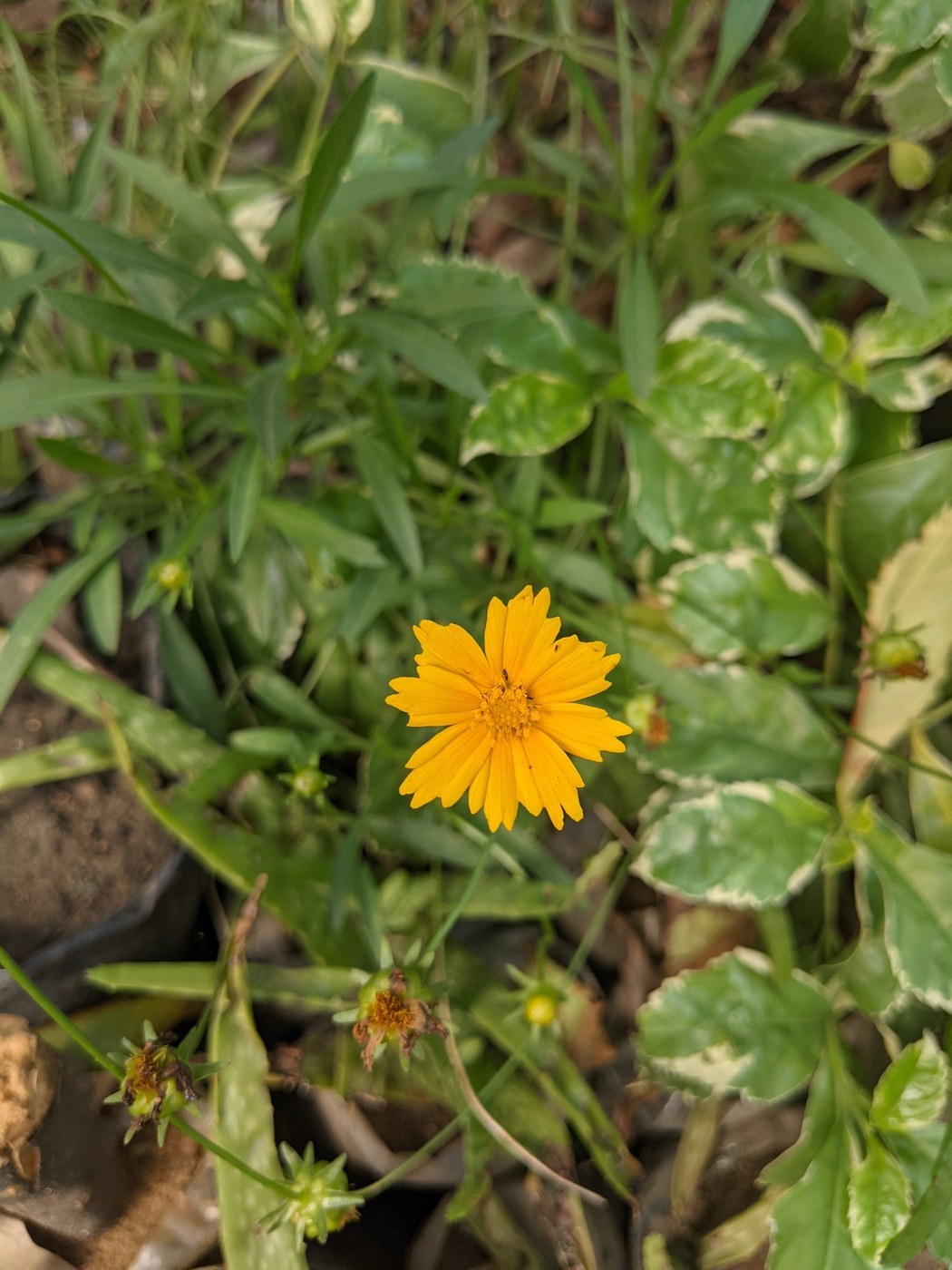
Each bloom has bright yellow or orange rays surrounding a dark purple-brown central cone, giving the look of a tiny sunflower or black-eyed Susan.
Tough, sun-loving, and drought-tolerant, it blooms nonstop from early summer to frost with almost no care, spilling attractively over container edges and walls.
How to identify it
- Habit: Low, spreading, mat-forming annual usually 4-8 in tall and 12-18 in wide.
- Flowers: Small (about 1 in) daisy-like blooms with golden-yellow or orange rays and a dark brown-purple central disk.
- Leaves: Small, oval, slightly hairy green leaves.
- Bloom: Profuse and continuous from summer to frost.
- Form: Trailing, making it a good spiller and groundcover.
Care & growing
Light: Full sun for best flowering and compact growth.
Water: Low to moderate; quite drought tolerant once established, though container plants need more frequent watering.
Soil: Well-drained soil; tolerates poor and sandy conditions.
Temperature: Loves heat; a warm-season annual sensitive to frost.
Feeding: Minimal feeding needed; light feeding sustains container plants.
Propagation: Grown easily from seed sown directly outdoors after frost or started indoors. It is largely self-cleaning and rarely needs deadheading.
Habitat & origin
Native to Mexico and the southwestern United States, where it grows in open, sunny, dry sites.
Grown worldwide as a warm-season annual for edging, containers, hanging baskets, and as a flowering groundcover, especially valued in hot, dry climates.
Frequently asked questions
Is creeping zinnia a true zinnia?
No. It is Sanvitalia procumbens, a related member of the daisy family named for its small, zinnia-like flowers.
Does it need deadheading?
Not really. It is largely self-cleaning and blooms continuously from summer to frost with little maintenance.
How big does it get?
It stays low, around 4-8 inches tall, but spreads 12-18 inches wide, making it good for edging and groundcover.
Is it drought tolerant?
Yes, once established it tolerates heat and dry soil well, though plants in containers need more regular watering.
Creeping Zinnia guides
In-depth guides for identifying, growing, and caring for Creeping Zinnia.
How to Care for Creeping Zinnia
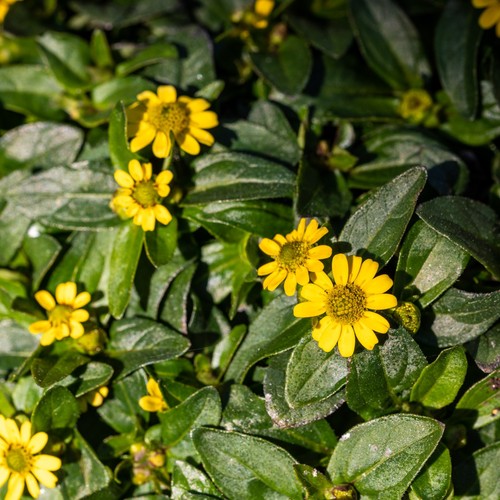
Grow creeping zinnia (Sanvitalia procumbens), a low, spreading annual smothered in small golden daisies. Loves full sun and shrugs off drought.
Creeping Zinnia Identification Guide
Identify creeping zinnia (Sanvitalia procumbens) by its low spreading mats and small golden-yellow daisy flowers with dark purple-brown centers.
Creeping Zinnia identified by the community
Real specimens identified with Plant Identifier.