Creeping Zinnia Identification Guide
Identify creeping zinnia (Sanvitalia procumbens) by its low spreading mats and small golden-yellow daisy flowers with dark purple-brown centers.
Read the full Creeping Zinnia encyclopedia entry →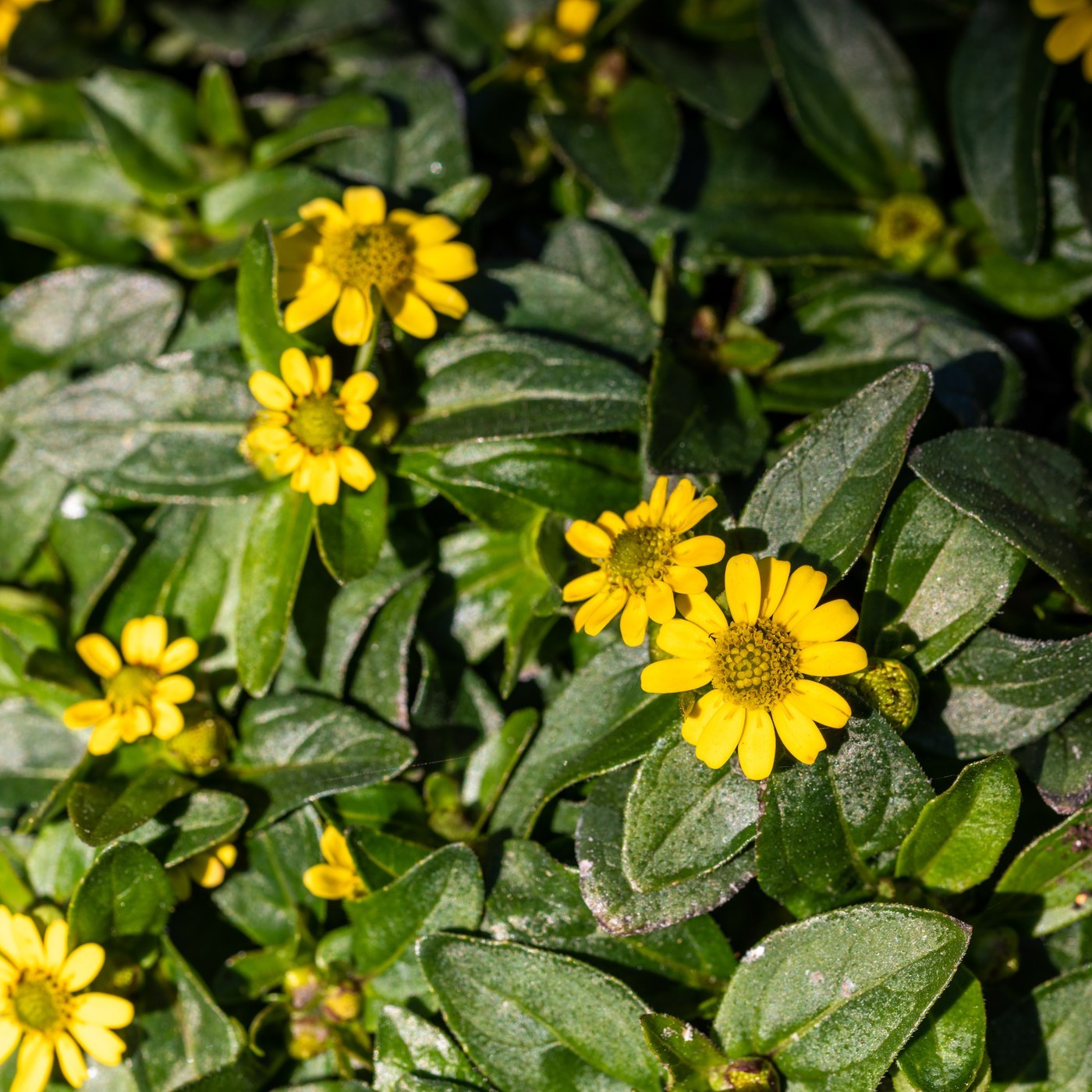
Key Identifying Features
Creeping zinnia (Sanvitalia procumbens) is a low, spreading annual in the aster family that, despite its name, is not a true zinnia. It earns the name from its small daisy flowers that resemble miniature zinnias: golden-yellow rays around a prominent dark purple-brown to black central disk. The plant grows as a dense, trailing mat 4–8 inches tall, spreading 12–18 inches wide, smothered in cheerful blooms all summer.
- Low, mat-forming or trailing annual
- Small (about 3/4 inch) yellow daisy flowers
- Dark purple-brown to nearly black cone-shaped center
- Heavy, continuous bloom from early summer to frost
Leaves & Stems
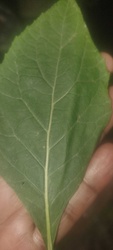
Stems are slender, branching, and procumbent (sprawling along the ground), often rooting where they touch soil. Leaves are opposite, small, oval to lance-shaped, with smooth or slightly hairy margins and a pointed tip, on short stalks. The fine, mounding foliage forms a tidy green carpet that quickly fills gaps and trails over container edges.
Flowers & Fruit
Each flower head has a single ring of broad golden-yellow (sometimes orange-yellow) ray florets surrounding a raised, dark dome of disk florets. The dark center is the most distinctive trait, giving the bloom a black-eyed appearance. Flowers are abundant and self-cleaning. Small dry seeds (achenes) follow but the show is uninterrupted through the season.
How to Tell It Apart from Look-Alikes
- True zinnias (Zinnia) are upright with larger, often double flowers and stiffer stems; creeping zinnia stays low and trailing with simpler single blooms.
- Black-eyed Susan (Rudbeckia) is much taller with larger flowers and coarse, hairy leaves.
- Melampodium has similar small yellow daisies but a yellow-green center, not dark, and a more upright bushy habit.
- The combination of trailing mat habit plus tiny dark-centered yellow daisies is diagnostic.
Where You'll Find It
Creeping zinnia is grown as a ground cover, edging, and hanging-basket plant in full sun. Native to Mexico and the southwestern US, it thrives in heat, drought, and poor soil. Look for it spilling over walls and container rims or carpeting sunny beds. It self-sows in warm climates.
Quick ID Checklist
- Low, trailing/mat-forming annual (4–8 in tall)
- Small yellow daisy flowers (~3/4 in)
- Dark purple-brown to black raised center
- Opposite, small oval leaves on sprawling stems
- Sun-loving, heat- and drought-tolerant
A sun-baked trailing carpet of tiny yellow daisies with dark centers is creeping zinnia.
Frequently asked questions
Is creeping zinnia a real zinnia?
No. It is Sanvitalia procumbens, a different genus in the aster family, but its small daisy flowers resemble miniature zinnias, which gives it the common name.
How do I tell it from melampodium?
Creeping zinnia has a dark purple-brown center and a low trailing habit, while melampodium has a yellow-green center and a more upright, bushy form.
How big does it get?
It stays low, about 4–8 inches tall, but spreads 12–18 inches wide as a dense mat, making it ideal for edging and hanging baskets.
Does it need full sun?
Yes. Creeping zinnia blooms best in full sun and tolerates heat, drought, and poor soil, flowering continuously from early summer to frost.
Creeping Zinnia identified by the community
Recent Creeping Zinnia specimens identified with Plant Identifier.