Crepe Myrtle Identification Guide
Recognize crepe myrtle by its crinkled crepe-paper summer flowers, smooth mottled exfoliating bark, and small oval leaves.
Read the full Crepe Myrtle encyclopedia entry →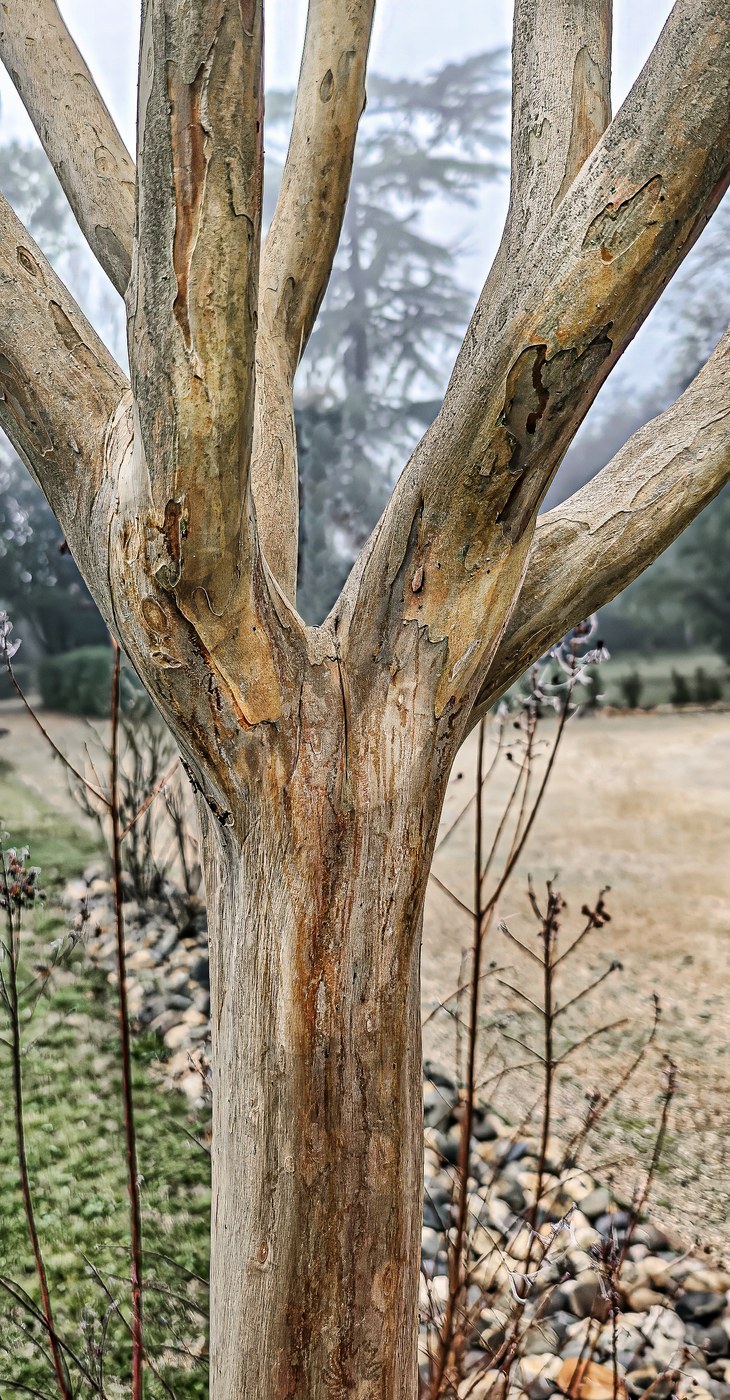
Key Identifying Features
Crepe myrtle (Lagerstroemia indica and hybrids) is a beloved ornamental shrub or small tree famous for long-lasting summer flowers and sculptural bark, widely planted in warm-temperate regions.
- Crinkled, crepe-paper-textured flowers in showy panicles, midsummer to fall
- Smooth, mottled, exfoliating bark in shades of gray, tan, and cinnamon
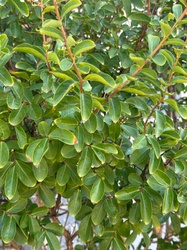
- Small, opposite or sub-opposite oval leaves
- Multi-stemmed, vase-shaped form with muscular trunks
Leaves & Stems
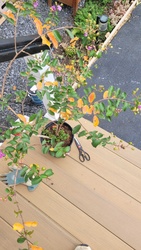
Leaves are small (3-7 cm long), oval to oblong, smooth-edged (entire), and arranged oppositely or nearly so along the twigs. They are glossy dark green in summer and emerge bronze-red, turning brilliant orange, red, or yellow in autumn. The leaves are short-stalked and somewhat leathery.
The bark is a signature feature: on mature stems it is thin, smooth, and exfoliates in flakes to reveal a sinewy, muscular surface mottled in gray, brown, pink, and cinnamon. Stems are often clustered from the base, giving a multi-trunk, fluted appearance. Twigs are slender and four-angled when young.
Flowers & Fruit
The flowers are unmistakable: borne in dense terminal panicles 10-25 cm long, each individual flower has 6-7 ruffled, clawed petals with a crinkled, crepe-paper texture, in white, pink, lavender, purple, or red, with a central tuft of yellow stamens. Bloom lasts for weeks in mid-to-late summer. The fruit is a rounded brown woody capsule that splits into six segments and persists through winter in clusters.
How to Tell It Apart from Look-Alikes
- Lilac: Spring-blooming with fragrant tubular flowers and heart-shaped leaves; very different bloom season and bark.
- True myrtle (Myrtus): Evergreen with fragrant foliage and white flowers; unrelated.
- Privet or other shrubs: Lack the crepe-textured petals and exfoliating muscular bark.
The crepe-paper petals plus smooth mottled flaking bark are unique and diagnostic.
Where You'll Find It
Native to the Indian subcontinent, China, and Southeast Asia, and planted extensively across the southern United States, Mediterranean climates, and other warm regions as a street, garden, and patio tree. It thrives in heat and full sun and tolerates drought once established.
Quick ID Checklist
- Crinkled crepe-paper flowers in summer panicles
- Smooth, mottled, exfoliating muscular bark
- Small oval smooth-edged leaves, opposite-ish
- Multi-stemmed vase-shaped form
- Round six-segmented woody seed capsules in winter
Frequently asked questions
When does crepe myrtle bloom?
It blooms in mid-to-late summer, often for many weeks, which sets it apart from spring-flowering shrubs like lilac.
Why do the flowers look like crepe paper?
Each petal is thin and ruffled with a crinkled texture and a narrow clawed base, giving the whole flower a crepe-paper appearance, the source of the common name.
What makes the bark distinctive?
Mature crepe myrtle bark is smooth and exfoliates in thin flakes, exposing a sinewy trunk mottled in gray, tan, pink, and cinnamon tones.
Is crepe myrtle a tree or a shrub?
It can be either. Many are multi-stemmed large shrubs, but they are often trained or grow into small single- or few-trunked trees.
Crepe Myrtle identified by the community
Recent Crepe Myrtle specimens identified with Plant Identifier.