
Crocus Identification Guide
Identify crocuses by their low cup-shaped six-petaled flowers, grassy white-striped leaves, and very early bloom from corms. Includes how to distinguish true crocus from autumn crocus and saffron.
Read the full Crocus encyclopedia entry →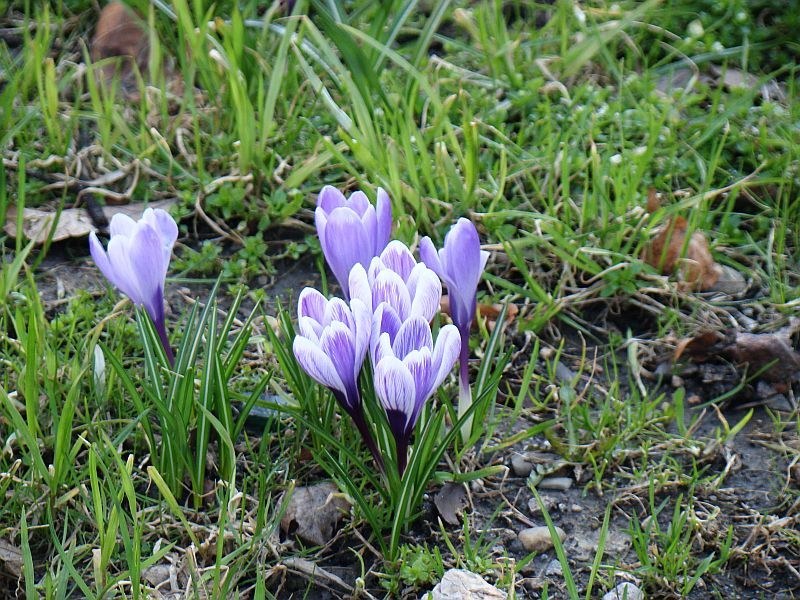
Key Identifying Features
Crocuses are small, low-growing corm plants among the first flowers of spring (some bloom in autumn). They emerge almost stemless, with goblet-shaped blooms sitting close to the ground.
- 6 petal-like segments (tepals) forming a chalice/cup shape
- Colors: purple, lilac, yellow, white, often with feathered or striped markings
- 3 stamens and a prominent, often orange or yellow, branched style in the center
- Flowers nearly stalkless, just a few inches tall
Leaves & Stems
Leaves are narrow, grass-like, and erect, usually with a distinctive silvery-white stripe down the center of each leaf. They rise from the base in a tuft, often appearing alongside or just after the flowers. Crocuses have no true above-ground stem; the bloom sits atop a long white floral tube emerging from an underground corm (a solid bulb-like storage organ).
Flowers & Fruit
Each flower has 6 tepals that close in cloudy weather and at night, opening wide in sun. The 3 stamens distinguish true crocus (autumn crocus look-alikes have 6). After bloom, a small capsule of seeds may form near ground level. Spring crocuses naturalize in lawns, multiplying into drifts over years.
How to Tell It Apart from Look-Alikes
- Autumn crocus (Colchicum): looks similar but has 6 stamens (crocus has 3), larger blooms, and no leaves at flowering time. True crocus has 3 stamens.
- Saffron crocus (Crocus sativus): a real fall-blooming crocus whose long red three-branched styles are the source of saffron.
- Snowdrops: also very early but have drooping white bell flowers, not upward cups.
- Counting stamens is the safest ID: 3 = Crocus, 6 = Colchicum.
Where You'll Find It
Crocuses are widely planted in lawns, borders, rock gardens, and naturalized drifts under trees across temperate gardens. Wild species occur in meadows and rocky slopes from Europe to central Asia. They thrive in well-drained soil and full to partial sun, blooming when snow is barely gone.
Quick ID Checklist
- Low cup-shaped flower with 6 tepals
- 3 stamens (not 6) in the center
- Grass-like leaves with a white central stripe
- Purple, yellow, or white, often striped
- Nearly stemless, growing from a corm
- Very early spring (or fall in some species)
A tuft of white-striped grassy leaves with a stemless purple or yellow cup of six tepals and three stamens at winter's end is a true crocus.
Frequently asked questions
How do I tell crocus from autumn crocus (Colchicum)?
Count the stamens: true crocus has three, while the autumn crocus (Colchicum) has six. Colchicum also blooms leafless in fall with larger flowers.
Where does saffron come from?
Saffron is the dried red three-branched style of the saffron crocus, Crocus sativus, a genuine fall-blooming crocus species.
Why do crocus flowers close up?
Crocus tepals close in cloudy, cold weather and at night, then open wide in sunshine, which helps protect pollen and attract pollinators.
Do crocuses grow from bulbs?
They grow from corms, which are solid swollen stem bases that store energy, rather than the layered scales of a true bulb.