Crocus
Crocus vernus
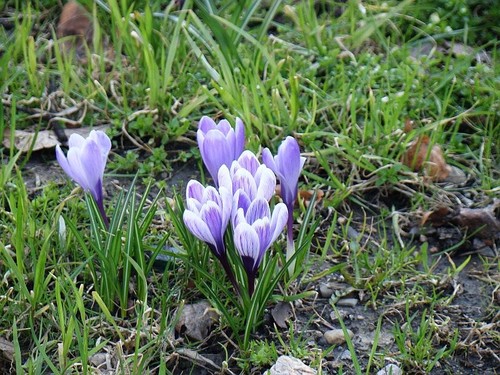
Crocuses are among the earliest spring bulbs, pushing up goblet-shaped flowers in purple, yellow, and white, sometimes through snow. Autumn-blooming species include the saffron crocus.
- Light
- Full sun to light shade
- Water
- Moderate while growing; dry dormancy
- Difficulty
- Easy
Got a plant like this?
Identify any plant from a photo, free.
Overview
Crocuses are low-growing perennials grown from corms, belonging to the iris family (Iridaceae). The genus contains both spring-blooming species, which herald the end of winter, and autumn-blooming species such as the saffron crocus (Crocus sativus).
Their chalice-shaped flowers open in sun and close in cold or cloudy weather, carpeting lawns, rockeries, and woodland edges in vivid color. Because they bloom so early — sometimes through a dusting of snow — they are cherished as a first sign of spring.
The spring “Dutch” crocus (Crocus vernus) is the most familiar large-flowered garden type, while species crocuses are daintier and naturalize freely.
How to identify it
Crocuses are small, grass-and-goblet plants emerging directly from the ground.
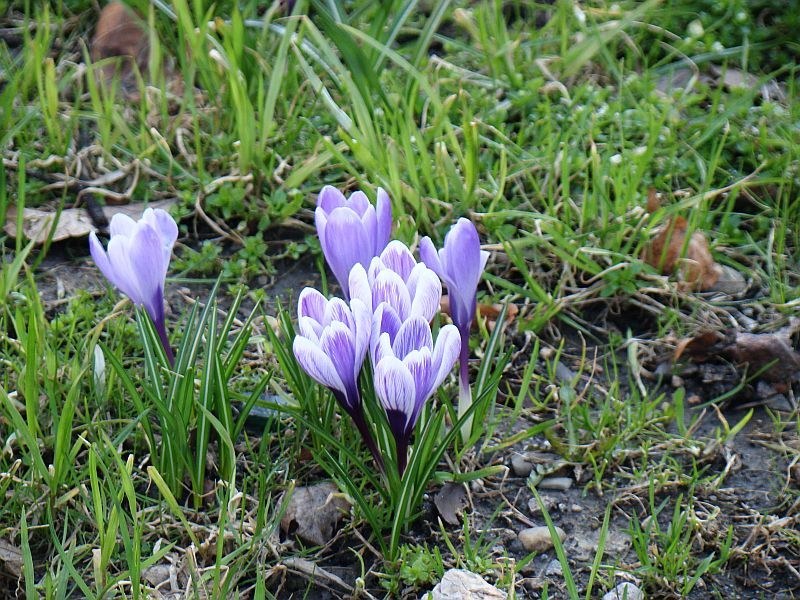
- Flowers: Cup- or goblet-shaped, with six petals (tepals) in purple, lilac, white, yellow, or striped forms
- Leaves: Narrow, grass-like, usually with a distinctive white central stripe
- Height: Low, typically 3-6 in tall
- Structure: Flowers arise on a tube directly from an underground corm; no true stem above ground
- Bloom time: Late winter to early spring (most species) or autumn (saffron and others)
Care & growing
Crocuses are easy and long-lived when given a dry summer rest.
- Light: Full sun to light shade; flowers open fully in sunshine
- Water: Moderate moisture during active growth in fall through spring; keep dry during summer dormancy
- Soil: Gritty, well-drained soil; corms rot in waterlogged ground
- Temperature: Hardy in USDA zones 3-8; spring types need winter cold to flower
- Feeding: A low-nitrogen bulb fertilizer at planting and after bloom helps build next year's corms
- Propagation: Lift and divide crowded corms in summer; they also self-seed and form offsets
Plant corms 3-4 in deep in autumn (autumn-flowering species in late summer). Let foliage die back naturally to feed the corm.
Habitat & origin
Crocuses are native to a broad band stretching from southern Europe and North Africa across the Middle East to western China, with a center of diversity in the Balkans and Asia Minor. In the wild they grow in alpine meadows, scrub, and rocky slopes with sharp drainage and dry summers.
They are now planted across temperate gardens worldwide, naturalizing readily in lawns, borders, and beneath deciduous trees.
Frequently asked questions
When should I plant crocus bulbs?
Plant spring-flowering crocus corms in autumn, about 3-4 inches deep; plant autumn-flowering (saffron) types in late summer.
Why didn't my crocuses come back?
Common causes are corms rotting in wet summer soil, foliage cut too early, or squirrels and rodents digging up the corms.
Do crocuses multiply?
Yes, they naturalize over time by producing offset corms and self-seeding, gradually forming larger drifts.
How do I recognize a crocus?
Look for low, 3-6 in plants with cup- or goblet-shaped six-petaled flowers in purple, white, or yellow, and narrow grass-like leaves with a white central stripe, emerging straight from the ground.
Crocus guides
In-depth guides for identifying, growing, and caring for Crocus.