Cucumber Identification Guide
How to identify the cucumber plant (Cucumis sativus) by its bristly vines, lobed leaves, coiling tendrils, yellow flowers, and elongated green fruit.
Read the full Cucumber encyclopedia entry →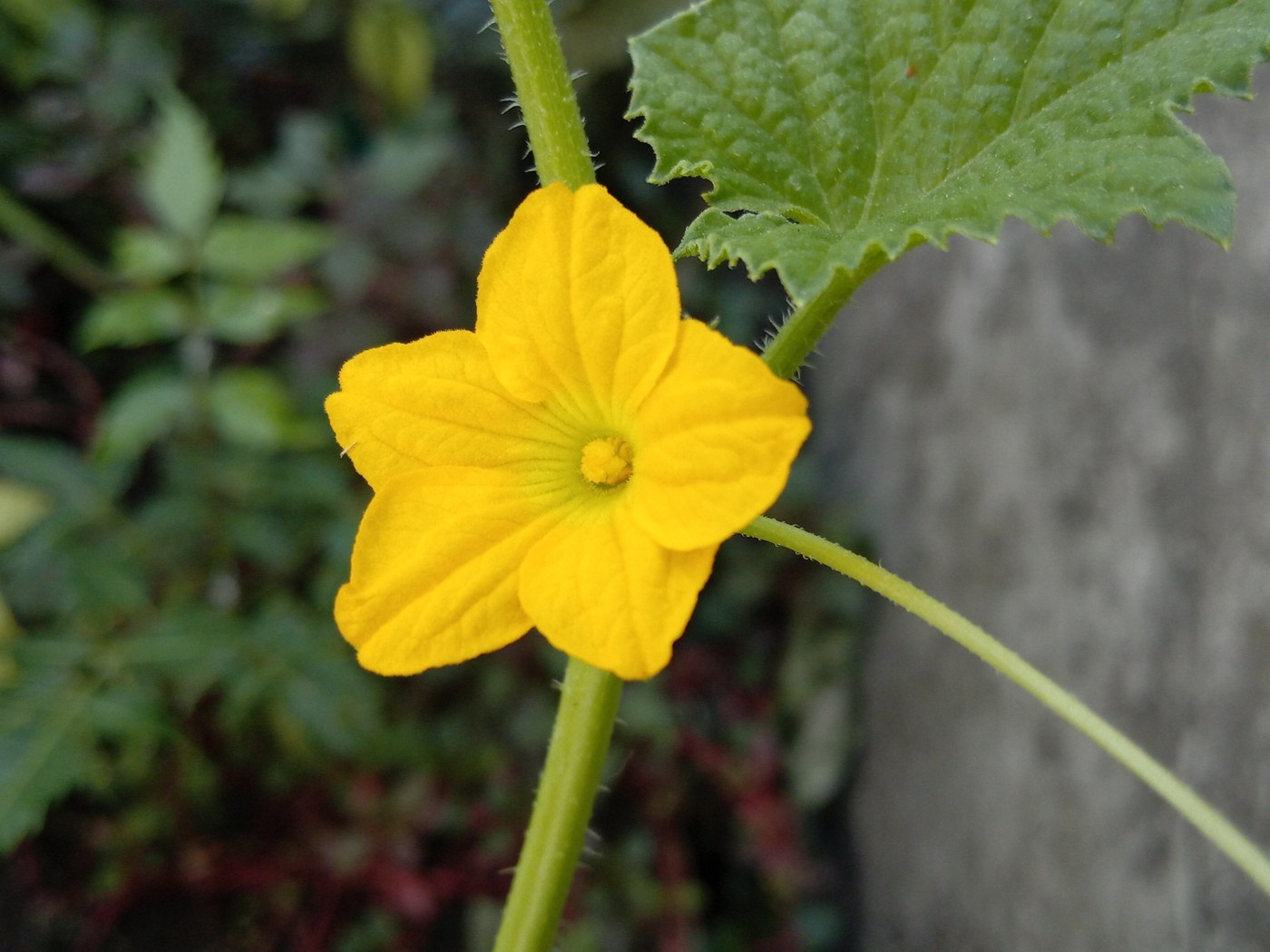
Key Identifying Features
The cucumber (Cucumis sativus) is a trailing or climbing annual vine in the gourd family (Cucurbitaceae). Look for rough, bristly stems and leaves, branched coiling tendrils, yellow star-shaped flowers, and the unmistakable long, green, cylindrical fruit with bumpy or smooth skin.
Leaves & Stems
- Stems are angular, trailing, and covered in stiff hairs, sprawling along the ground or climbing supports.
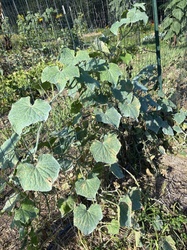
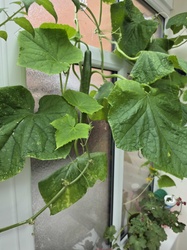
- Leaves are large, triangular to heart-shaped with 3–5 shallow pointed lobes, rough-textured (sandpapery) on both sides, and arranged alternately.
- Each leaf node produces an unbranched or branched tendril that coils tightly around supports.
- Crushed foliage gives off a faint, fresh cucumber scent.
Flowers & Fruit
- Flowers are bright yellow, 2–4 cm across, with five fused petals forming a shallow star.
- Plants are usually monoecious: separate male and female flowers on the same plant. Female flowers have a tiny cucumber-shaped ovary swelling directly behind the petals; male flowers sit on a plain thin stalk.
- Fruit is an elongated green berry (pepo), 5–40 cm long, often ridged or covered in small warty bumps and spines when young.
- Flesh is pale and watery with soft seeds.
How to Tell It Apart from Look-Alikes
- Zucchini/summer squash (Cucurbita pepo): larger, broader 5-lobed leaves with white flecks, much bigger flowers, and thicker, often ridged fruit; tendrils are stout. Cucumber leaves are smaller and the fruit narrower.
- Melon (Cucumis melo): very similar vine but leaves are more rounded and less sharply lobed; fruit is round and aromatic.
- Bitter gourd / wild cucumber: deeply divided lacy leaves and warty, tapering fruit — a different texture and form.
- Pumpkins & gourds: far more vigorous, with huge leaves and rounded fruit.
Where You'll Find It
Cucumbers are a warm-season garden crop grown on trellises, fences, mounds, and in containers worldwide. They need warmth, full sun, and steady moisture, and will sprawl widely if not trellised. In gardens you'll spot them by their dense bristly vines hung with dangling green fruit and a constant succession of yellow flowers.
Quick ID Checklist
- Bristly, angular trailing/climbing stems
- Rough triangular leaves with 3–5 shallow lobes
- Coiling tendrils at leaf nodes
- Yellow five-petaled star flowers
- Long green cylindrical bumpy fruit, often with a swollen ovary on female blooms
- Faint fresh cucumber smell
Frequently asked questions
How do I tell a cucumber plant from a zucchini plant?
Compare the leaves and flowers: zucchini has much larger leaves often marked with silvery-white flecks and big flowers, while cucumber leaves are smaller and the fruit is narrower. Cucumber tendrils are also more slender.
Why do some cucumber flowers never form fruit?
Those are the male flowers, which only provide pollen. Female flowers have a miniature cucumber-shaped ovary behind the petals and are the ones that develop into fruit after pollination.
Are the spines and bumps on young cucumbers normal?
Yes. Many varieties have warty skin and short spines when immature; these often rub off or soften as the fruit matures. It is a normal identifying trait, not a sign of disease.
Can I identify a cucumber by smell?
Often, yes. Crushed leaves and cut fruit release the familiar cool, fresh cucumber aroma, which together with the bristly lobed leaves and tendrils confirms the plant.
Cucumber identified by the community
Recent Cucumber specimens identified with Plant Identifier.