
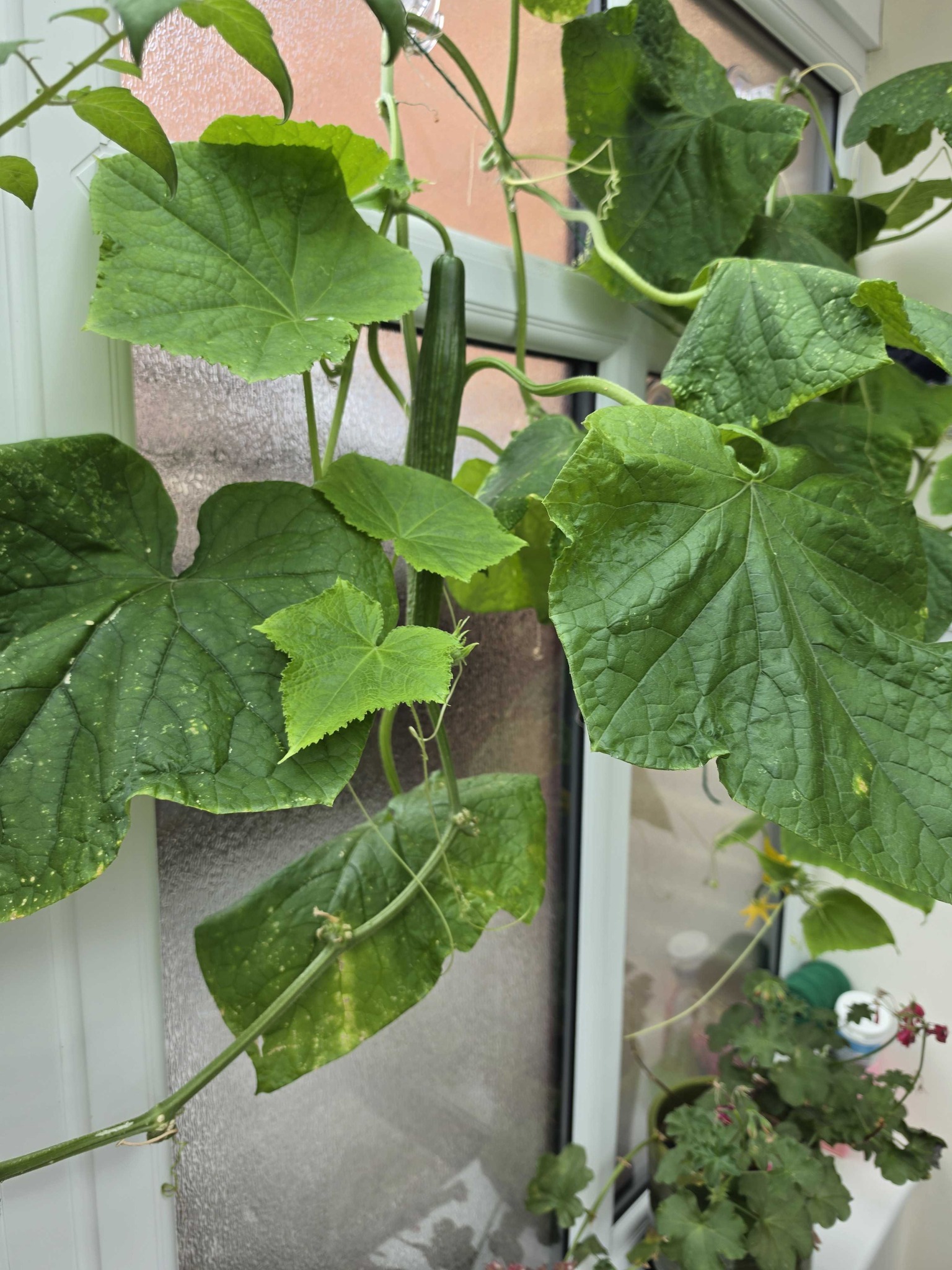
Cucumber
Cucumis sativus
A trailing or climbing vine with large, rough-textured, heart-shaped or lobed leaves, branching tendrils, and oblong cylindrical fruits.
- Light
- Full sun, requiring 6 to 8 hours of direct sunlight per day.
- Water
- High water requirements; keep soil consistently moist through regular watering. Inconsistent watering can negatively impact fruit development.
- Growth
- Vining herbaceous annual plant featuring rapid growth, spreading widely along the ground or climbing via tendrils up to 6 to 10 feet in length.
Care instructions
Provide full sun exposure with at least six to eight hours of direct light daily. Maintain consistently moist soil and feed regularly with a balanced fertilizer during the active growing season.
Growing details
Sunlight
Full sun, requiring 6 to 8 hours of direct sunlight per day.
Watering
High water requirements; keep soil consistently moist through regular watering. Inconsistent watering can negatively impact fruit development.
Soil
Rich, well-draining loamy soil with a neutral pH range between 6.0 and 6.8.
Hardiness zone
Typically grown as an annual in USDA zones 2 through 11; sensitive to frost and cold temperatures.
Growth habit
Vining herbaceous annual plant featuring rapid growth, spreading widely along the ground or climbing via tendrils up to 6 to 10 feet in length.
Bloom season
Flowers appear in mid-summer, producing small, yellow, bell-shaped flowers that are pollinated by insects.
Propagation
Propagated primarily from seeds sown directly into warm soil after the last frost date, or started indoors in biodegradable pots.
Common pests & issues
Susceptible to powdery mildew, downy mildew, aphids, and cucumber beetles. Preventative measures include proper air circulation, crop rotation, and row covers.
Similar species
Squash and melon species within the Cucurbitaceae family; distinguished by leaf shape, fruit texture, and specific floral characteristics.