
How to Care for Culver's Root
Grow Culver's Root for its tall candelabra of white flower spikes. An easy, moisture-loving native perennial for sunny borders and rain gardens.
Read the full Culver's Root encyclopedia entry →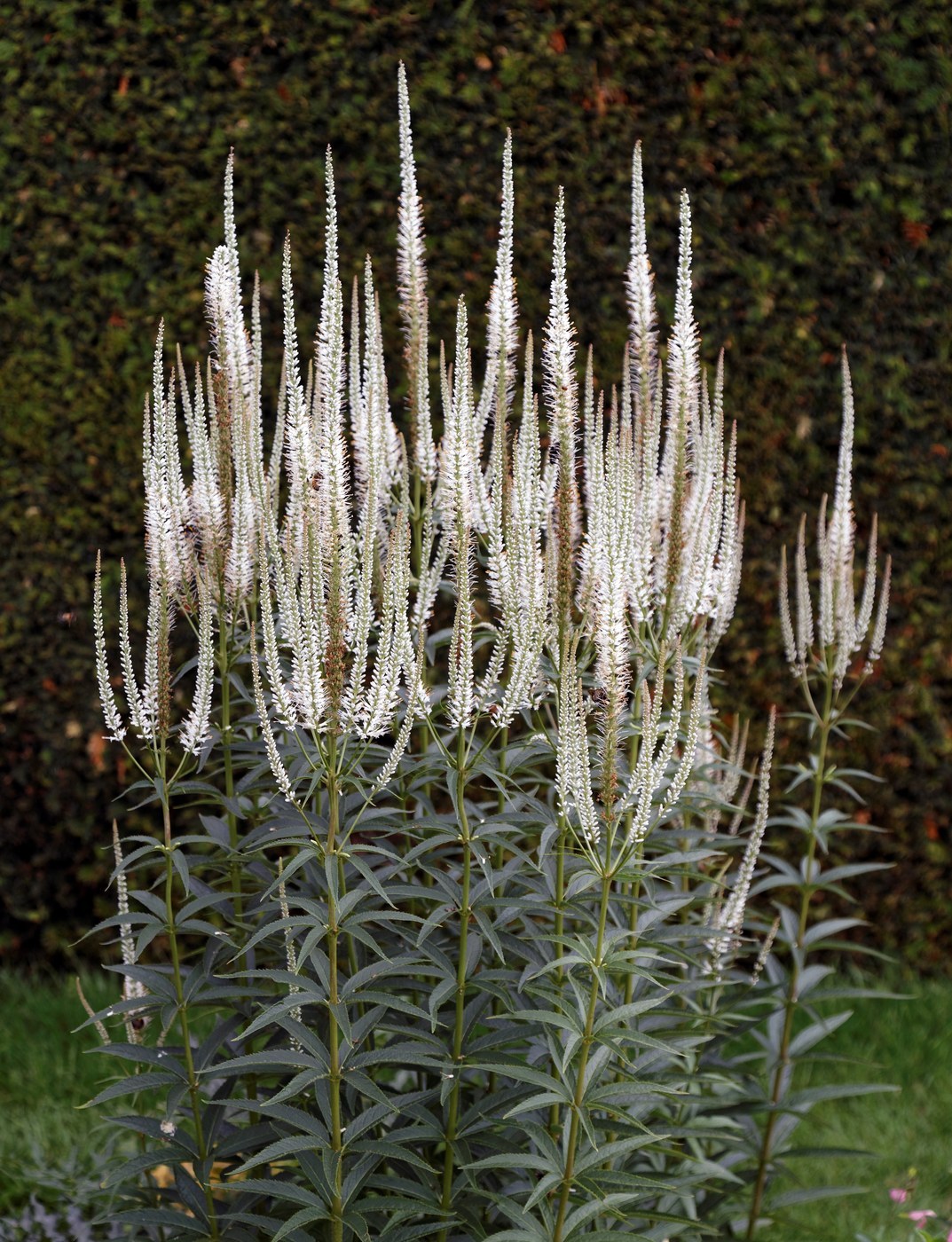
Culver's Root (Veronicastrum virginicum) is a stately North American prairie perennial prized for its slender, candelabra-like spires of tiny white to pale-lilac flowers held on erect stems above whorled foliage. It is an easygoing plant that rewards steady moisture and full sun with an architectural, vertical presence in the mid- to back of the border.
Light
Give Culver's Root full sun for the strongest, most upright stems and the heaviest flowering. It also grows in part shade, but plants in too much shade tend to stretch and flop, often needing support. In hotter regions a little afternoon shade helps keep the foliage crisp.
Water
This is a moisture-loving prairie species that likes to be kept evenly moist. It performs beautifully in the reliably damp soils of rain gardens, pond margins, and low spots. Water deeply during dry spells, especially in the first year while roots establish; mature clumps tolerate short dry periods but decline and drop lower leaves if allowed to bake dry.
Soil & Potting
Plant in rich, humusy soil that holds moisture. It adapts to a range of textures from loam to clay as long as drainage is not stagnant, and prefers a neutral to slightly acidic pH. Work compost into the planting hole to boost moisture retention and fertility, and mulch to keep the root zone cool and damp.
Humidity & Temperature
Culver's Root is fully cold-hardy across much of the temperate zone and needs no special humidity. It emerges reliably in mid to late spring after the ground warms and thrives through summer heat as long as its roots stay moist. Winter cold provides the dormancy period it needs to return each year.
Feeding
This is not a heavy feeder. An annual spring topdressing of compost is usually enough. If growth is weak in lean soil, apply a light dose of balanced granular fertilizer in spring. Avoid excess nitrogen, which produces soft, floppy stems that lean and require staking.
Propagation
Divide established clumps in early spring or fall every few years to rejuvenate and increase your stock; lift the crown and separate it into sections each with roots and buds. It can also be grown from seed, which benefits from a period of cold moist stratification before sprouting, and from basal stem cuttings taken in spring.
Repotting / Pruning
Cut spent stems back to the ground in late fall or leave the seed spikes standing for winter structure and cut them in early spring. Deadheading finished spikes can encourage a lighter second flush. Tall stems in rich soil may need staking; alternatively, pinch stems back by a third in late spring to encourage sturdier, more branched growth.
Common Problems & Pests
Culver's Root is largely trouble-free. Powdery mildew and leaf spot can appear on plants that are too dry at the root or crowded with poor airflow, so space plants well and keep them watered. Occasional aphids may cluster on new growth and can be rinsed off with a jet of water. Flopping is the most common complaint and is usually caused by shade or overly rich soil.
Seasonal Care Tips
In spring, topdress with compost and divide crowded clumps as new shoots emerge. Through summer, keep the soil consistently moist and stake if needed. In fall, either tidy the plant to the ground or leave the seed heads for winter interest. Apply a light mulch in cold climates to protect the crown.
Frequently asked questions
Why is my Culver's Root flopping over?
Flopping usually means too much shade or overly rich, high-nitrogen soil that produces soft stems. Move it to full sun, ease off feeding, or pinch stems back by a third in late spring to encourage sturdier, more branched growth. Staking also helps in exposed spots.
How often should I water Culver's Root?
Keep the soil evenly moist. Water deeply whenever the top inch or two begins to dry, and more frequently during hot, dry spells. It excels in damp rain gardens and pond edges, and only tolerates brief dry periods once well established.
Does Culver's Root spread aggressively?
No. It forms a slowly expanding clump rather than running through the garden. You can lift and divide it every few years in spring or fall to rejuvenate the crown and make more plants, but it will not overwhelm neighbors.
Should I cut it back in fall or leave it standing?
Either works. The tall seed spikes add architectural winter interest and can be left until early spring, then cut to the ground before new growth emerges. If you prefer a tidy bed, cut spent stems to the base after the first hard frost.