
Cumin Identification Guide
Identify the cumin plant by its slender stems, thread-like divided leaves, small white or pink umbrella-shaped flower clusters, and the ridged, aromatic boat-shaped seeds.
Read the full Cumin encyclopedia entry →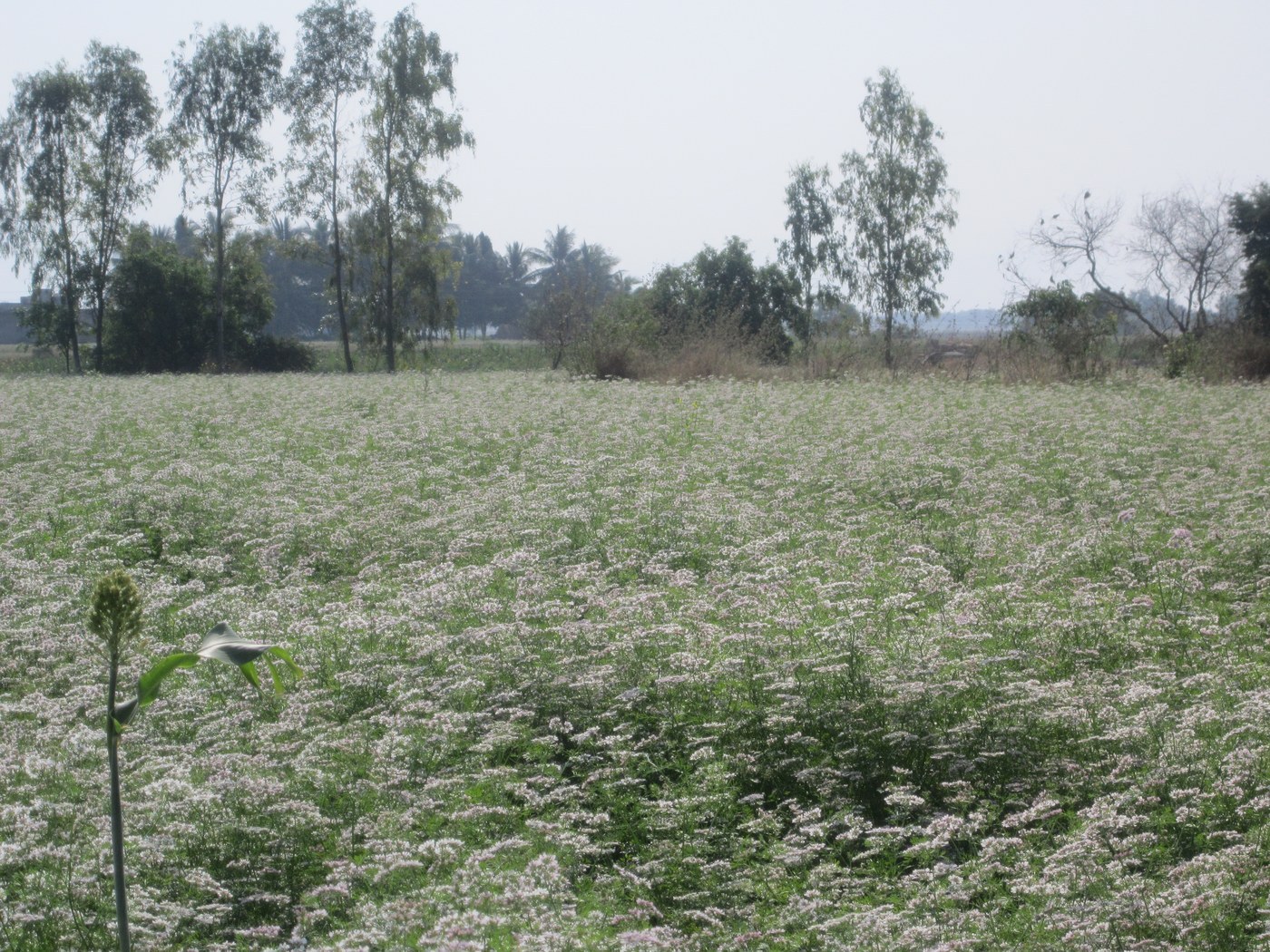
Key Identifying Features
Cumin (Cuminum cyminum) is a small, slender annual in the carrot/parsley family (Apiaceae). It is recognized by its wispy, threadlike (filiform) divided leaves, small compound umbels (umbrella-shaped flower clusters) of white or pink flowers, and most distinctively its elongated, ridged, boat-shaped seeds with a warm, earthy, pungent aroma.
- Slim, branching plant 20–50 cm (8–20 in) tall
- Finely divided, thread-like blue-green leaves
- Small umbrella-shaped (umbel) flower clusters, white or pink
- Oblong, ridged, bristly seeds (the spice)
- Warm, earthy, slightly bitter scent
Leaves & Stems
Stems are slender, smooth, much-branched, and wiry, often with a bluish-green (glaucous) cast. Leaves are alternate and finely divided (pinnate or bipinnate) into very narrow, thread-like segments, giving a feathery, almost dill- or fennel-like appearance but more delicate. The whole plant is small and airy compared with bulkier umbellifers.
Flowers & Fruit
Flowers appear in small compound umbels — the flat or slightly domed umbrella-like clusters typical of the carrot family — each with a few tiny white or pink five-petaled flowers. After flowering, the plant produces its hallmark fruits ('seeds'): small (4–5 mm), oblong, spindle- or boat-shaped, tapering at both ends, with prominent longitudinal ridges and fine bristles, ripening yellowish-brown and intensely aromatic.
How to Tell It Apart from Look-Alikes
- Caraway (Carum carvi): seeds are similar in shape but darker, more curved, and smell of anise/citrus, not the warm earthiness of cumin; caraway is a biennial with broader leaf segments.
- Fennel / dill: much taller, with stronger anise scent and yellow flower umbels.
- Other small umbellifers: distinguished by the cumin seed's distinctive ridged boat shape and unmistakable aroma.
The threadlike leaves, small white/pink umbels, and ridged boat-shaped aromatic seeds together confirm cumin.
Where You'll Find It
Native to the eastern Mediterranean to South Asia (likely the Levant/Egypt region), cumin is cultivated as a field crop in hot, dry climates — India, Iran, the Middle East, North Africa, and the Mediterranean. It needs a long, hot, dry growing season and well-drained soil in full sun, and is grown from seed as an annual.
Quick ID Checklist
- Small, slim, branching annual (20–50 cm)
- Thread-like, finely divided blue-green leaves
- Small white or pink umbrella-shaped flower clusters
- Oblong, ridged, bristly boat-shaped seeds
- Warm, earthy, pungent seed aroma
A delicate carrot-family annual with threadlike leaves, tiny white-pink umbels, and ridged spindle-shaped aromatic seeds is cumin.
Frequently asked questions
How do I tell cumin seeds from caraway seeds?
Both are ridged and elongated, but cumin seeds are straighter, lighter brown, bristly, and smell warm and earthy, while caraway seeds are darker, more curved, and smell of anise and citrus. The plants also differ, caraway being a biennial with broader leaf segments.
What family does cumin belong to?
Cumin is in the carrot/parsley family (Apiaceae), which is why it bears its tiny flowers in umbrella-shaped umbels and has finely divided, feathery leaves.
What do cumin flowers look like?
Small white or pink five-petaled flowers grouped into compound umbels (flat or slightly domed umbrella-like clusters) at the tips of the slender branches.
Where is cumin grown?
It is grown as an annual field crop in hot, dry regions such as India, Iran, the Middle East, North Africa, and the Mediterranean, requiring a long, warm, dry season and full sun.